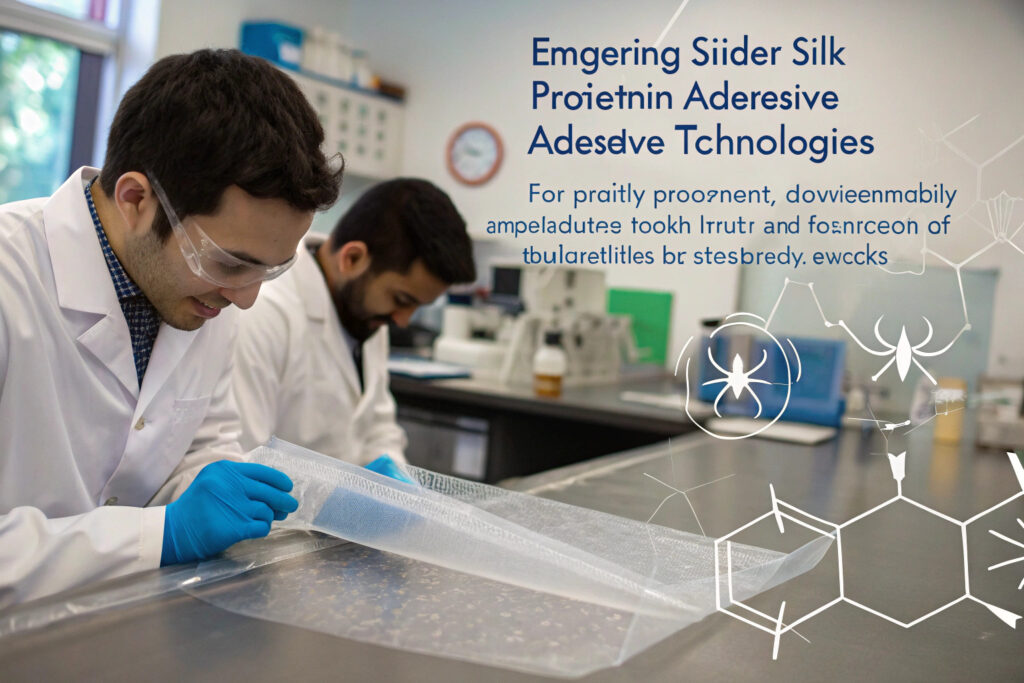
The quest for high-performance, sustainable, and biocompatible adhesives has led materials scientists to one of nature's most remarkable engineering feats: spider silk. Emerging spider silk protein adhesive technologies are unlocking revolutionary bonding solutions that combine unprecedented strength with environmental gentleness and biological compatibility. For manufacturers in medical devices, electronics, aerospace, and advanced textiles, understanding these bio-inspired adhesives is becoming essential for next-generation product development.
Emerging spider silk protein adhesive technologies utilize recombinant or bio-inspired proteins that mimic the molecular structure and bonding mechanisms of natural spider silk to create adhesives with exceptional strength-to-weight ratios, controlled viscoelasticity, underwater adhesion capability, and full biocompatibility. These technologies represent a fundamental shift from traditional petrochemical-based adhesives toward programmable, multifunctional bio-adhesives that can be engineered at the molecular level for specific applications. The most advanced developments focus on scalable production, functional modification, and integration into industrial processes.
The global bio-adhesives market is projected to reach $12.5 billion by 2028, with protein-based adhesives driving significant innovation. Research in Nature Communications demonstrates that engineered spider silk proteins can achieve adhesive strengths exceeding 5 MPa while maintaining full biodegradability and non-toxicity—properties unattainable with conventional synthetic adhesives. Let's explore the most significant emerging technologies in this transformative field.
What Production Methods Enable Scalable Spider Silk Protein Manufacturing?
The historical challenge with spider silk has been scalability—spiders cannot be farmed like silkworms. Modern biotechnology has developed multiple pathways to produce spider silk proteins at commercially viable scales.
How Do Microbial Fermentation Systems Work?
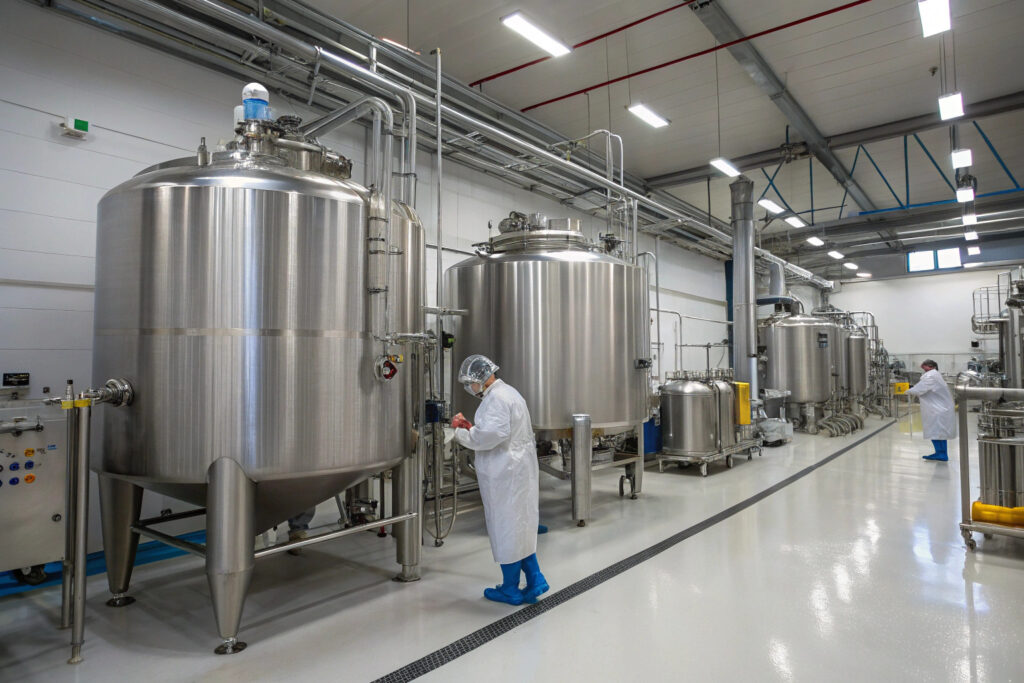
The dominant production method uses genetically engineered microorganisms—typically bacteria (E. coli), yeast (P. pastoris), or fungi—that have been modified to produce spider silk proteins. The genes encoding the repetitive protein sequences of spider dragline silk (major ampullate spidroins) are inserted into the microorganism's genome. These "cellular factories" are then grown in large fermentation bioreactors, where they convert nutrients into the target protein. Companies like AMSilk and Bolt Threads have optimized these systems to produce kilograms to tons of protein. The proteins are then extracted, purified, and can be processed into various forms, including adhesive solutions, gels, or solid fibers.
What Role Does Plant-Based Production Play?
An emerging alternative is using transgenic plants to produce spider silk proteins. Plants like tobacco or lettuce are engineered to express the proteins in their leaves. The plants are then harvested, and the proteins are extracted. While currently at a smaller scale than microbial fermentation, plant-based production offers potentially lower costs and a more "green" manufacturing footprint. Research from the Fraunhofer Institute indicates that plant systems are particularly promising for producing the more complex, large molecular weight spidroins that are challenging for microbes.
What Molecular Engineering Approaches Create Functional Adhesives?
Spider silk proteins are not inherently sticky in the way we think of adhesives. Their remarkable properties emerge from their precise molecular structure, which can be engineered to create different types of adhesives.
How Are Hybrid "Silk-Elastin" Proteins Designed?
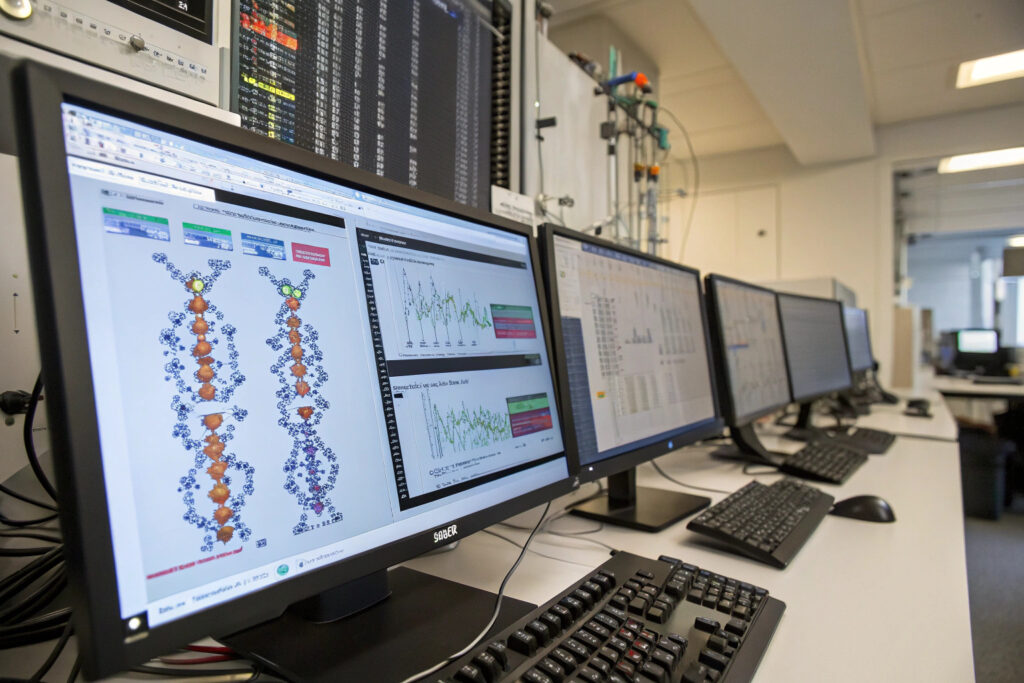
One powerful approach is to create block copolymers that combine the strong, crystalline-forming sequences of spider silk with the elastic, adhesive sequences from other natural proteins. For example:
- Silk-Mussel Hybrids: Sequences from mussel foot proteins (rich in the amino acid DOPA, which provides incredibly strong wet adhesion) are combined with spider silk sequences. The silk provides structural toughness, while the DOPA provides the chemical "glue." This creates adhesives that work underwater or on wet tissues—a breakthrough for medical applications.
- Silk-Gecko Hybrids: Incorporating sequences inspired by gecko foot hairs allows for the creation of strong but reversible dry adhesives that can stick and release on demand, useful for electronics and robotics.
These chimeric proteins are designed at the DNA level and then produced using the fermentation methods described above.
Can Adhesive Properties Be "Switched" On and Off?
Advanced research is creating stimuli-responsive silk adhesives. The bonding behavior can be triggered or reversed by specific environmental cues:
- pH-Sensitive Adhesion: The adhesive is formulated to be non-tacky at one pH (e.g., during storage) but becomes strongly adhesive at another pH (e.g., upon contact with skin or a wound site).
- Thermoresponsive Adhesion: The material transitions from a liquid or weak gel to a strong solid adhesive upon warming to body temperature, perfect for minimally invasive surgical procedures.
- Light-Activated Curing: Incorporating chemical groups that cross-link when exposed to specific wavelengths of light, allowing for precise spatial and temporal control of bonding.
These "smart" adhesives are at the forefront of biomedical engineering research, with prototypes demonstrating controlled drug release from the adhesive matrix as it degrades.
What Are the Key Application Sectors and Performance Advantages?
Spider silk protein adhesives are not a one-size-fits-all solution but offer specific, transformative advantages in sectors where traditional adhesives fail.
Why Are They Revolutionary for Medical and Surgical Applications?
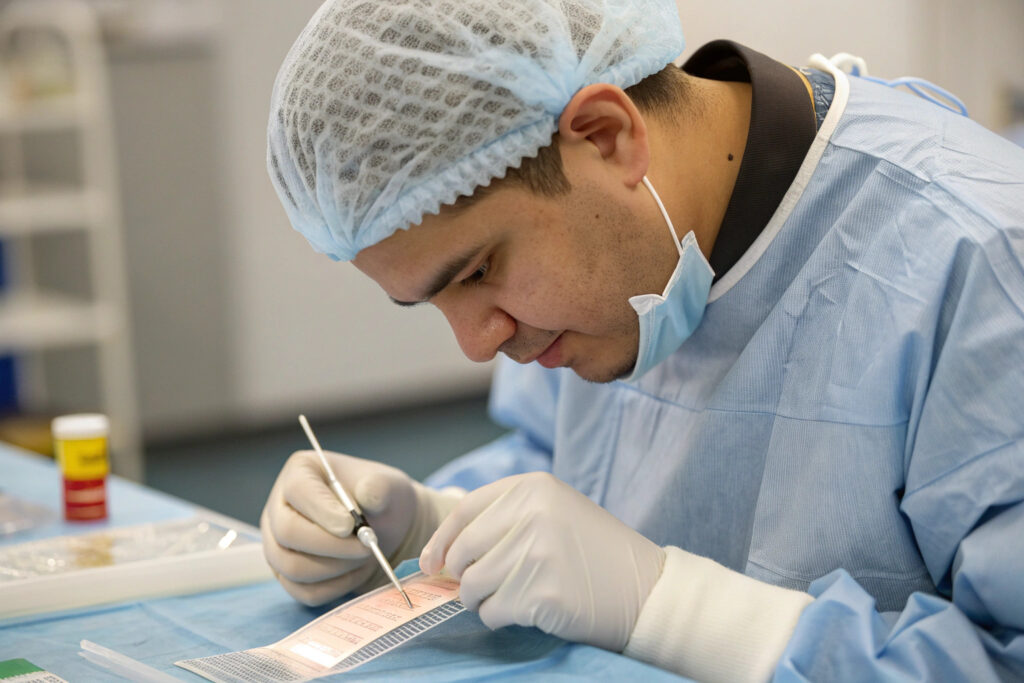
This is perhaps the most compelling sector. Spider silk protein adhesives are inherently:
- Biocompatible and Non-Toxic: They are made from natural amino acids and are broken down into harmless byproducts in the body.
- Strong Yet Flexible: They can bond to wet, dynamic tissues like skin, organs, or nerves without restricting movement or causing irritation.
- Antimicrobial: Some formulations can be engineered to slowly release antimicrobial ions (like silver from incorporated nanoparticles) as they degrade, preventing infection.
They are being developed for: surgical glues and sealants (replacing staples and sutures), wound dressings, drug delivery patches, and even as scaffolds to promote tissue regeneration. Companies like Covalon are advancing such technologies toward clinical use.
What Advantages Do They Offer in Advanced Electronics and Textiles?
- Electronics: They can form transparent, flexible, and thermally conductive bonds. Their precise molecular control allows for fine-tuning of electrical properties, making them candidates for adhesives in flexible displays, wearable sensors, and biodegradable circuits.
- Technical Textiles: For high-performance sportswear, outdoor gear, or military uniforms, silk protein adhesives can create seamless, waterproof, and highly durable bonds between different fabrics (e.g., Gore-Tex to nylon) without the stiffness or toxicity of polyurethane or PVC-based adhesives. They are also washable and breathable.
What Are the Remaining Challenges and Future Directions?
Despite exciting progress, translating these technologies from the lab to widespread industrial use faces hurdles that define the current frontier of research and development.
How Can Production Costs Compete with Synthetic Adhesives?
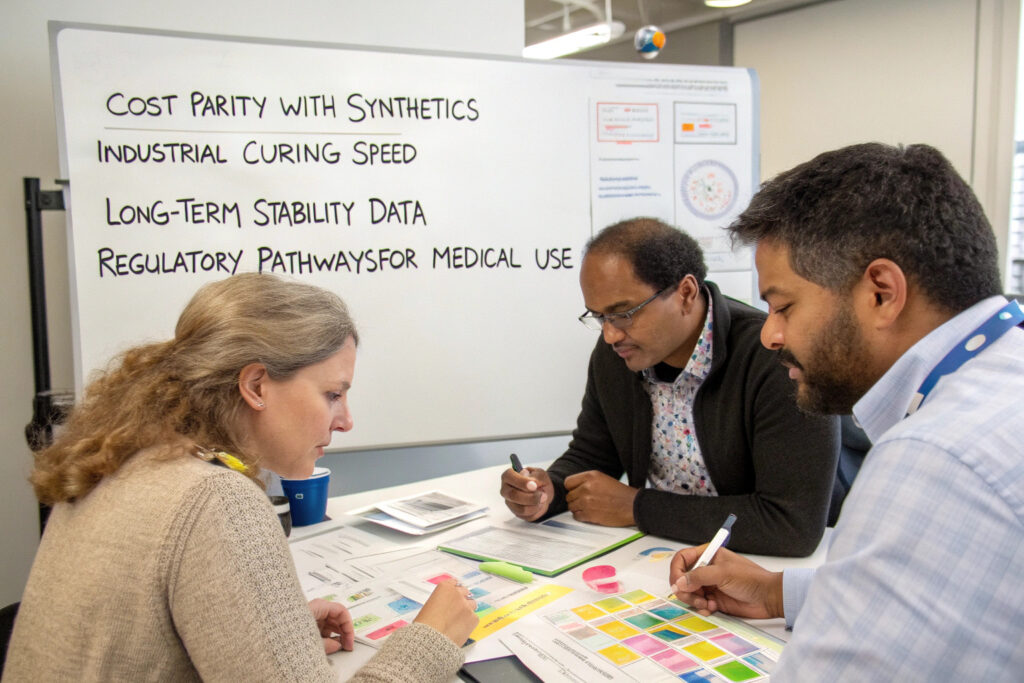
The bioproduction of engineered proteins is currently more expensive than synthesizing petrochemical polymers. The path to cost-competitiveness involves:
- Strain and Process Optimization: Continuously improving the yield and efficiency of microbial fermentation.
- Economies of Scale: Building larger production facilities as market demand grows.
- Downstream Processing Innovation: Developing cheaper and more efficient methods to purify and formulate the protein into an adhesive.
Analyses suggest that with continued investment, costs could fall within an order of magnitude of high-performance synthetic medical adhesives within 5-10 years, justifying the premium through superior performance and sustainability.
What Regulatory Pathways Are Needed for Medical Adoption?
For use in the human body, these adhesives are classified as medical devices (often Class III for implantable or life-sustaining applications). Gaining regulatory approval from agencies like the FDA or EMA requires:
- Extensive Biocompatibility Testing: Following ISO 10993 standards.
- Preclinical and Clinical Studies: Demonstrating safety and efficacy for the intended use.
- Robust Quality Control: Ensuring batch-to-batch consistency of a biologically derived product.
This process is lengthy and expensive but is actively being navigated by several biotech companies. Establishing standardized regulatory guidelines for bio-engineered protein adhesives is an ongoing discussion between industry and regulators.
Conclusion
Emerging spider silk protein adhesive technologies represent a convergence of biotechnology, materials science, and sustainable engineering. They offer a unique suite of properties—unmatched biocompatibility, high strength, environmental responsiveness, and green credentials—that are unlocking new possibilities in medicine, electronics, and beyond. While challenges in cost-effective scaling and regulatory approval remain, the trajectory is clear: these bio-inspired adhesives are moving from laboratory curiosities to viable, high-value alternatives where traditional glues fall short. As production scales and molecular design tools advance, we can expect spider silk proteins to become a cornerstone of next-generation advanced manufacturing.
Ready to explore how spider silk protein adhesive technology can revolutionize your product's performance or sustainability? Contact our Business Director, Elaine, at elaine@fumaoclothing.com to discuss potential applications, material sourcing, or collaborative development projects.