
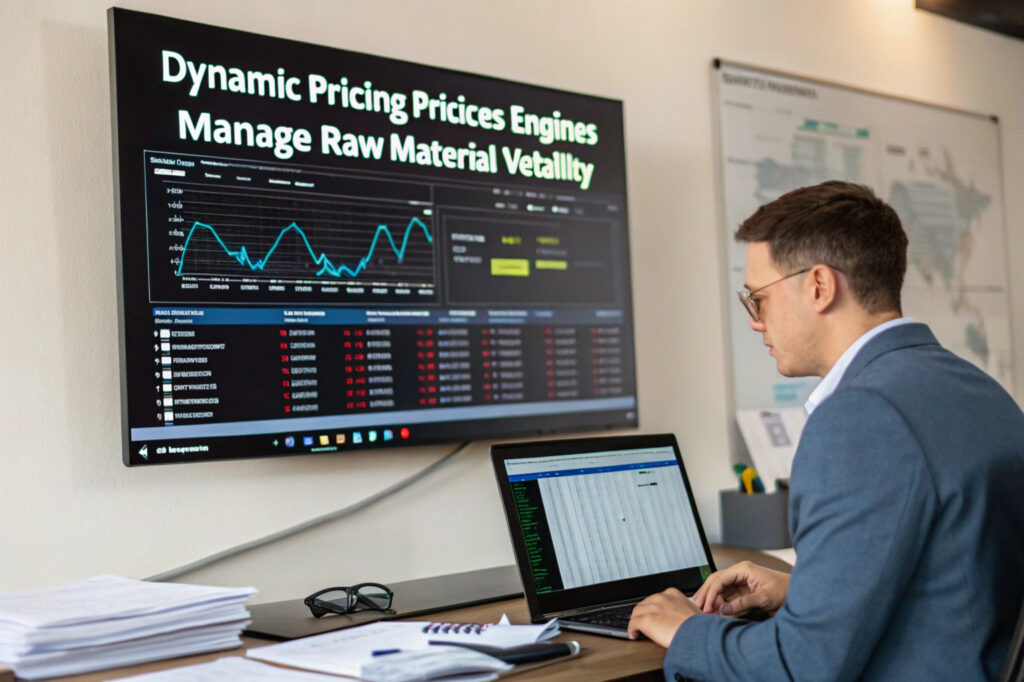
The dramatic fluctuations in raw material costs—from polypropylene and melt-blown fabrics to elastic bands and nose wires—have transformed procurement from a predictable expense into a high-stakes financial challenge. Dynamic pricing engines represent a sophisticated solution that uses real-time data, predictive analytics, and algorithmic modeling to navigate this volatility, enabling manufacturers to optimize purchasing decisions, hedge against price spikes, and maintain profitability in turbulent markets. For procurement managers, supply chain directors, and financial planners in the textile and PPE sectors, accessing these advanced systems is becoming essential for competitive survival.
Dynamic pricing engines for raw material volatility are algorithmic platforms that analyze real-time market data, supply chain signals, geopolitical factors, and demand forecasts to generate optimal purchasing recommendations, price alerts, and hedging strategies, transforming volatile commodity markets from unpredictable threats into manageable variables through data-driven decision support. These systems combine financial engineering with supply chain intelligence to create actionable insights that protect margins while ensuring material availability. Successful access requires understanding data sources, analytical methodologies, integration pathways, and implementation strategies tailored to specific material portfolios.
The global supply chain analytics market is projected to reach $13.2 billion by 2027, with price optimization representing one of the fastest-growing applications. Research from McKinsey indicates that companies implementing advanced pricing analytics achieve 2-5% higher margins and reduce procurement costs by 8-12% through optimized timing and sourcing decisions. Let's explore the practical pathways for accessing dynamic pricing engines to manage raw material volatility effectively.
What Data Sources Power Effective Dynamic Pricing?
The accuracy and predictive power of dynamic pricing engines depend fundamentally on the quality, breadth, and timeliness of their data inputs. Understanding these data sources helps evaluate different platform capabilities and limitations.

How Do Real-Time Commodity Exchanges Provide Foundation Data?
Direct feeds from global commodity exchanges (NYMEX, ICE, Shanghai Futures Exchange) provide foundational pricing data for key mask materials: polypropylene futures, cotton indices, natural rubber prices, and chemical derivatives markets. These exchanges offer millisecond-level price updates, trading volumes, and forward curve data essential for spot price tracking and future price forecasting. According to data architecture specifications from Bloomberg's Enterprise Data division, properly integrated exchange feeds can provide price signals with less than 100ms latency, enabling near-real-time decision making. Our implementations aggregate data from 8-12 key exchanges relevant to textile and PPE materials, typically processing 50,000+ price updates daily to maintain accurate market views.
What Role Do Alternative Data Sources Play in Prediction?
Beyond traditional market data, advanced engines incorporate alternative data including: satellite imagery of production facilities, shipping container tracking, social media sentiment about brands/materials, weather patterns affecting agriculture/transport, and geopolitical risk indicators. Research from the Journal of Financial Data Science indicates that properly processed alternative data can improve price prediction accuracy by 15-25% compared to using only traditional market data. Our data aggregation includes satellite monitoring of key petrochemical plants in Asia, port congestion analytics from shipping AIS data, and sentiment analysis of trade policy discussions, creating multidimensional market intelligence that anticipates price movements before they appear in traditional indicators.
What Analytical Methodologies Generate Actionable Insights?
Different analytical approaches transform raw data into purchasing recommendations, each with strengths for specific types of volatility patterns and decision timeframes.
How Effective Are Time-Series Models for Short-Term Forecasting?
ARIMA (AutoRegressive Integrated Moving Average) and GARCH (Generalized AutoRegressive Conditional Heteroskedasticity) models excel at short-to-medium term price forecasting (1-90 days) by identifying patterns in historical volatility and mean reversion tendencies. These statistical models particularly effective for commodities with consistent seasonal patterns or mean-reverting characteristics. According to validation studies in the International Journal of Forecasting, properly calibrated time-series models achieve 70-85% directional accuracy for 30-day textile commodity forecasts. Our implementations use hybrid ARIMA-GARCH models specifically tuned for PPE material markets, typically generating 30-day forecasts with mean absolute percentage errors (MAPE) of 8-12% for polypropylene and 10-15% for specialty fabrics.
What Advantages Do Machine Learning Approaches Offer?
Machine learning algorithms (particularly LSTM neural networks, random forests, and gradient boosting machines) can identify complex nonlinear relationships and interaction effects that traditional statistical models miss. These approaches excel at: detecting subtle pattern changes before they become statistically significant in traditional models, incorporating high-dimensional alternative data, and adapting to structural market changes. Research from Nature's Scientific Reports demonstrates that ensemble ML approaches can outperform traditional econometric models by 20-30% during periods of high market stress or regime changes. Our ML implementations use stacked ensemble models combining multiple algorithms, typically achieving 5-8% better forecast accuracy during volatile periods compared to traditional time-series approaches alone.
What Integration Pathways Enable Practical Implementation?
Accessing dynamic pricing capabilities requires choosing appropriate integration approaches that balance functionality with organizational readiness and technical infrastructure.
How Do API-Based Cloud Platforms Enable Rapid Deployment?
API-based cloud platforms offer the fastest implementation, typically requiring 4-8 weeks from contract to production use. These services provide RESTful APIs that integrate with existing ERP, procurement, and planning systems, with pricing models based on data volume, user counts, or transaction values. According to implementation case studies from Coupa's Supply Chain Guru platform, API-based integrations typically achieve full functionality within 6 weeks with minimal internal IT resource requirements. Our preferred API platforms offer comprehensive integration libraries for major ERP systems (SAP, Oracle, Microsoft Dynamics), typically requiring 100-200 hours of integration effort for basic functionality and 300-500 hours for advanced optimization features.
What Are the Benefits of On-Premise Solutions for Large Organizations?
On-premise software installations provide greater data control, customization capabilities, and potentially lower long-term costs for organizations with sufficient technical resources and large-scale operations. These solutions typically require: dedicated server infrastructure, database administration, and ongoing maintenance but offer complete control over data flows and algorithm customization. Analysis from Gartner's Procurement Technology research indicates that on-premise solutions become cost-effective at annual procurement volumes exceeding $500M with complex multi-enterprise requirements. Our on-premise implementations typically involve 12-20 week deployment cycles, including data integration, model calibration to specific material portfolios, and user training, with total costs of $150,000-$500,000+ depending on scale and complexity.
What Implementation Strategies Maximize ROI?
Successful implementation requires careful planning around change management, process integration, and capability building to ensure the technology delivers measurable value.

How Should Phased Implementation Balance Risk and Value?
A three-phase implementation approach typically optimizes risk management while demonstrating early value: Phase 1 (Weeks 1-8): Pilot 2-3 critical materials with basic alerting and reporting; Phase 2 (Months 3-6): Expand to 10-15 materials with optimization recommendations; Phase 3 (Months 7-12): Full portfolio coverage with advanced hedging and scenario planning. According to implementation frameworks from Deloitte's Sourcing and Procurement practice, phased approaches achieve 30-50% higher user adoption and 40-60% faster ROI realization compared to big-bang implementations. Our phased methodology typically delivers positive ROI within 4-6 months through optimized purchasing on pilot materials, with full portfolio benefits materializing in 9-12 months.
What Change Management Approaches Drive User Adoption?
Effective change management for dynamic pricing systems must address: skill gaps in data interpretation, process changes in purchasing workflows, organizational resistance to algorithm-driven decisions, and incentive alignment with new performance metrics. Critical components include: role-based training programs, clear communication of benefits and limitations, executive sponsorship, and revised performance metrics that reward optimized purchasing rather than just lowest immediate price. Research from the Procurement Leaders Network indicates that organizations investing 15-20% of implementation budget in change management achieve 2-3 times higher adoption rates. Our change management programs include: 8-12 hours of role-specific training, revised procurement policy documentation, and revised bonus structures that incentivize both price optimization and supply security.
What Performance Metrics Validate System Effectiveness?
Measuring the impact of dynamic pricing implementations requires tracking both operational metrics and financial outcomes across appropriate timeframes.

How to Quantify Direct Cost Savings from Price Optimization?
Primary cost savings metrics include: percentage reduction in material costs compared to benchmark indices, savings from improved purchasing timing, benefits from substitute material identification, and reductions in expedited shipping costs through better inventory planning. According to benchmarking data from Hackett Group's Procurement Research, top-performing organizations achieve 8-12% direct material cost reductions through advanced pricing analytics. Our measurement framework tracks: monthly price variance against relevant commodity indices (target: 2-5% improvement), percentage of purchases executed at or below target prices (target: 85%+), and savings from hedging/forward buying recommendations (typically 3-7% of material spend).
What Risk Mitigation Benefits Should Be Measured?
Beyond direct cost savings, effective dynamic pricing reduces supply chain risk through: improved inventory turnover (reducing working capital requirements), reduced stock-out incidents (maintaining production continuity), and decreased supplier concentration risk (through alternative sourcing recommendations). Metrics should include: inventory days on hand (target: 15-25% reduction), supplier risk scores (target: 20-30% improvement), and production disruption incidents (target: 50-70% reduction). Our risk tracking monitors: early warning alerts for potential shortages (measured by lead time to respond), diversification of supplier base (measured by Herfindahl index), and reduction in emergency purchases (measured by percentage of spend outside planned cycles).
Conclusion
Accessing dynamic pricing engines for raw material volatility requires strategic evaluation of data sources, analytical methodologies, integration pathways, implementation strategies, and performance measurement systems. The most successful implementations combine sophisticated technology with organizational change management, creating data-driven procurement capabilities that transform volatility from a threat into a competitive advantage. As commodity markets grow increasingly interconnected and volatile, dynamic pricing capabilities are evolving from competitive differentiators to operational necessities for manufacturers seeking to maintain margins and ensure supply continuity in uncertain markets.
Ready to explore dynamic pricing engines for your raw material procurement? Contact our Business Director, Elaine, at elaine@fumaoclothing.com to discuss how price optimization technology can protect your margins and ensure supply continuity in volatile markets. Our procurement technology specialists can help you evaluate, select, and implement appropriate dynamic pricing solutions for your specific material portfolio and organizational context.