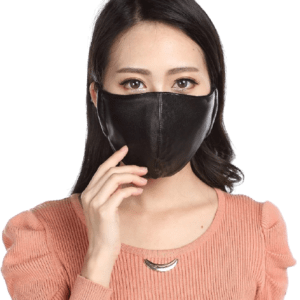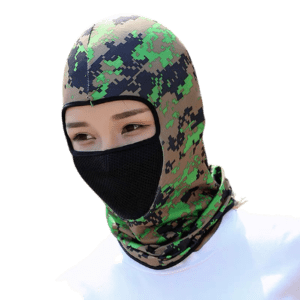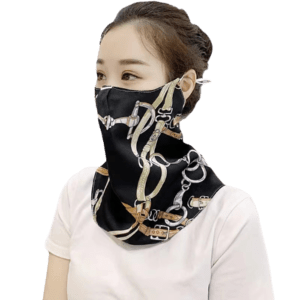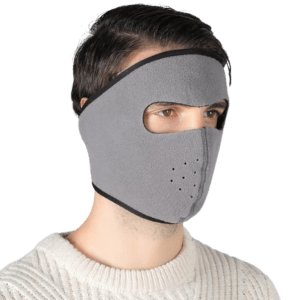

The integration of wireless technologies like Bluetooth, Wi-Fi, or cellular connectivity into masks—for features such as sensor data transmission, active filtration control, or communication enhancement—transforms them from simple protective gear into intentional radiators of radio frequency (RF) energy. This shift places these products squarely under the jurisdiction of the Federal Communications Commission (FCC) in the United States. Navigating the FCC certification process is a complex but mandatory step for market access, with non-compliance risking significant fines, shipment seizures, and reputational damage.
FCC certification for wireless mask devices is a mandatory regulatory process that ensures your product's radio frequency emissions do not cause harmful interference to other communications services and comply with strict human exposure limits for RF energy, requiring rigorous testing at an accredited laboratory followed by detailed technical and administrative filings with the FCC. The path differs significantly based on whether your device contains a pre-certified wireless module or a custom-designed RF circuit, with the former offering a streamlined route and the latter demanding full responsibility for compliance.
The market for connected wearables is booming, but the FCC has issued over $200 million in fines over the past five years for non-compliant electronic devices. For a mask with a Bluetooth chip to transmit air quality data, the certification is not optional—it's the law. The process involves understanding equipment authorization procedures, selecting the correct certification path, preparing for specific tests, and managing ongoing compliance. Let's break down the practical steps.
What Are the Three FCC Equipment Authorization Paths?
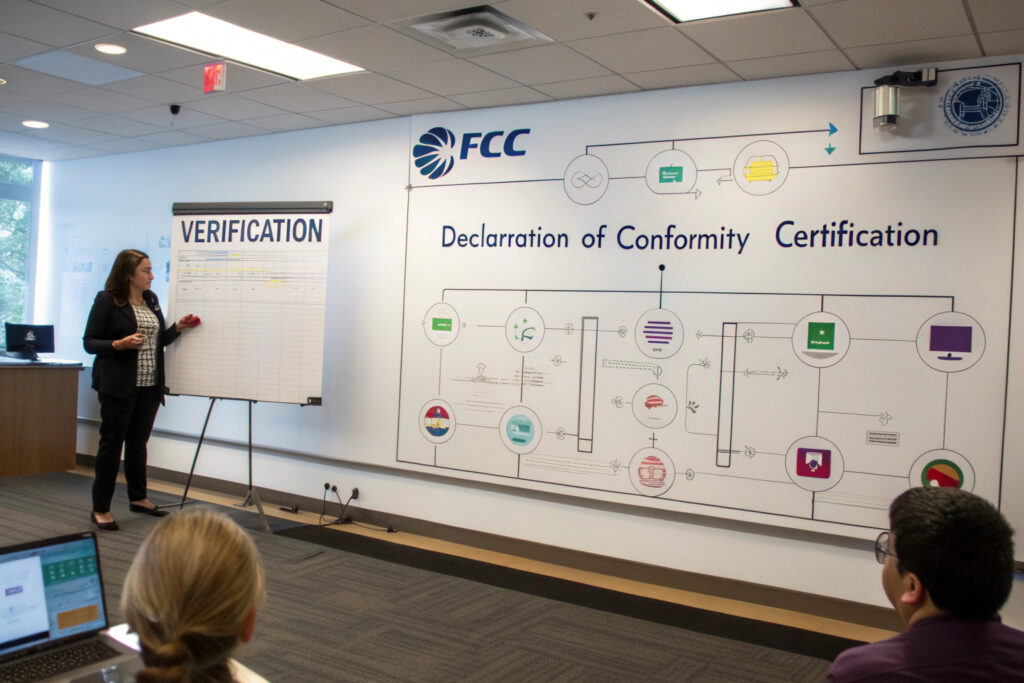
The FCC offers three main authorization procedures: Verification, Declaration of Conformity (DoC), and Certification. The correct path for your wireless mask depends on the type of device and its potential for causing interference.
Does My Wireless Mask Require Full Certification?
Almost certainly, yes. If your mask intentionally generates and uses RF energy (like a Bluetooth Low Energy transmitter to send data to a phone), it is classified as an Intentional Radiator and requires the most stringent Certification path. This involves testing at an FCC-recognized accredited laboratory (like a Telecommunication Certification Body or TCB) and filing a formal application that results in an FCC ID that must be displayed on the product. According to FCC rules under Part 15 for intentional radiators, this is non-negotiable. The use of a pre-certified wireless module can simplify this, but the final product (the mask) still requires certification as a host device.
When Might Verification or DoC Apply?
If your mask contains digital circuitry (like a microcontroller) but no intentional wireless transmitter, it is classified as an Unintentional Radiator (it may emit low-level RF noise as a byproduct of operation). Such devices typically follow the Verification (self-testing) or Declaration of Conformity (DoC) path. DoC requires testing at an accredited lab but allows the manufacturer to declare compliance. For example, a mask with only wired sensors and non-wireless data logging would likely fall under DoC. However, the moment you add wireless connectivity, you move to the Certification path.
How to Prepare for Mandatory RF Testing?
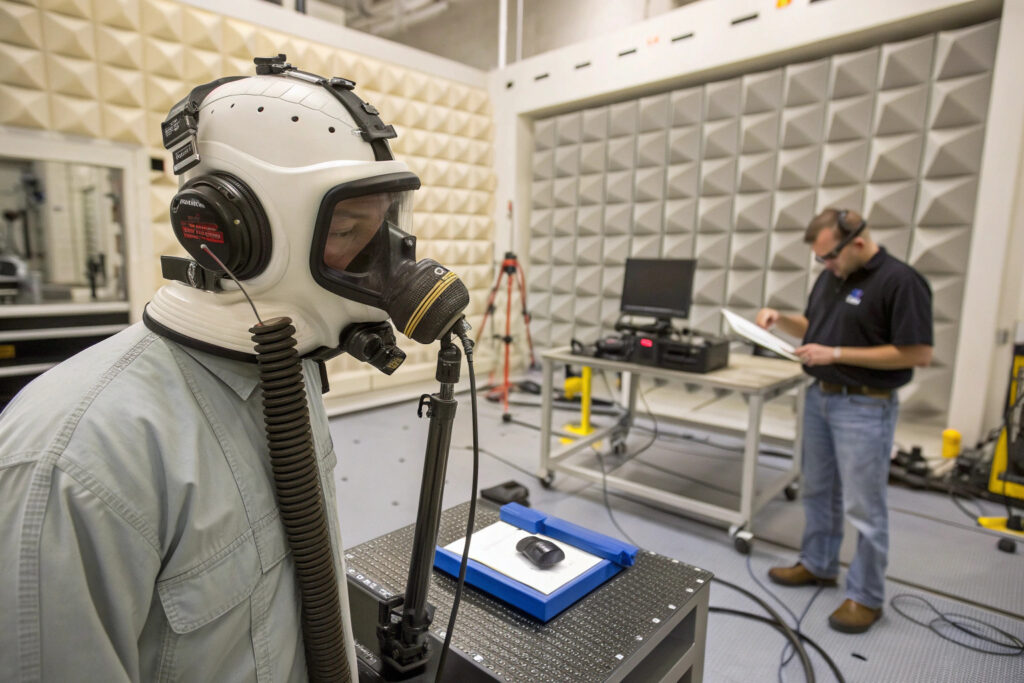
Testing at an accredited lab is the core technical hurdle. Preparing your product and documentation thoroughly can prevent costly retests and delays.
What Are the Key Tests for an Intentional Radiator Mask?
For a Bluetooth or similar mask, the lab will conduct a suite of tests, primarily:
- Radiated & Conducted Emissions: Measures RF energy emitted from the device and its power lines to ensure it stays within allowed limits and doesn't interfere with other services.
- Bandedge Compliance & Occupied Bandwidth: Verifies the transmitter stays within its allocated frequency band (e.g., Bluetooth's 2.4 GHz ISM band).
- RF Exposure Evaluation (SAR or MPE): This is critical for wearables. SAR (Specific Absorption Rate) testing measures the rate at which RF energy is absorbed by the human body, with strict limits (1.6 W/kg averaged over 1g of tissue). Due to the mask's distance from the body, it may qualify for the MPE (Maximum Permissible Exposure) evaluation based on power density, which is less onerous. The lab will determine which applies based on the transmitter's power and proximity. The FCC's OET Bulletin 65 provides the evaluation guidelines.
- Frequency Stability: Ensures the transmitter's frequency remains stable under varying voltage and temperature conditions.
How Can Using a Pre-Certified Module Simplify Testing?
Integrating an FCC-certified wireless module (like a Bluetooth chip on a certified PCB module) is the most effective way to reduce time, cost, and complexity. The module's RF components have already passed the core RF tests. For the final product certification, the lab's focus shifts to:
- Ensuring the module is integrated without modification (using its approved antenna).
- Testing for any new emissions caused by the host (mask circuitry) that could cause interference.
- Conducting the RF exposure evaluation for the final product configuration.
You must ensure the module's certification is valid for integration into a host device and that you follow the module manufacturer's integration instructions exactly.
What is the RF Exposure (SAR) Evaluation Process?
Given that a mask is worn directly on the face, RF exposure evaluation is arguably the most sensitive part of the FCC review. Demonstrating compliance is paramount.

When is SAR Testing Required vs. MPE Calculation?
SAR testing is typically required for portable devices operating at or above 20 cm from the body. For a mask, the antenna is often within 20mm of the head, so SAR evaluation is almost always mandatory unless the transmitter is extremely low power. The formal test involves placing the device on a standardized phantom head filled with tissue-simulating liquid and using a robotic probe to measure the peak absorption. It is expensive and time-consuming.
MPE Calculation is an alternative for devices that operate at a greater distance (like a router). For a mask to qualify, you must demonstrate through initial calculations that the power density at a distance of 20cm from the wearer is below the MPE limit. This is often difficult for masks due to their proximity.
What Design Choices Minimize SAR and Simplify Compliance?
- Antenna Placement: Position the antenna away from the head as much as possible (e.g., in the front panel or chin area rather than the side/temple area).
- Lower Power: Use the lowest transmit power necessary for reliable communication. Bluetooth Low Energy is advantageous here.
- Duty Cycle: Implement firmware to minimize the transmitter's on-time (duty cycle). Intermittent data transmission, rather than constant streaming, can significantly reduce average exposure.
- Shielding: Consider strategic shielding between the antenna and the wearer's skin, though this can impact antenna performance.
How to File with the FCC and Manage the Grant?
Once testing is complete, the administrative process of filing for certification begins, followed by responsibilities after the grant is obtained.
What is the Role of a TCB, and How Do You File?
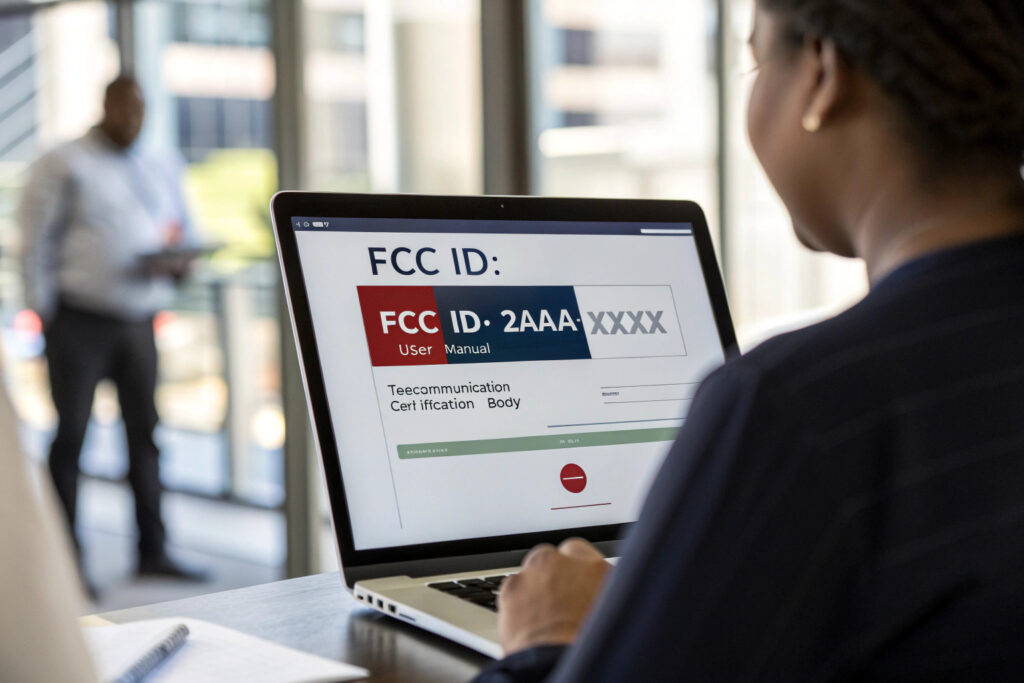
Most Certification applications are now reviewed and granted by a Telecommunication Certification Body (TCB), which is a private organization accredited by the FCC. You (or your lab) will submit the application package to a TCB. This package includes:
- The full test report from the accredited lab.
- Detailed technical documentation (schematics, block diagrams, photos).
- A user manual draft that includes the required FCC compliance statements (e.g., "This device complies with part 15 of the FCC Rules..." and specific warning statements about antenna installation).
- Label drawings showing the placement of the FCC ID.
The TCB reviews the package for completeness and technical compliance before issuing the grant of equipment authorization.
What Are Your Responsibilities After Certification?
- Labeling: The product must bear the FCC ID in the format specified in the grant. This is often on a permanent label inside the battery compartment or on the product itself.
- Consistency in Production: You must ensure that every unit produced is identical to the unit that was tested. Any changes to the RF circuitry, antenna, or firmware that could affect emissions require a new evaluation and possibly a new application (Class II permissive change or new certification).
- Record Retention: You must retain all test reports and technical documentation for as long as the product is marketed and for two years after production ceases. The FCC can request these at any time.
Conclusion
Navigating FCC certification for wireless mask devices is a detailed, technical, and mandatory journey. The optimal strategy involves early planning: designing for low RF exposure, selecting pre-certified modules, and engaging with an experienced compliance testing laboratory and TCB partner early in the development cycle. While the process demands investment, it is a non-negotiable cost of entry to the U.S. market and serves as a foundation for quality and safety that protects both your customers and your business.
Ready to bring your connected mask device to market with full FCC compliance? Contact our Business Director, Elaine, at elaine@fumaoclothing.com. Our technical and regulatory team can guide you through the design, testing, and certification process, ensuring your innovative product meets all necessary standards for a successful launch.