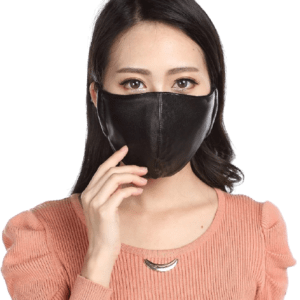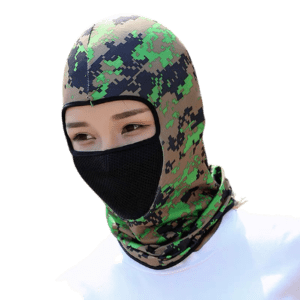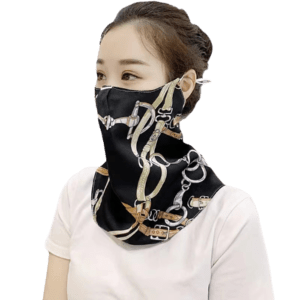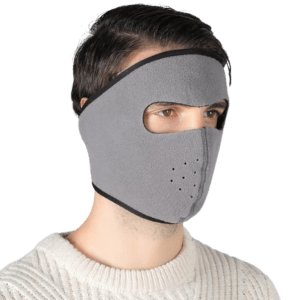
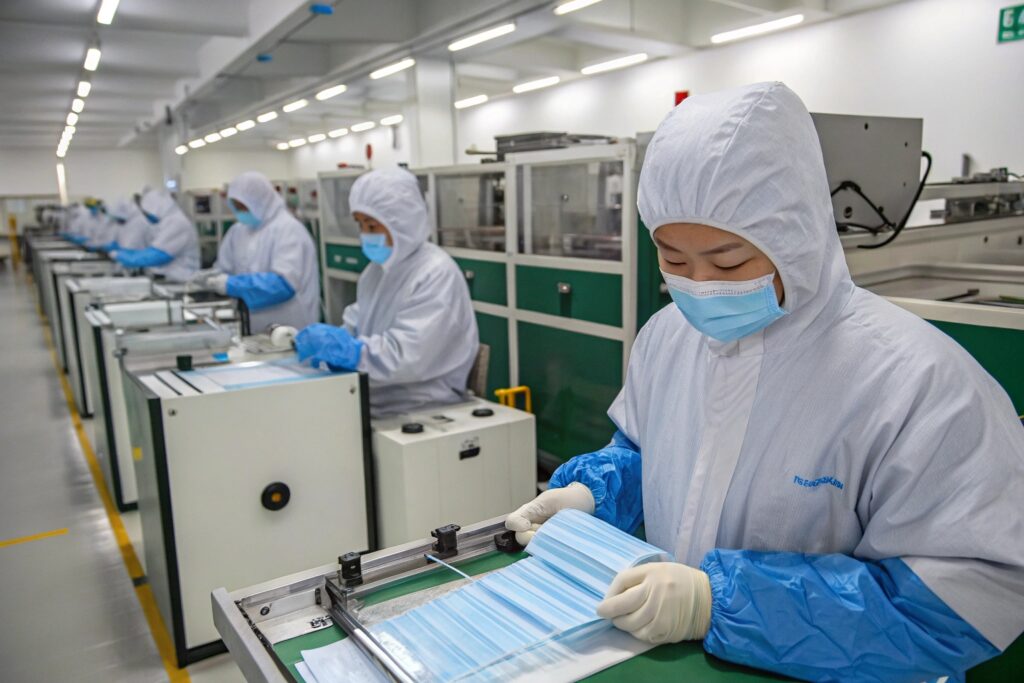
In the post-pandemic era, product safety is not optional—it’s essential. Buyers across North America and Europe no longer ask if your masks are safe, but how you prove it. As a manufacturer of wholesale fabric face masks, I’ve seen how safety practices have evolved into full-scale systems.
Leading fabric mask suppliers ensure safety through testing, certified materials, clear documentation, and traceable production processes. From raw material sourcing to finished product QC, safety is built into every stage.
In this article, I’ll walk you through the exact practices we and other top Chinese mask exporters follow to guarantee compliance, user safety, and brand protection for global buyers.
What Testing Standards Must Fabric Masks Meet?
Testing is the first checkpoint of safety—and the one buyers ask about the most. But what exactly do leading suppliers test for?
Fabric mask safety testing typically includes filtration efficiency, breathability, flammability, skin irritation, colorfastness, shrinkage, and microbial control, depending on destination markets.
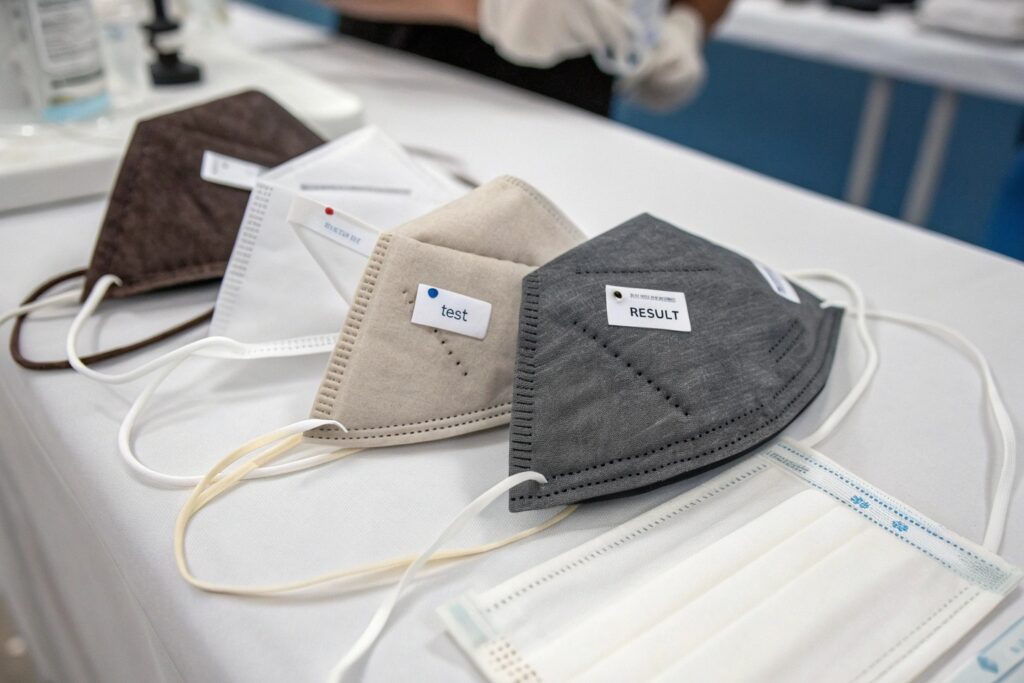
What Types of Lab Testing Are Required?
At our facility, we run multiple tests for every fabric mask batch. For U.S. or EU export, we include filtration tests like ASTM F2100 or GB/T 32610 for particle retention, and air permeability tests for breathability.
We also ensure colorfastness and shrinkage fall within EN or ISO standards to prevent dye leakage or size change. If a client requests OEKO-TEX® or REACH certification, we test for allergenic dyes and chemical residues.
Our partner labs like SGS and Intertek provide official test reports, and we allow pre-shipment testing from third parties.
How Are the Test Results Documented?
Every batch receives a digital test summary including results from our in-house lab and any third-party certificates. These reports are linked via QR codes on the packaging for full traceability.
Clients also receive PDF reports during production approval, and we upload all test history to a shared Google Drive or internal inventory system.
How Is Fabric Quality Controlled Before Production?
The most overlooked risk in mask production lies in the fabric itself. Bad fabric leads to allergic reactions, weak filtration, and early mask failure.
Top suppliers implement fabric QC procedures like roll inspection, lot testing, fiber verification, and compliance checks before masks ever reach the sewing line.
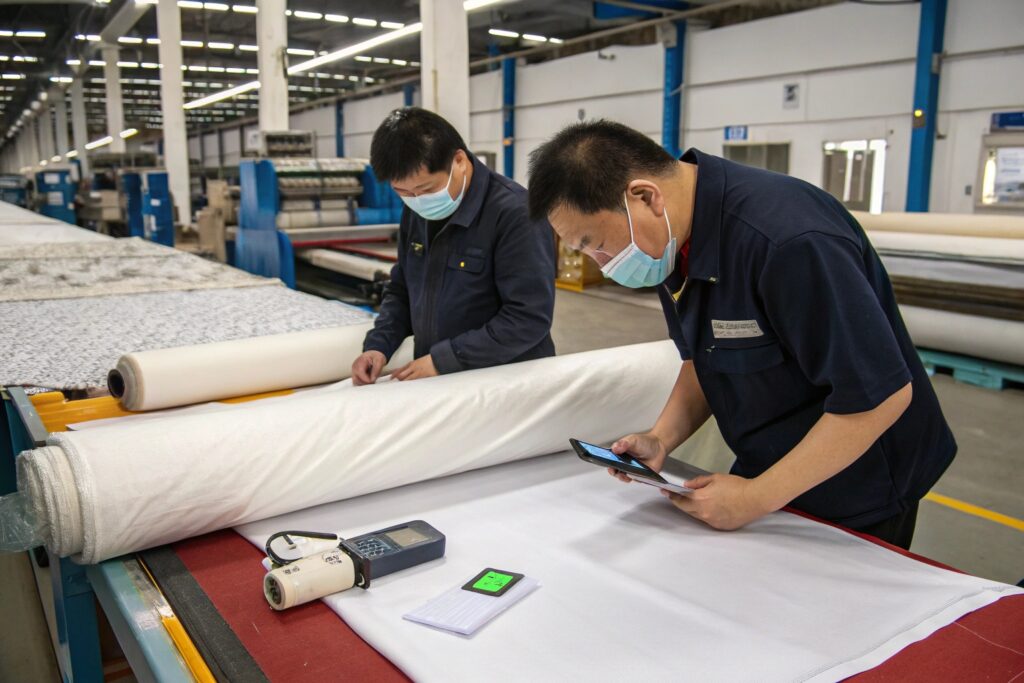
What Happens During Incoming Fabric Inspection?
Every roll of fabric is inspected upon arrival using 4-point inspection systems for defects like holes, stains, or dye inconsistency. We also confirm GSM (weight), stretch percentage, and surface treatment (e.g., antimicrobial coating) before approval.
Only rolls that pass this visual and metric check are moved to cutting. We reject or return about 2% of incoming fabric each month based on these controls.
How Are Functional Properties Verified?
We perform random spot tests on incoming lots for properties like moisture-wicking, odor resistance, or UV protection. For example, bamboo fiber masks must pass pH-neutrality and hypoallergenic evaluation before cutting.
Clients needing medical-grade options may also request biocompatibility testing based on ISO 10993 guidelines.
What Systems Ensure Hygiene During Manufacturing?
Safety isn't just about the materials—it’s about the process. Hygiene and contamination control are vital for ensuring the masks that reach end users are as clean as they are functional.
Leading factories follow GMP-style practices including workwear policies, disinfection routines, and air-filtered assembly zones to prevent contamination.
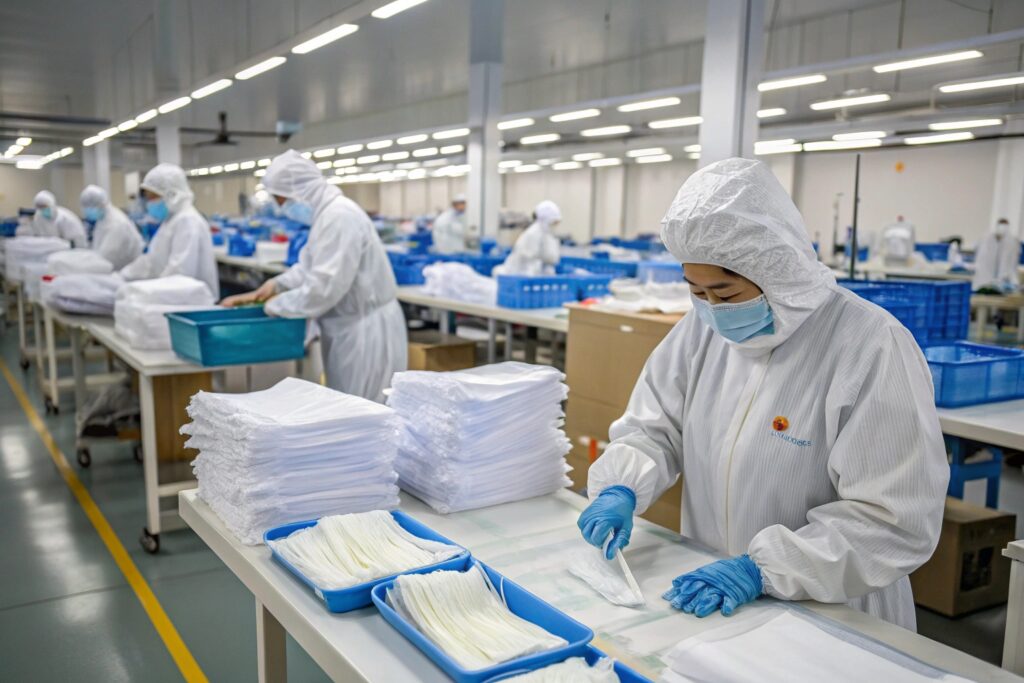
How Are Clean Zones Structured?
Our sewing floor is separated by access zones—raw material, cutting, sewing, finishing, and packing. Each zone has HEPA-filtered air circulation, UV sterilization of surfaces, and shoe sanitizing mats at entry points.
Staff must wear masks, gloves, and hairnets, and undergo hand-sanitization every 2 hours. All tools are disinfected daily.
This setup mirrors ISO 14644-1 cleanroom protocols, although full cleanroom certification is only needed for medical masks.
How Is Cross-Contamination Prevented?
Finished masks are sealed in individual polybags immediately after quality control. We use color-coded trays for each batch and disallow any external entry into the packing room.
Routine audits, video logs, and spot inspections by clients help us ensure these standards are kept. We also rotate production staff weekly to avoid repetitive errors or fatigue.
How Do Buyers Verify Safety Before Shipment?
Even with all internal controls, global buyers need ways to verify safety without flying to China. The good news: top suppliers make this process simple.
Buyers can verify product safety through digital test reports, live factory audits, carton-level tracking, and third-party inspection at any point before shipment.
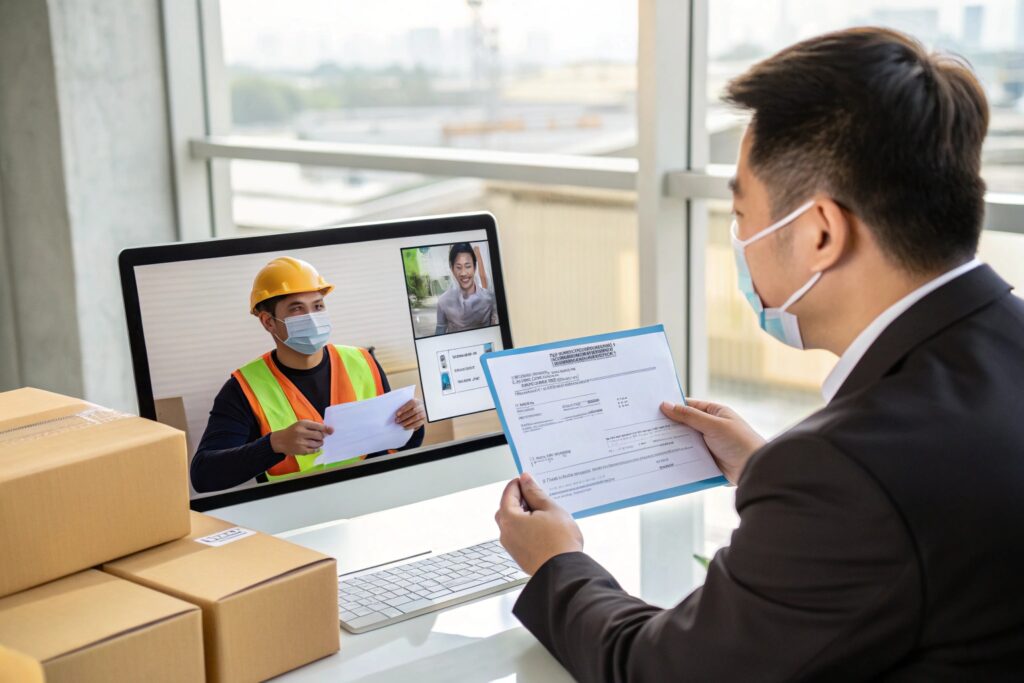
What Pre-Shipment Options Are Available?
We offer virtual inspections via Zoom where clients can watch random QC checks, packaging line views, and label confirmations. For sensitive orders, we allow third-party inspectors from QIMA or Bureau Veritas to visit before container sealing.
We also provide shipping mark photos, carton weight logs, and pallet loading diagrams for every order.
How Are Safety Metrics Tracked Over Time?
Our system logs test reports and QC pass rates per style, date, and destination. If a buyer reorders the same mask, we show the safety consistency rate across lots.
Repeat clients also get auto-notifications when a batch’s certification is about to expire or needs revalidation. This ensures ongoing safety compliance for long-term stock.
Conclusion
Fabric mask safety is not a one-step process—it’s a culture. From selecting non-irritant materials to documenting tests and maintaining clean environments, trusted suppliers invest in making every piece as safe as possible. If you’re sourcing from China, choose partners who treat safety as a system, not just a label. That’s what builds brands buyers trust—and why our clients stay with us long term.