In today’s market, many fabric face masks claim to have “anti-microbial” or “anti-bacterial” properties—but as a buyer, how can you be sure these claims are legitimate?
Verifying anti-microbial claims involves checking third-party lab certifications, active ingredient registration, ISO or ASTM testing standards, and proper product labeling.
In this article, I’ll explain what tests and certifications are considered valid, how to read a supplier’s anti-microbial report, and how we help buyers worldwide avoid greenwashing or unverifiable marketing claims.
What Does “Anti-Microbial” Really Mean for Masks?
Many suppliers use these terms interchangeably, but they’re not all equal. Understanding the differences helps you evaluate claims more accurately.
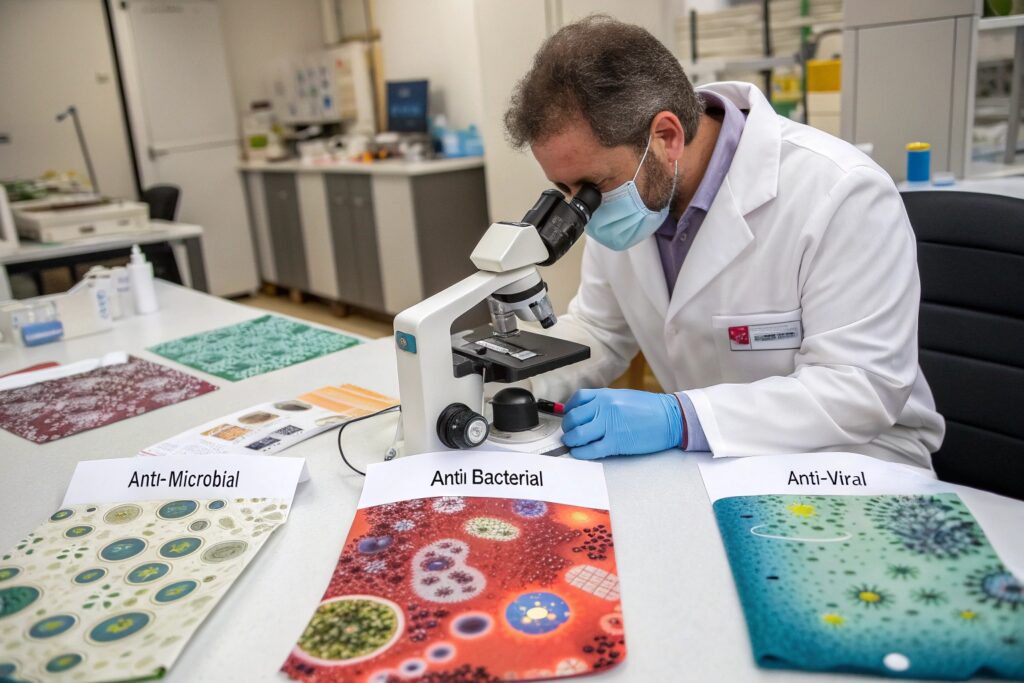
“Anti-microbial” means the fabric inhibits the growth of microorganisms (bacteria, fungi, etc.); “anti-bacterial” targets bacteria specifically; “anti-viral” is rarer and refers to virus-deactivation capabilities.
Are All Claims Regulated the Same Way?
No. In the U.S., any anti-microbial marketing tied to health claims is regulated by the EPA and FDA. Only EPA-registered agents (like silver chloride or zinc pyrithione) can be used, and they must appear on the EPA’s approved list.
In Europe, compliance is under BPR (Biocidal Products Regulation). This means you must request Declaration of Conformity and substance registration for any treated fabric.
We always share our fabric finishing data, including test results from Intertek or SGS.
What Do Real Anti-Microbial Finishes Contain?
Common treatments include:
- Silver ion (Ag+): long-lasting anti-bacterial, used by brands like Polygiene®
- Zinc oxide: natural UV and odor control
- Silane quats: chemical antimicrobials used in hospital textiles
- Copper oxide: known anti-viral, though costly
Always verify CAS number and application percentage. We disclose full MSDS upon request.
How Do You Test a Fabric’s Anti-Microbial Activity?
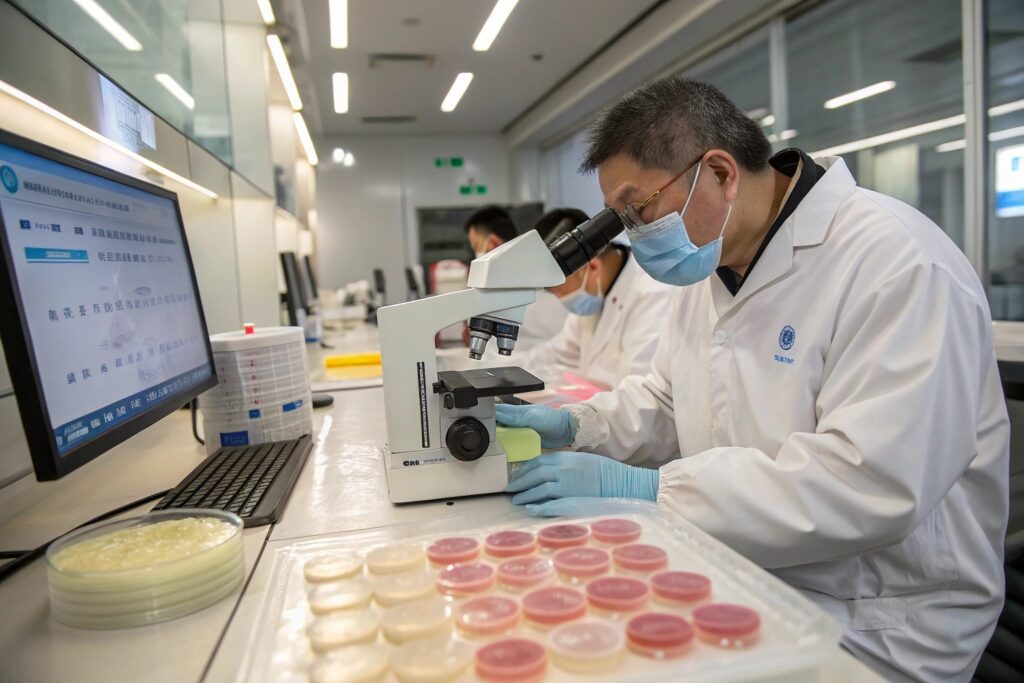
If a supplier claims anti-microbial properties, they should provide test reports from an ISO-accredited lab, showing measurable reduction of bacteria or microbes after 24 hours.
The most recognized standards include ISO 20743 (textiles), AATCC TM100 (antibacterial finish), and JIS L 1902.

What Should a Valid Test Report Contain?
A real anti-microbial test report should include:
- The test method (e.g., ISO 20743 or AATCC TM100)
- Type of organism tested (e.g., Staphylococcus aureus)
- Control vs treated sample comparison
- Reduction rate (log10 value or % reduction)
- Date and lab signature
A good example: ISO 20743 result showing 99.3% reduction of bacteria on silver-ion treated polyester after 18 hours.
Here’s an example from Microban® certification.
Are Home Tests Reliable?
No. UV lights or odor testing can’t verify microbial resistance. You must rely on certified labs. In China, look for reports from CTTC, Intertek, or SGS—and ask for original PDF with official stamp.
We supply lab reports in both English and Chinese, depending on the customer’s compliance market.
How Do You Verify Ingredient Safety and Legality?
Not all anti-microbial agents are approved for use in textiles—or safe for skin contact. It’s essential to request ingredient documentation and safety sheets from your supplier.
You should request MSDS, EPA registration, BPR documentation (EU), and safety certification for any claimed anti-microbial treatment.

What Is an MSDS and Why Is It Important?
An MSDS (Material Safety Data Sheet) provides information on chemical identity, safe handling, exposure risks, and disposal. For treated masks, the MSDS confirms:
- Chemical name & CAS number
- Application level (%)
- Contact safety (skin, inhalation)
- Manufacturer and formulation date
You can cross-reference this data with ECHA’s chemical database.
We provide full MSDS sheets for our Polygiene®, HeiQ Viroblock®, and Silvadur® finishes.
What Legal Issues Could Arise?
In the U.S., anti-microbial marketing is regulated under FIFRA by the EPA. Without proper registration, even mentioning “anti-bacterial” could trigger import rejection.
Retailers like Target or Walmart now require pre-screened reports for all antimicrobial claims.
We assist clients in gathering required paperwork for customs, retail, or Amazon listing compliance.
What Labeling and Packaging Rules Apply?
Even if the product is treated, labeling it correctly is vital for both legal and consumer trust reasons.
Compliant labels should disclose the treatment type, test standard, and proper usage warnings or disclaimers.
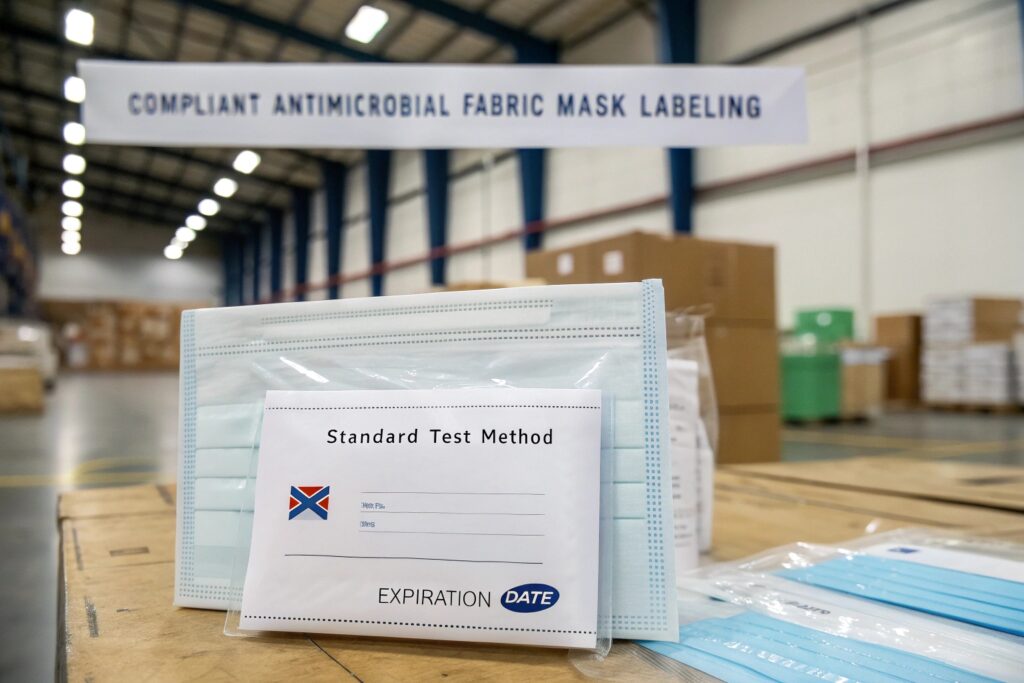
What Does a Proper Label Look Like?
Sample label text for a treated fabric mask:
“This product contains a silver-ion anti-bacterial finish tested to ISO 20743, achieving 99% bacterial reduction. Not a medical device. For consumer use only.”
Key label elements include:
- Agent disclosure (e.g., “treated with silver chloride”)
- Tested standard (e.g., “ISO 20743”)
- Intended use disclaimer (e.g., “Not intended for surgical use”)
- Wash durability (e.g., “Effective up to 50 washes”)
We help clients with bilingual labeling templates based on the region (FDA, EU CE, UKCA).
Are QR Code Labels Useful?
Yes. We offer QR code tags that link to live test reports or ingredient disclosures. These help build brand transparency and reduce customer service complaints.
Our own masks carry QR codes linking to batch-level testing hosted via QR Tiger or Scantrust.
Conclusion
In a crowded market full of “anti-microbial” claims, smart buyers protect themselves—and their customers—by asking the right questions and requesting the right documents. At ChinaClothMask, we believe in full transparency. Whether it's ISO lab testing, MSDS reports, or EPA compliance, we provide what you need to verify that your masks really do what the label says. Because safety isn’t just a feature—it’s a promise.