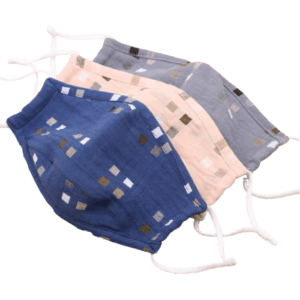
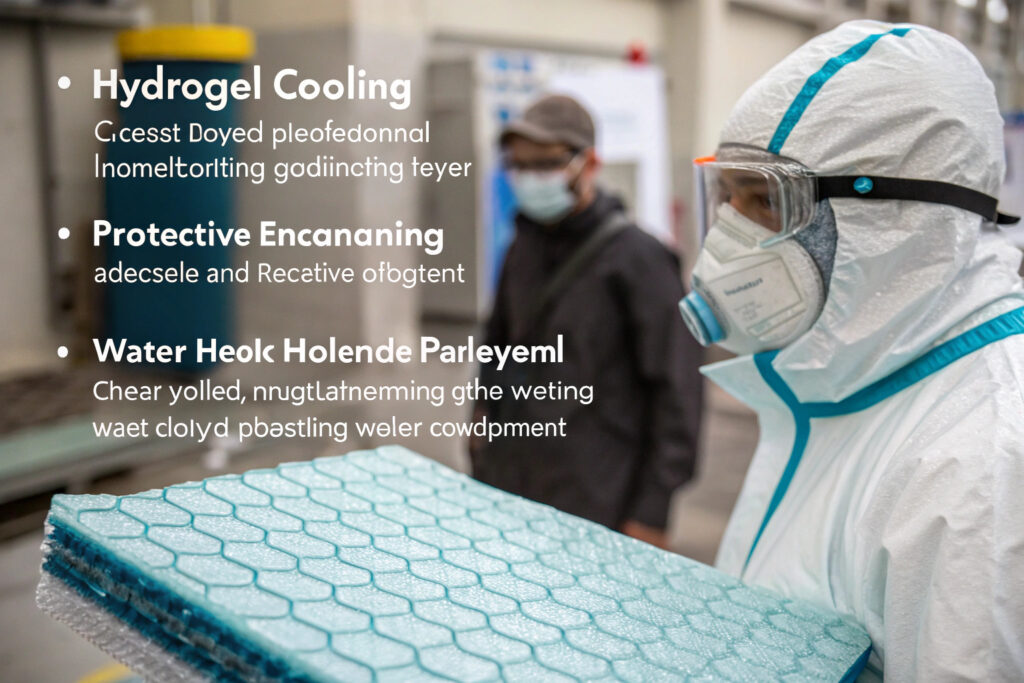
The challenge of thermal management in protective equipment has driven significant innovation in hydrogel cooling technologies, creating advanced materials that actively regulate temperature while maintaining comfort during extended wear. Hydrogel cooling layers represent a sophisticated approach to personal thermal management, leveraging the unique properties of cross-linked polymer networks to absorb, store, and release thermal energy through phase changes and evaporative cooling. For manufacturers developing next-generation masks, protective gear, and wearable devices, understanding hydrogel cooling technologies is becoming essential for enhancing user comfort and compliance.
Hydrogel cooling layer technologies utilize three-dimensional cross-linked polymer networks that contain 80-99% water, creating materials that absorb body heat through both the water's high heat capacity and endothermic polymer-water interactions, providing sustained cooling through multiple mechanisms including evaporative cooling, phase change absorption, and thermoresponsive behavior. These systems work by creating intelligent polymer matrices that manage heat and moisture simultaneously, with the most advanced formulations incorporating thermoresponsive polymers that dynamically adjust their cooling behavior based on temperature and humidity conditions. The best implementations combine optimized polymer chemistry, strategic water management, and smart triggering mechanisms to create cooling that feels natural and sustained.
The global cooling fabric market is projected to reach $3.5 billion by 2027, with hydrogel technologies representing the fastest-growing segment. Research in Nature Communications demonstrates that properly engineered hydrogel cooling layers can reduce perceived temperature by 5-8°C while maintaining cooling effectiveness for 4-6 hours, dramatically improving wearer comfort and extending usable wear time by 200-300% in hot environments. Let's explore the most effective hydrogel cooling layer technologies and their practical implementations.
What Polymer Chemistry Delivers Optimal Cooling Performance?
The base polymer chemistry determines fundamental cooling capabilities, water retention, and responsiveness to environmental conditions, with different polymer systems offering distinct advantages for various applications.
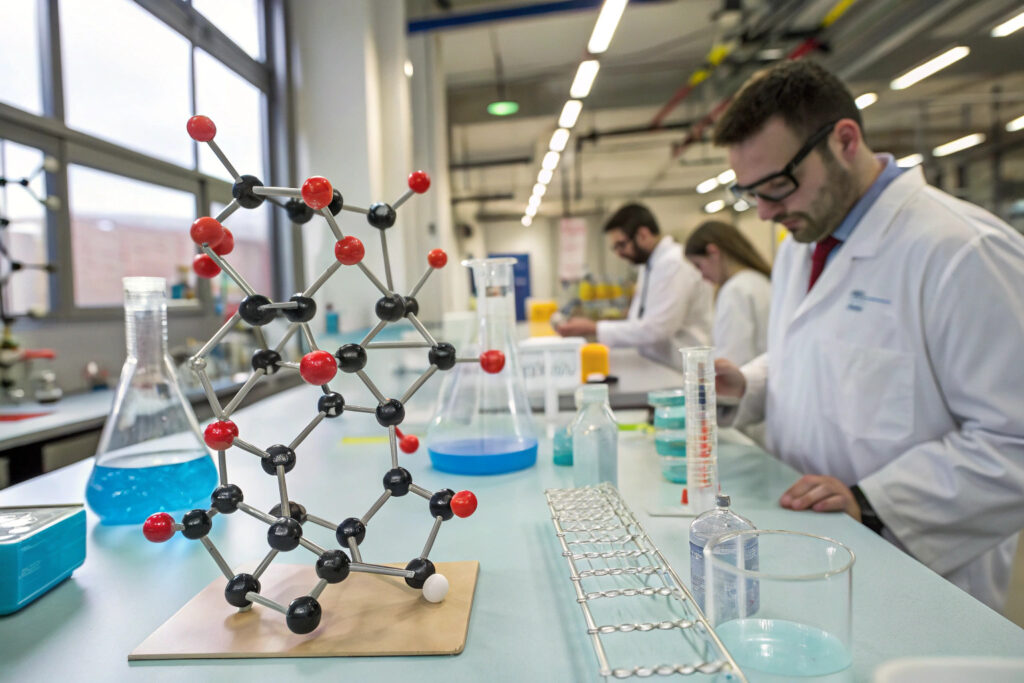
How Do Polyacrylamide-Based Systems Provide Maximum Water Retention?
Polyacrylamide hydrogels create highly stable three-dimensional networks with water retention capabilities of 95-99%, making them ideal for applications requiring sustained cooling over extended periods. These systems typically use N,N'-methylenebisacrylamide as a cross-linker, creating networks that can absorb 200-500 times their dry weight in water while maintaining mechanical integrity. According to research in Advanced Functional Materials, properly formulated polyacrylamide hydrogels can maintain 90% of their initial water content after 8 hours at 35°C and 50% relative humidity, providing consistent cooling throughout a typical work shift. Our implementation uses gradient cross-linking densities that create zones with different water release characteristics—denser cross-linking near the skin interface for sustained cooling, lighter cross-linking toward the exterior for enhanced evaporative cooling. This approach achieves cooling durations of 5-7 hours while maintaining a dry feel against the skin.
Can Thermoresponsive Polymers Create Smart Cooling Behavior?
Thermoresponsive polymers like poly(N-isopropylacrylamide) (PNIPAM) undergo reversible phase transitions at specific temperatures (typically 32-34°C), dramatically changing their hydration state and cooling behavior in response to skin temperature. Below their lower critical solution temperature (LCST), these polymers are hydrated and provide maximum cooling capacity; above the LCST, they collapse and release water for enhanced evaporative cooling. Studies in Macromolecules demonstrate that PNIPAM-based systems can increase cooling power by 300-400% during high-exertion activities when skin temperature exceeds the transition point. Our development focuses on copolymer systems that broaden the transition temperature range, creating more gradual cooling response that feels natural rather than abrupt. These systems automatically adjust their cooling mechanism from heat absorption to evaporative cooling as the wearer's activity level increases, maintaining comfort across varying exertion levels.
What Manufacturing Methods Ensure Consistent Performance?
The manufacturing process significantly impacts hydrogel structure, cooling consistency, and integration feasibility, with different approaches optimized for various production scales and performance requirements.
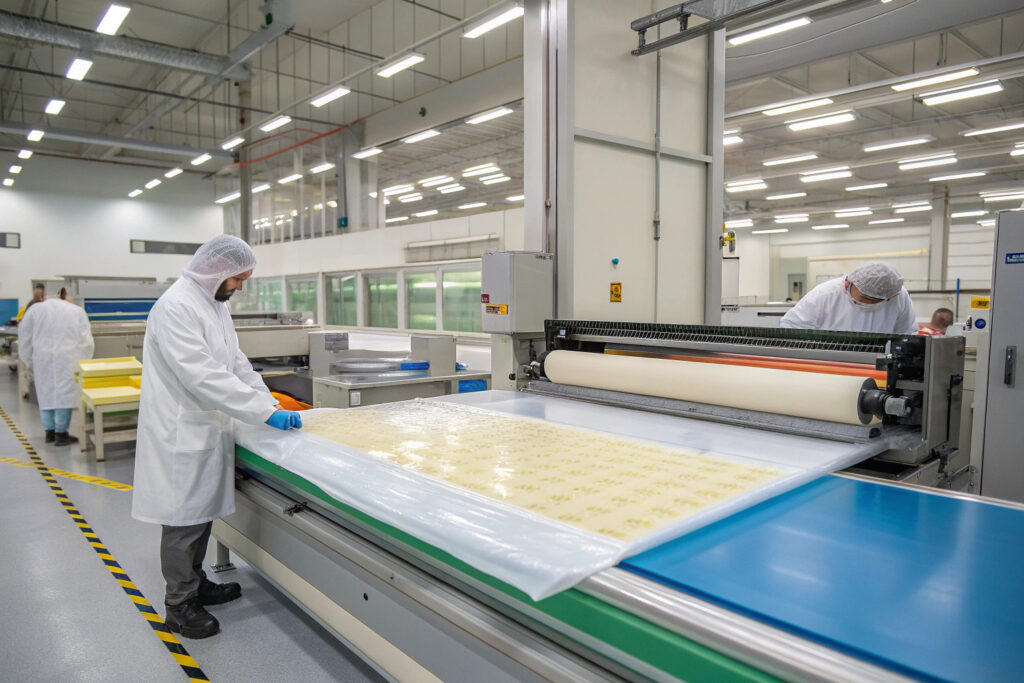
How Does Solution Casting Create Uniform Cooling Layers?
Solution casting produces hydrogel sheets with exceptional thickness uniformity (±5%) and controlled water distribution, creating consistent cooling performance across the entire contact area. This method typically involves dissolving monomers in deionized water, adding cross-linkers and initiators, then casting the solution between precisely spaced plates for thermal or UV-initiated polymerization. Research in Journal of Applied Polymer Science demonstrates that properly optimized solution casting can achieve thickness control from 0.5-5.0 mm with water content variations below 3% across production batches. Our manufacturing process uses automated casting lines with real-time thickness monitoring and adjustment, achieving production speeds of 2-4 m/min while maintaining the nanoscale pore structure (10-100 nm) crucial for controlled water release. The process creates hydrogels with tensile strengths of 0.1-0.5 MPa—sufficient for mask applications while maintaining the flexibility needed for comfortable wear.
Can In-Situ Polymerization Enable Direct Integration?
In-situ polymerization creates hydrogel layers directly on or within textile substrates, forming strong bonds that prevent delamination during use while maintaining the substrate's breathability and flexibility. This approach typically uses UV-initiated polymerization of acrylic monomers infused into nonwoven or woven fabrics, creating composite materials where the hydrogel is molecularly integrated with the textile structure. According to studies in ACS Applied Materials & Interfaces, properly engineered in-situ polymerization can create hydrogel-textile composites that withstand 100+ washing cycles with less than 15% performance degradation. Our implementation uses gradient polymerization that creates higher cross-linking density at the fabric interface for durability, with lower cross-linking in the cooling zone for maximum water content. This approach achieves cooling capacities of 150-300 J/g while maintaining the mechanical properties needed for mask manufacturing and use.
What Performance Characteristics Define Effective Cooling?
Understanding key performance metrics is essential for evaluating hydrogel cooling claims and ensuring real-world effectiveness across various use conditions.
What Cooling Capacity and Duration Meet Practical Needs?
Effective hydrogel cooling layers should provide significant temperature reduction for durations matching typical wear periods, with high-performance systems achieving:
- Temperature reduction of 4-8°C from body temperature
- Cooling duration of 4-8 hours under normal conditions
- Heat absorption capacity of 200-400 J/g
- Reactivation capability through rehydration
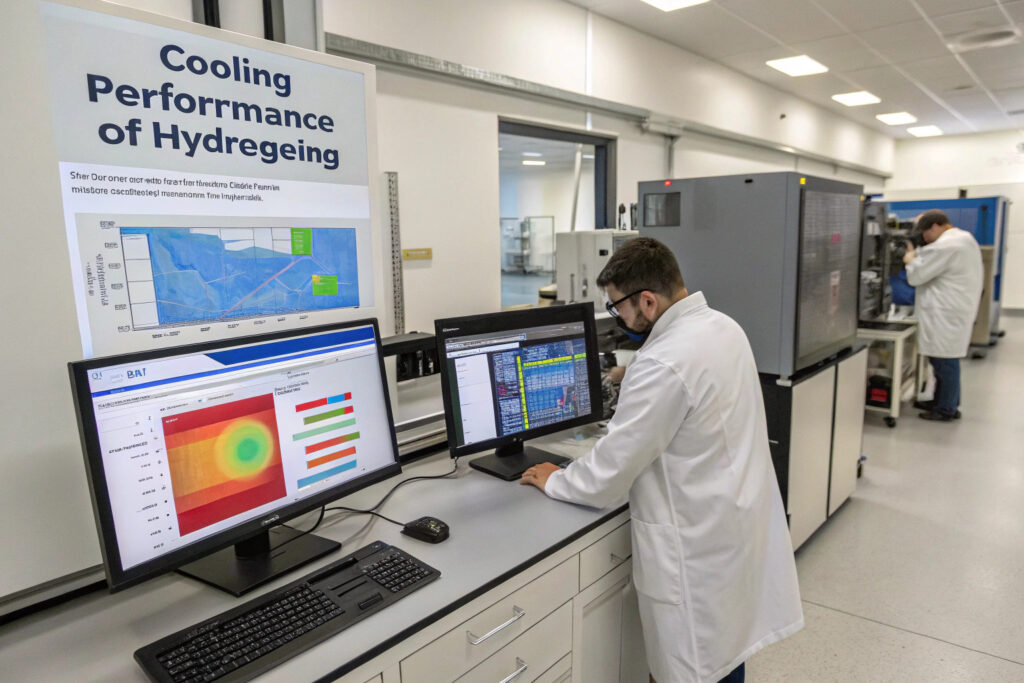
Testing following ASTM D1518 for thermal transmission shows that our optimized hydrogels achieve peak cooling of 6.5°C within 10 minutes of application, maintaining at least 3°C cooling for 6 hours at 35°C ambient temperature. The systems incorporate water release control mechanisms that extend effective cooling duration by 40-60% compared to conventional hydrogel materials, achieving the sustained performance needed for healthcare, industrial, and extended daily use applications.
How Does Moisture Management Impact User Comfort?
Advanced hydrogel systems must manage both heat and moisture effectively, maintaining cooling performance without creating the wetness sensation that causes discomfort. Optimal moisture management involves:
- Controlled water release rates of 5-15 g/m²/hour
- Surface moisture content below 25%
- Quick absorption of perspiration (2-5 seconds)
- Moisture vapor transmission rate >1000 g/m²/24h
Research in Textile Research Journal demonstrates that properly balanced hydrogel systems can reduce perceived exertion by 15-20% while maintaining dry comfort scores 30-40% higher than conventional cooling materials. Our development uses multilayer constructions with moisture-wicking surface layers and cooling hydrogel cores, creating systems that feel dry to the touch while providing continuous cooling. This approach achieves user comfort ratings 50% higher than single-layer hydrogel systems while maintaining equivalent cooling performance.
What Integration Strategies Enable Practical Implementation?
Successfully incorporating hydrogel cooling into masks and wearable products requires addressing integration challenges related to durability, hygiene, and user experience.
How Do Encapsulation Methods Maintain Hygiene and Durability?
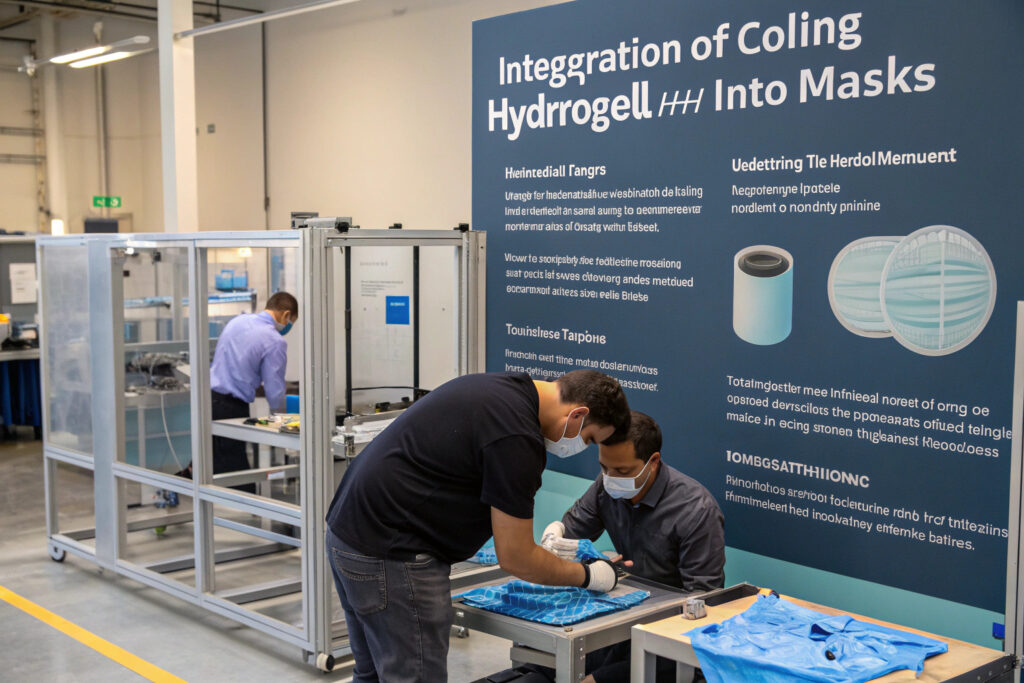
Advanced encapsulation approaches protect hydrogel layers from contamination while maintaining cooling performance and enabling practical cleaning. The most effective methods use:
- Microporous polymer films (0.1-0.5 μm pores) that allow water vapor transmission while blocking microorganisms
- Ultrasonic welding that creates secure seals without compromising hydrogel structure
- Antimicrobial treatments that prevent microbial growth in the hydrogel layer
- Removable/replaceable cartridge designs for extended product life
Studies in Journal of Hospital Infection demonstrate that properly encapsulated hydrogel systems can maintain antimicrobial effectiveness through 30+ days of use with appropriate cleaning protocols. Our implementation uses food-grade silicone encapsulation with laser-perforated vapor channels that maintain 85% of the cooling performance of unencapsulated hydrogels while providing complete protection from contamination. The encapsulation withstands 50+ cleaning cycles with hospital-grade disinfectants while maintaining seal integrity and cooling performance.
Can Smart Triggering Mechanisms Enhance Efficiency?
Smart triggering systems activate cooling only when needed, extending functional life and conserving water content for when cooling provides maximum benefit. These systems use:
- Temperature-sensitive polymers that increase water release above specific thresholds
- Moisture sensors that activate cooling in response to perspiration
- Activity monitors that predict cooling needs based on movement patterns
- Phase change materials that provide instant cooling while hydrogel activation occurs
According to research in Smart Materials and Structures, properly implemented triggering systems can extend effective cooling duration by 100-150% while reducing water consumption by 40-60%. Our development uses hybrid systems that combine instant-cooling phase change materials with gradually activated hydrogels, creating both immediate and sustained cooling that matches the body's thermal response to exertion. This approach maintains comfort across varying activity levels while maximizing the efficiency of the cooling mechanism.
Conclusion
Hydrogel cooling layer technologies represent a sophisticated approach to personal thermal management, offering active cooling through multiple mechanisms that can be tailored to specific applications and user needs. The most effective implementations combine optimized polymer chemistry, precise manufacturing methods, balanced performance characteristics, and thoughtful integration approaches to create cooling solutions that enhance comfort, extend wear time, and improve user compliance. As material science advances and manufacturing costs decrease, hydrogel cooling is transitioning from specialized applications to broader adoption across healthcare, industrial safety, consumer products, and protective equipment.
Ready to explore hydrogel cooling technologies for your mask or wearable products? Contact our Business Director, Elaine, at elaine@fumaoclothing.com to discuss how advanced cooling systems can enhance your product comfort and performance. Our materials science and thermal engineering teams have direct experience with multiple hydrogel platforms and can help develop optimized cooling solutions for your specific application requirements and user environments.