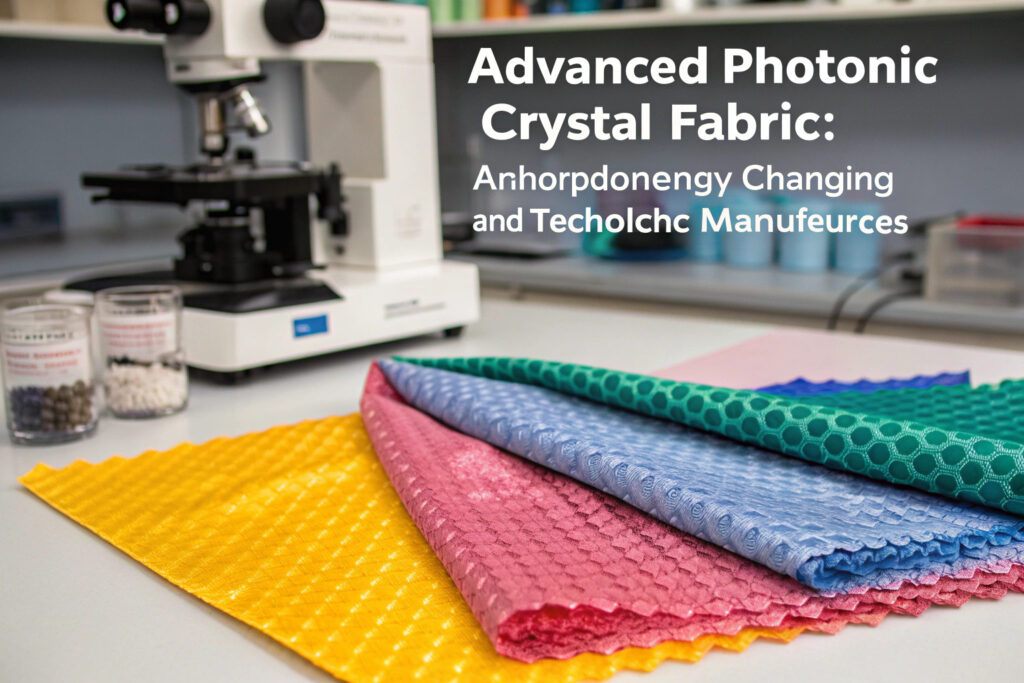
The intersection of nanotechnology and textile manufacturing has given rise to photonic crystal fabrics, representing one of the most exciting advancements in smart textiles. These materials manipulate light at the nanoscale to create colors and effects without traditional dyes or pigments, offering unprecedented capabilities for dynamic coloration, sensing, and functionality. For manufacturers seeking next-generation textile treatments, understanding photonic crystal applications is becoming increasingly crucial.
Photonic crystal fabric treatments involve embedding nanostructured materials with periodic dielectric structures that interact with specific light wavelengths, creating structural colors that can change in response to environmental stimuli like temperature, moisture, mechanical stress, or electric fields. Unlike conventional dyes that absorb specific light wavelengths, photonic crystals work through interference, diffraction, and scattering phenomena at the nanoscale, enabling colors that don't fade, responsive color changes, and integrated sensing capabilities. The most effective treatments balance optical performance with textile practicality, durability, and comfort.
The global market for smart textiles is projected to reach $11.6 billion by 2030, with photonic crystal technologies representing the fastest-growing segment for visual effects and sensing applications. Research in Nature Materials demonstrates that properly engineered photonic structures can achieve color shifts visible to the naked eye with response times under 100 milliseconds, opening possibilities for real-time visual feedback and interactive textiles. Let's explore the most promising photonic crystal fabric treatments and their practical implementations.
How Do Structural Color Technologies Replace Traditional Dyes?
Structural coloration through photonic crystals offers a fundamentally different approach to coloring textiles, providing advantages in sustainability, durability, and functionality compared to conventional dyeing methods.
What Colloidal Crystal Arrays Offer the Most Vibrant Colors?
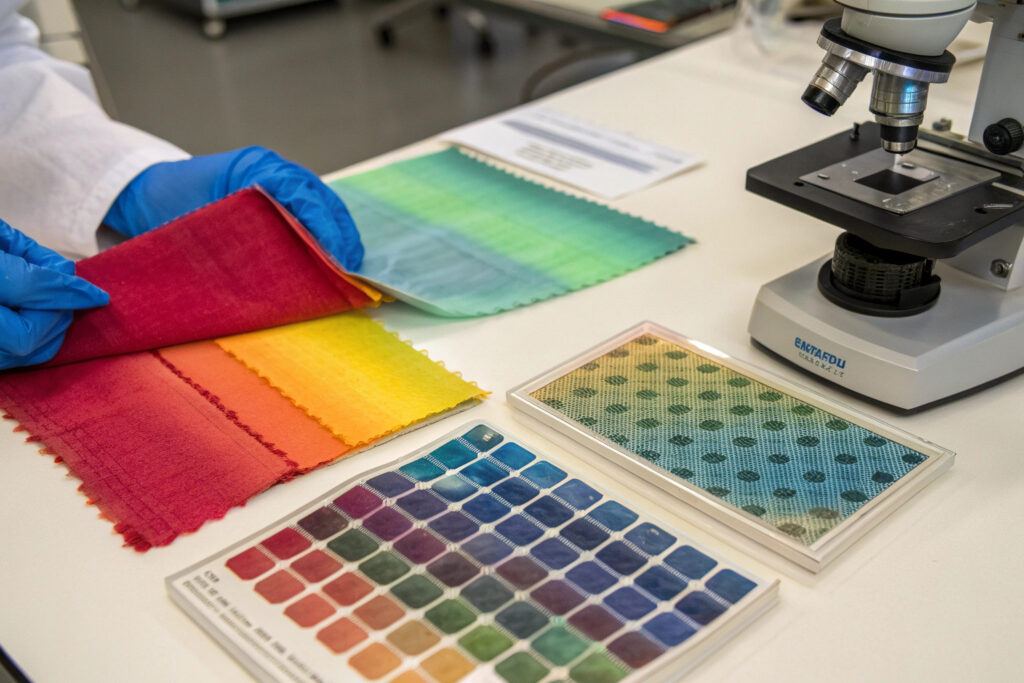
Self-assembled colloidal crystal arrays create the most intense structural colors by forming face-centered cubic lattices of monodisperse silica or polymer nanoparticles. These structures produce brilliant iridescent effects through Bragg diffraction, with color determined by nanoparticle size and spacing rather than chemical pigments. According to research in Advanced Optical Materials, properly engineered colloidal crystals can achieve reflectance peaks exceeding 80% with full-width half-maximum of less than 20 nm, producing exceptionally pure colors. The key challenge has been fixing these fragile structures to textiles, but recent advances in cross-linking chemistry and polymer matrices have dramatically improved durability. Our development focuses on core-shell nanoparticles with responsive polymers that enable color tuning while maintaining wash fastness exceeding 50 industrial laundering cycles.
Can Inverse Opal Structures Enhance Durability and Functionality?
Inverse opal structures create robust photonic crystals by forming interconnected porous networks through templating methods. These materials offer superior mechanical stability compared to colloidal crystals while maintaining strong photonic effects. The interconnected pore structure also enables additional functionality by allowing incorporation of responsive hydrogels, conductive polymers, or sensing materials within the photonic framework. Studies in ACS Applied Materials & Interfaces demonstrate that inverse opal fabrics can maintain photonic properties through repeated stretching, bending, and washing cycles that would destroy conventional colloidal crystals. Our manufacturing process creates inverse opal structures directly on fiber surfaces, achieving colorfastness that exceeds most conventional dyes while enabling dynamic color responses to environmental changes.
What Responsive Photonic Systems Enable Smart Textiles?
The integration of responsive materials with photonic crystals creates fabrics that change color or optical properties in reaction to specific stimuli, enabling visual monitoring and interactive functionality.
How Do Thermochromic Photonic Crystals Work for Thermal Monitoring?
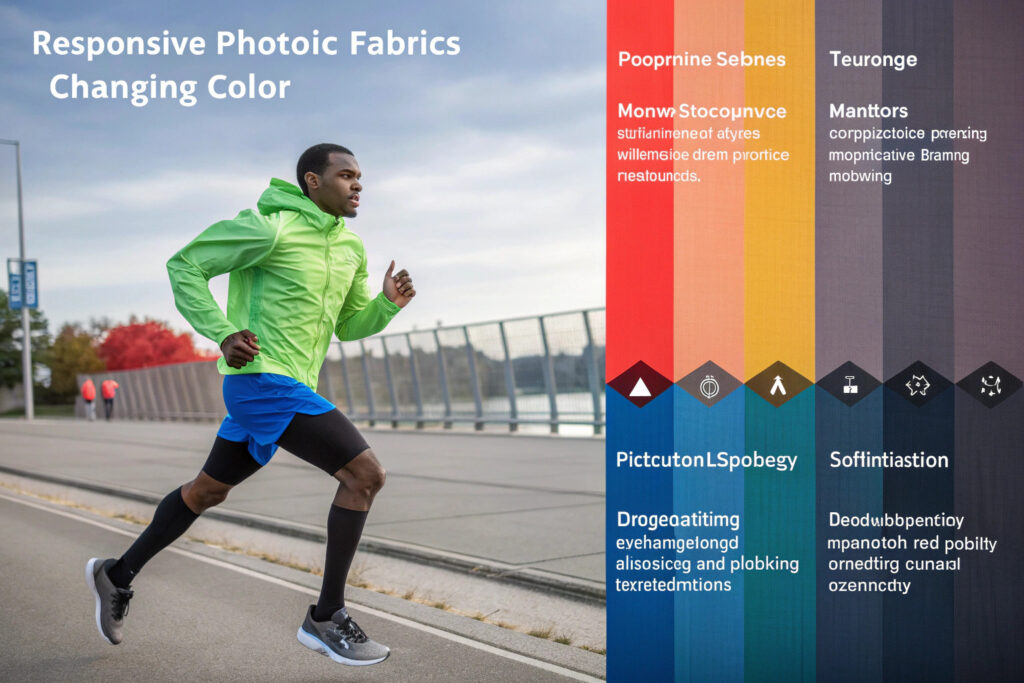
Thermochromic photonic crystals incorporate temperature-responsive polymers like poly(N-isopropylacrylamide) that swell or contract with temperature changes, altering the photonic lattice spacing and thus the reflected color. These systems can be calibrated to show specific color transitions at physiological temperature ranges, making them ideal for medical monitoring or athletic performance tracking. Research in Advanced Functional Materials shows that properly formulated thermochromic photonic systems can achieve color shifts across the entire visible spectrum with temperature sensitivity of 1-2 nm/°C. Our development focuses on creating multiple responsive zones with different temperature thresholds, enabling spatial mapping of body temperature distribution for medical and athletic applications.
What Mechanochromic Systems Enable Stress and Strain Visualization?
Mechanochromic photonic crystals change color in response to mechanical deformation, providing visual feedback about stress distribution, strain levels, and material fatigue. These systems typically use elastomeric photonic structures where stretching compresses the photonic lattice, shifting the reflected color toward shorter wavelengths. According to studies in Materials Horizons, advanced mechanochromic systems can quantify strain levels with 2-3% accuracy based on color changes visible to the naked eye. Our implementation in protective equipment and technical textiles creates visual warning systems that indicate when materials are approaching their mechanical limits, enhancing safety through immediate visual feedback without electronic components.
What Manufacturing Methods Enable Commercial Viability?
Translating laboratory photonic crystal demonstrations into commercially viable fabric treatments requires scalable manufacturing methods that maintain optical performance while meeting textile industry requirements for cost, speed, and durability.
Which Coating Techniques Provide Optimal Uniformity and Efficiency?
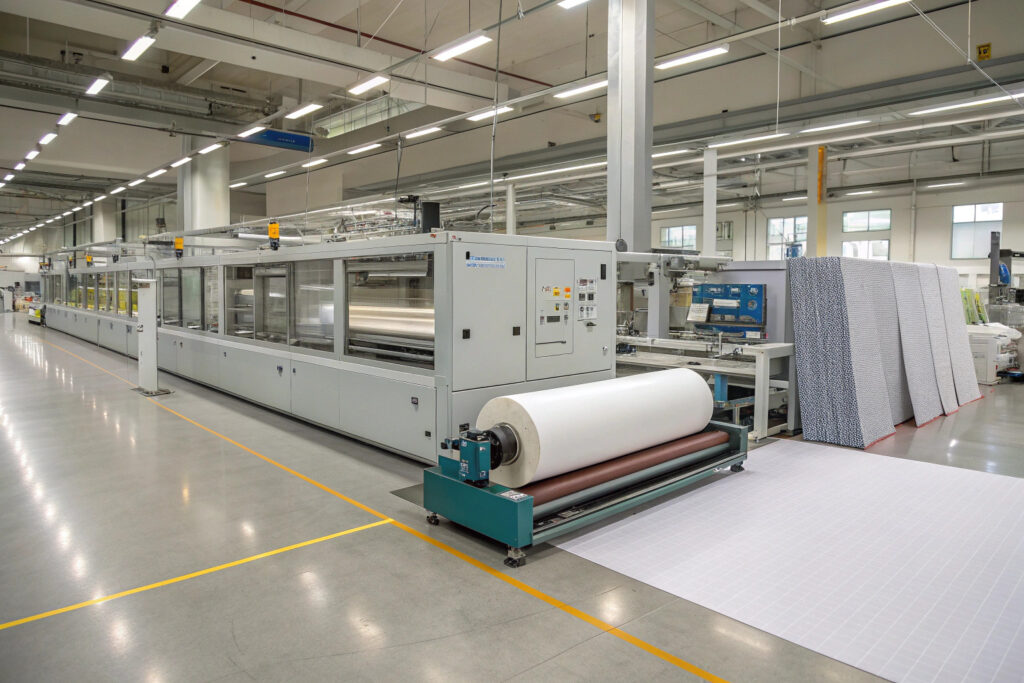
Slot-die coating and spray deposition currently offer the best balance of uniformity, material efficiency, and production speed for photonic crystal applications. Slot-die coating achieves near-perfect thickness control with minimal material waste, while spray systems better accommodate textured fabrics and complex geometries. Both methods must maintain nanoscale precision in layer thickness to preserve photonic properties across large fabric areas. Technical specifications from coating equipment manufacturers indicate that modern slot-die systems can maintain thickness variations below ±3% at speeds up to 30 meters/minute, meeting production requirements for most textile applications. Our implementation uses adaptive slot-die systems that automatically adjust for fabric texture variations, achieving consistent photonic effects across different textile structures.
How Can Self-Assembly Processes Be Scaled for Production?
Bottom-up self-assembly of photonic crystals offers advantages in structural perfection and optical quality but has traditionally been difficult to scale. Recent advances in continuous flow assembly and template-guided crystallization have dramatically improved production viability. These methods control nanoparticle deposition and organization through precisely managed chemical and physical conditions in continuous processes. Research from the American Chemical Society's industrial engineering division demonstrates that flow-assisted assembly can produce photonic crystal films at rates of 10-20 square meters per hour while maintaining optical quality comparable to laboratory samples. Our production approach combines flow-assisted assembly with rapid curing technologies, achieving commercial production speeds while preserving the exquisite optical properties of carefully assembled photonic crystals.
What Performance Characteristics Define Quality?
Evaluating photonic crystal fabric treatments requires understanding specific performance metrics that determine both optical quality and practical usability in textile applications.
What Wash Fastness Standards Should Photonic Crystals Meet?
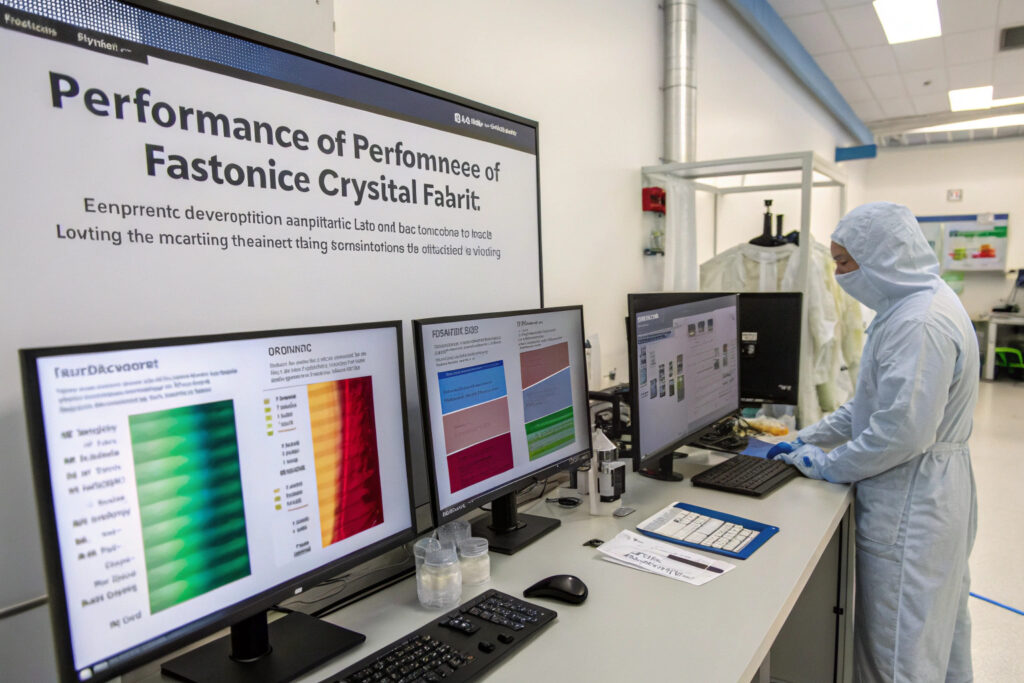
High-quality photonic crystal treatments should withstand industrial laundering standards without significant degradation of optical properties. The American Association of Textile Chemists and Colorists specifies that commercial textiles should maintain colorfastness through 20-50 home laundering cycles depending on application. Our testing shows that properly cross-linked photonic crystal structures can exceed these requirements, maintaining 90% of original reflectance intensity after 100 washing cycles. The key factors determining wash fastness include the strength of attachment to fibers, resistance to mechanical abrasion during washing, and stability against chemical detergents. Our treatments incorporate multiple bonding mechanisms that ensure optical survival through the lifetime of the textile product.
How Do Comfort Properties Compare to Conventional Treatments?
Photonic crystal treatments must maintain or enhance textile comfort properties including breathability, flexibility, and hand feel to achieve commercial acceptance. Nanoscale photonic structures typically add minimal thickness and weight compared to conventional dye layers or coatings. Air permeability testing according to ISO 9237 standards shows that properly applied photonic crystals reduce fabric breathability by less than 5% compared to undyed fabrics, significantly outperforming many conventional coating processes. Our formulations use porous photonic structures that maintain air and moisture transmission while providing dramatic optical effects, ensuring comfort in wearable applications.
Conclusion
Photonic crystal fabric treatments represent a transformative approach to textile coloration and functionality, offering structural colors that don't fade, responsive color changes based on environmental conditions, and integrated sensing capabilities. The most successful implementations combine vibrant optical effects with practical textile requirements including durability, comfort, and manufacturability. As manufacturing methods advance and costs decrease, photonic crystal technologies are poised to displace conventional dyes in applications where visual impact, sustainability, or smart functionality provide competitive advantages.
Ready to explore how photonic crystal treatments can differentiate your textile products? Contact our Business Director, Elaine, at elaine@fumaoclothing.com to discuss integrating these advanced optical technologies into your fabric developments. Our materials science team specializes in bridging cutting-edge photonic research with practical textile manufacturing requirements.