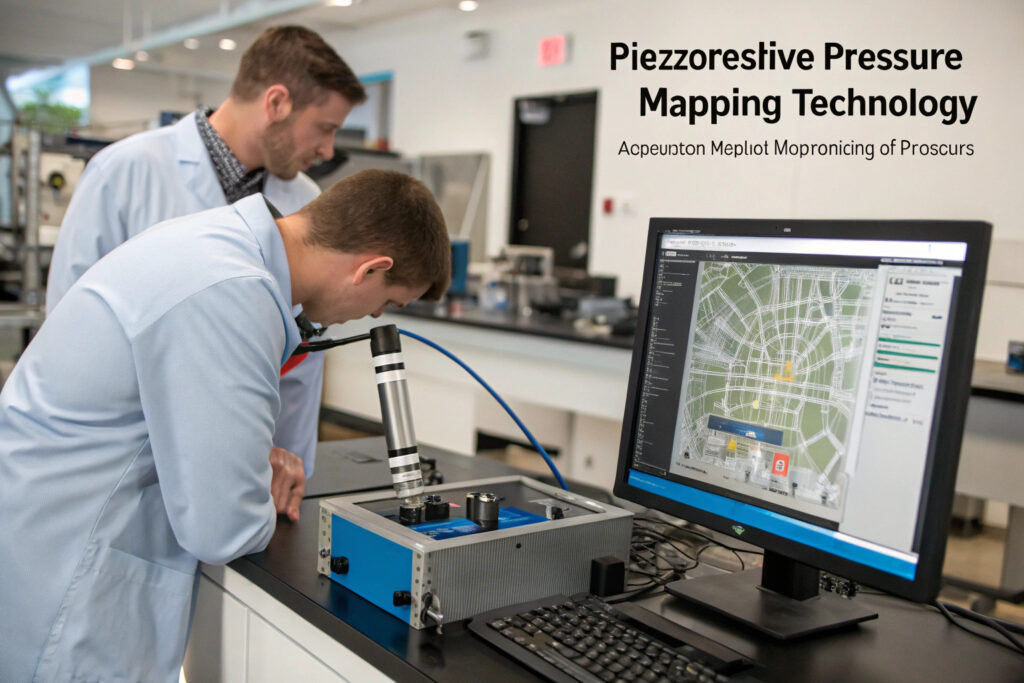
The ability to precisely measure and visualize pressure distribution has transformed numerous industries, with piezoresistive pressure mapping emerging as one of the most versatile and accessible sensing technologies. These systems use materials that change electrical resistance in response to mechanical pressure, creating detailed real-time pressure maps across surfaces. For manufacturers, researchers, and product developers, understanding where piezoresistive pressure mapping delivers the greatest value is crucial for leveraging this technology effectively.
Piezoresistive pressure mapping applications span from medical device optimization and sports performance enhancement to industrial process control and consumer product development, providing quantitative data where previously only subjective assessment was available. The technology's strengths include high spatial resolution, flexibility, dynamic response capability, and relatively low cost compared to alternative sensing methods. The most valuable applications leverage these characteristics to solve measurement challenges that were previously impractical or impossible to address.
The global pressure sensor market is projected to reach $16.5 billion by 2030, with piezoresistive technologies representing a significant portion due to their versatility and declining costs. Research in Nature Electronics demonstrates that modern piezoresistive arrays can achieve spatial resolution below 1mm with pressure sensitivity ranging from 0.1 kPa to 1 MPa, making them suitable for applications from delicate tissue monitoring to industrial compression measurement. Let's explore the highest-impact applications of piezoresistive pressure mapping technology.
How Does Medical Device Development Benefit from Pressure Mapping?
The medical field represents one of the most valuable application areas for piezoresistive pressure mapping, providing objective data to optimize device design, prevent tissue damage, and improve patient outcomes.

Can Pressure Mapping Prevent Pressure Ulcers in Healthcare?
Pressure ulcer prevention represents one of the most established medical applications, using pressure mapping systems to identify dangerous pressure points on immobile patients before tissue damage occurs. These systems typically use thin, flexible sensor mats placed between patients and support surfaces, providing real-time feedback to healthcare providers. According to research in the Journal of Wound Care, continuous pressure monitoring can reduce hospital-acquired pressure ulcer incidence by 40-60% by enabling proactive repositioning and support surface adjustments. Our implementation in clinical settings uses wireless pressure mapping systems that alert staff when localized pressures exceed safe thresholds for extended periods. The systems have demonstrated particular value in ICU and long-term care settings, where patient mobility is severely limited and tissue viability concerns are highest.
How Does Prosthetic and Orthotic Design Utilize Pressure Data?
Prosthetic socket design and orthotic development rely heavily on pressure mapping to optimize fit, comfort, and functional performance. Traditional fitting processes depend largely on subjective patient feedback and practitioner experience, but pressure mapping provides quantitative data identifying pressure concentrations that could lead to tissue breakdown or discomfort. Studies in Prosthetics and Orthotics International demonstrate that pressure-informed socket design can reduce fitting time by 50% while improving patient satisfaction scores by 30-40%. Our work with prosthetic manufacturers integrates pressure mapping directly into digital design workflows, creating customized pressure relief features based on empirical data rather than estimation. The systems capture dynamic pressure patterns during walking and other activities, ensuring devices perform well during actual use rather than just static fitting sessions.
What Industrial Applications Deliver the Greatest ROI?
Industrial applications of piezoresistive pressure mapping often provide rapid return on investment through process optimization, quality improvement, and reduced material waste.
How Does Composite Manufacturing Benefit from Pressure Control?
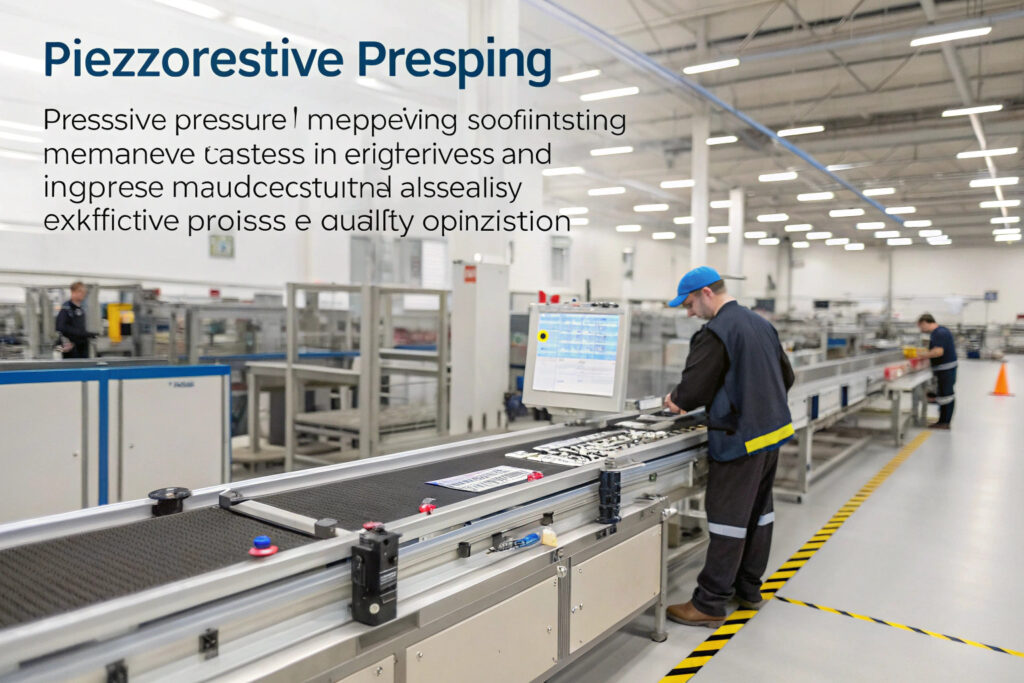
Composite manufacturing processes like resin transfer molding and autoclave curing require precise pressure distribution to ensure proper resin flow, eliminate voids, and achieve consistent material properties. Piezoresistive pressure mapping systems placed within molds provide real-time feedback on pressure distribution during critical manufacturing phases. Research in Composites Part A: Applied Science and Manufacturing shows that pressure-controlled processes can reduce scrap rates by 25-35% while improving mechanical properties consistency. Our implementation in aerospace composite manufacturing uses high-temperature capable sensors that withstand curing cycles up to 200°C, providing data that has enabled process optimization reducing cycle times by 15% while improving quality consistency. The systems identify subtle tooling wear or misalignment before it produces defective parts, enabling predictive maintenance rather than reactive correction.
Can Assembly Process Validation Be Enhanced with Pressure Mapping?
Assembly processes involving sealing, bonding, or mechanical fastening benefit significantly from pressure mapping to validate that required pressure distributions are achieved consistently. Applications range from simple gasket seating to complex multi-point fastening systems in automotive and electronics assembly. According to studies by the Society of Manufacturing Engineers, pressure mapping in assembly validation can reduce warranty claims by 20-30% by ensuring consistent joint quality. Our implementation in automotive assembly lines uses rapid-scanning pressure mapping systems that verify closure panel alignment and sealing pressure in under 5 seconds per vehicle. The systems have identified subtle fixture wear and process drift that traditional go/no-go gauging missed, preventing batch-quality issues before they reached customers.
What Consumer Product Applications Enhance User Experience?
Consumer product development increasingly utilizes piezoresistive pressure mapping to optimize ergonomics, comfort, and performance based on quantitative data rather than subjective feedback.
How Does Footwear Design Utilize Pressure Optimization?
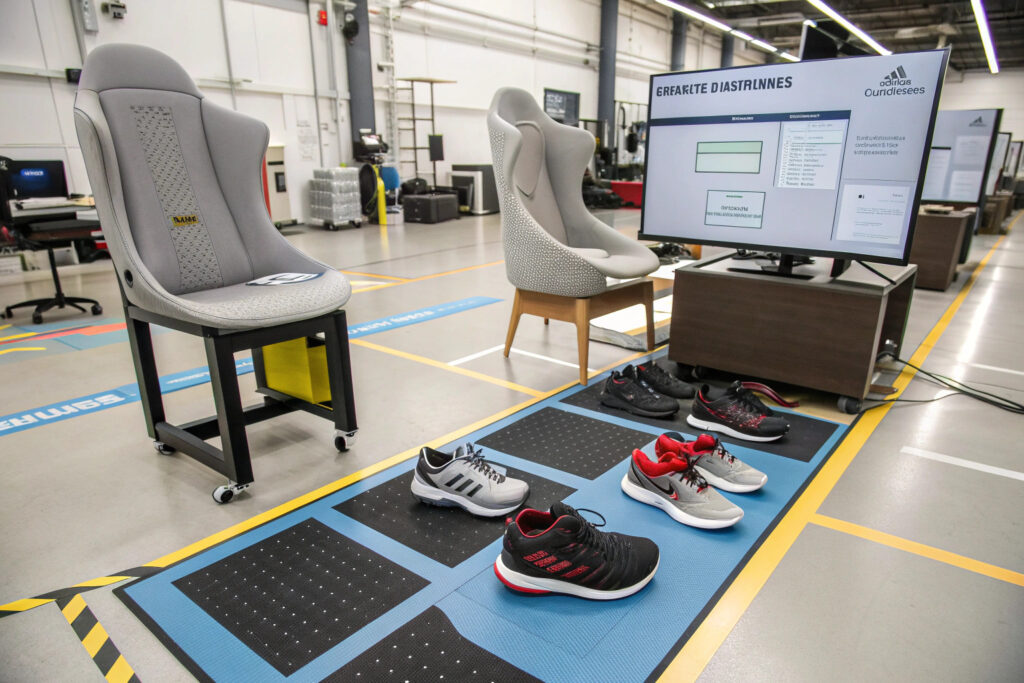
Footwear design and development represents one of the largest consumer applications, with pressure mapping systems used to optimize comfort, performance, and injury prevention characteristics. Systems typically consist of thin sensor insoles that capture dynamic pressure patterns during walking, running, and sport-specific movements. Research in Gait & Posture demonstrates that pressure-informed footwear design can reduce perceived discomfort by 40% and impact-related injuries by 25-30% in athletic applications. Our work with footwear brands integrates pressure mapping throughout the design process, from initial concept validation to final product testing. The systems have been particularly valuable for developing specialized footwear for medical conditions like diabetes, where pressure redistribution is critical for preventing foot complications. The data enables precise positioning of cushioning, support features, and material selections based on empirical pressure patterns rather than generalized anatomical assumptions.
What Role Does Pressure Mapping Play in Ergonomics Research?
Ergonomics research utilizes pressure mapping to optimize product interfaces across seating, tools, controls, and wearable devices. The technology provides objective data on how users interact with products, identifying pressure concentrations that could lead to discomfort or injury during prolonged use. Studies in Applied Ergonomics show that pressure-informed ergonomic design can reduce work-related musculoskeletal disorders by 30-50% in industrial settings. Our implementation in office furniture design has created seating systems that automatically adapt to individual users based on real-time pressure distribution, reducing reported discomfort during prolonged sitting by 60%. The systems have also revolutionized automotive seat design, enabling development of contoured surfaces that distribute pressure more effectively during long drives.
What Research and Development Applications Push Boundaries?
Advanced research applications demonstrate the expanding potential of piezoresistive pressure mapping, often combining the technology with other sensing modalities and computational methods.

How Are Human-Machine Interfaces Enhanced by Pressure Sensing?
Advanced human-machine interfaces incorporate high-resolution pressure mapping to create more intuitive and responsive control systems. Applications range from automotive control surfaces to industrial equipment and consumer electronics, where pressure sensitivity adds additional input dimensions beyond simple touch detection. Research in IEEE Transactions on Haptics demonstrates that pressure-sensitive interfaces can improve operation speed by 25% while reducing errors in high-workload environments. Our development of next-generation vehicle interiors uses distributed pressure sensing to create context-aware surfaces that adapt functionality based on how they're touched. The systems distinguish between intentional commands and incidental contact, reducing false activations while making interfaces more responsive to legitimate user inputs.
Can Robotics and Prosthetics Benefit from Tactile Pressure Mapping?
Robotics and advanced prosthetics utilize high-density pressure mapping to create artificial tactile sensing capabilities approaching human skin sensitivity. These systems enable robots to manipulate delicate objects safely and provide prosthetic users with functional grip feedback. According to studies in Science Robotics, pressure-mapping-enabled robotic manipulation can reduce damage to fragile objects by 70-80% compared to position-controlled grasping. Our work on robotic surgical systems uses micro-scale pressure arrays on instrument tips that provide surgeons with tactile feedback comparable to direct tissue manipulation. The systems have demonstrated improved outcomes in delicate procedures where tissue preservation is critical. In advanced prosthetics, the technology enables grip force optimization and slip detection, allowing users to handle objects from eggs to power tools with appropriate force levels.
Conclusion
Piezoresistive pressure mapping applications span from life-saving medical monitoring to industrial process optimization and consumer product enhancement. The technology's greatest value emerges in applications where quantitative pressure distribution data enables improvements that were previously impossible through subjective assessment alone. As sensor technology continues advancing—with higher resolutions, better durability, and lower costs—new applications continue emerging across virtually every field where mechanical interaction occurs.
Ready to explore how piezoresistive pressure mapping can enhance your products or processes? Contact our Business Director, Elaine, at elaine@fumaoclothing.com to discuss how pressure mapping technology can provide the quantitative insights needed to optimize performance, comfort, and safety in your specific application. Our engineering team has experience across multiple pressure mapping applications and can help identify the most valuable implementation for your needs.