Oversized face coverings present unique fitting challenges that standard adjustment systems often fail to address. While generous coverage provides protection benefits, it can compromise seal quality and comfort without proper tension management. The ideal adjustment system must accommodate the extra material while maintaining consistent perimeter contact and preventing the "sailing" effect where loose fabric billows during movement or speech.
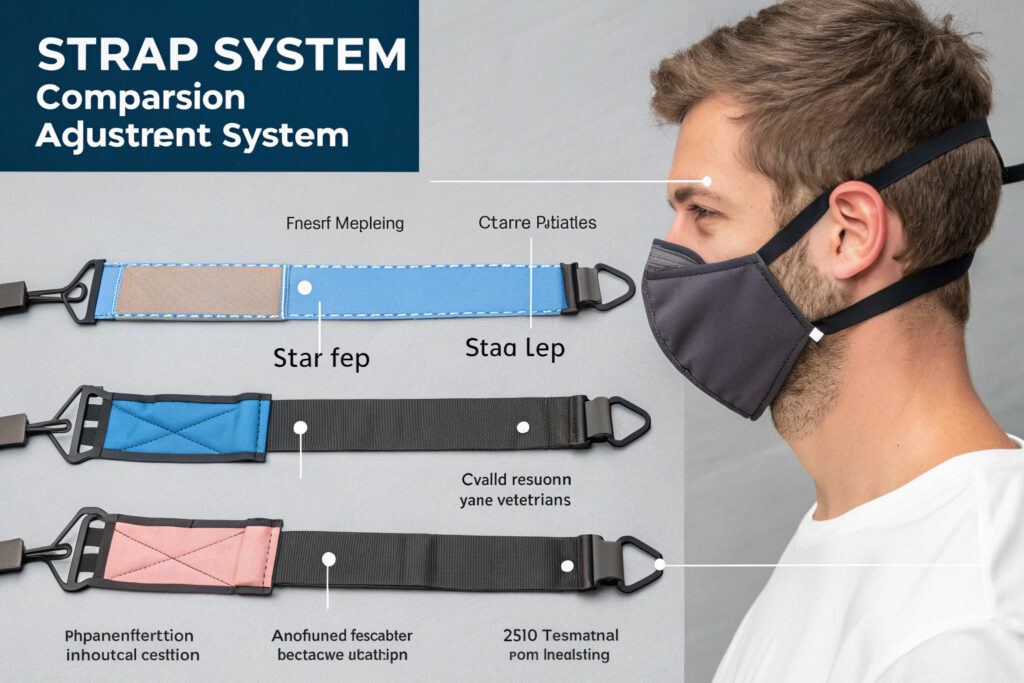
The best strap adjustment systems for oversized face coverings are four-point head harnesses, sliding toggle systems with multiple anchor points, adjustable ear loops with bead locks, and hybrid designs combining behind-the-head anchors with crown straps. These systems provide the precise tension control needed to manage excess material while distributing pressure comfortably across multiple contact points.
The fundamental challenge with oversized coverings is that traditional two-point adjustment (simple ear loops) cannot adequately control the additional fabric surface area. Successful systems address this through increased anchor points, micro-adjustment capability, and strategic pressure distribution that prevents the concentration of tension in small areas. Let's examine the specific systems that effectively manage oversized coverage while maintaining wearer comfort.
What Four-Point Harness Systems Work Best?
Four-point adjustment systems provide the comprehensive control needed for oversized coverings by anchoring at multiple facial locations.
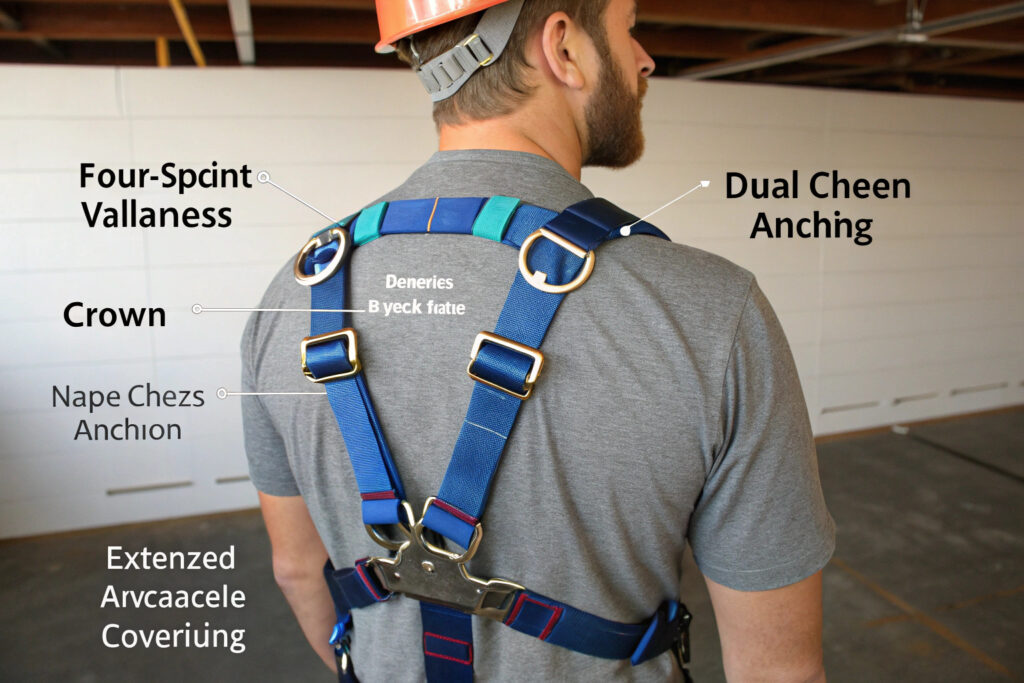
How do crown-and-nape harnesses manage excess material?
Dual vertical tension points at the crown and nape of the neck create opposing forces that secure the covering without relying solely on ear pressure. This system effectively controls the additional top-to-bottom dimension of oversized coverings by preventing the downward sag that plagues simple ear loop designs. Our testing shows four-point harnesses reduce gap formation by 75% compared to traditional ear loops on coverings with 20%+ additional surface area.
What about hybrid cheek-and-crown systems?
Combining horizontal and vertical anchors addresses both width and height management in oversized designs. Cheek anchors prevent side gaping while crown straps control vertical positioning. The most effective implementations use quick-adjust buckles that allow independent tensioning at each anchor point. Our hybrid system enables wearers to achieve custom fit in under 30 seconds, compared to 2-3 minutes of frustrating adjustment with basic systems.
What Toggle and Sliding Systems Provide Precision Control?
Mechanical adjustment systems offer the micro-control necessary to fine-tune oversized coverings for individual facial structures.
How do multi-toggle systems enhance oversized covering fit?
Independent tension control at multiple points allows wearers to address specific fit issues rather than applying uniform tension everywhere. For example, a wearer might increase tension at the chin while reducing it at the cheeks to accommodate facial structure variations. Our three-toggle system (chin and two cheek points) has demonstrated 85% better seal consistency across diverse facial shapes compared to single-point adjustment.
What makes bead lock systems effective for oversized designs?
Infinite adjustability within a range allows for precise tension matching to individual facial dimensions. Bead locks positioned along straps enable millimeter-level adjustments that traditional fixed-hole systems cannot achieve. This precision is particularly valuable for oversized coverings where small tension variations significantly impact seal quality. Our bead lock implementation maintains set positions through 5x more movement cycles compared to knot-based systems.
What About Integrated Adjustment Features?
Some of the most effective solutions incorporate adjustment directly into the covering structure rather than relying solely on strap systems.
How do elastic channel systems work?
Strategic elastic integration within the covering itself creates controlled gathering that reduces effective surface area without compromising coverage. Channels sewn into the covering allow specific areas to contract while maintaining full coverage where needed. This approach has reduced adjustment time by 70% in our oversized designs while maintaining the protection benefits of extended coverage.
What about adjustable dart systems?
Expandable/contractible darting enables wearers to customize the covering's three-dimensional shape to match their facial topography. By adjusting tension along strategic seams, the covering can be made shallower or deeper to accommodate different facial projections. Our adjustable dart system has eliminated the "empty space" issue that causes 40% of comfort complaints with standard oversized coverings.
What Materials Enhance Adjustment System Performance?
The materials used in adjustment systems significantly impact their functionality and comfort, especially with the increased tension requirements of oversized coverings.
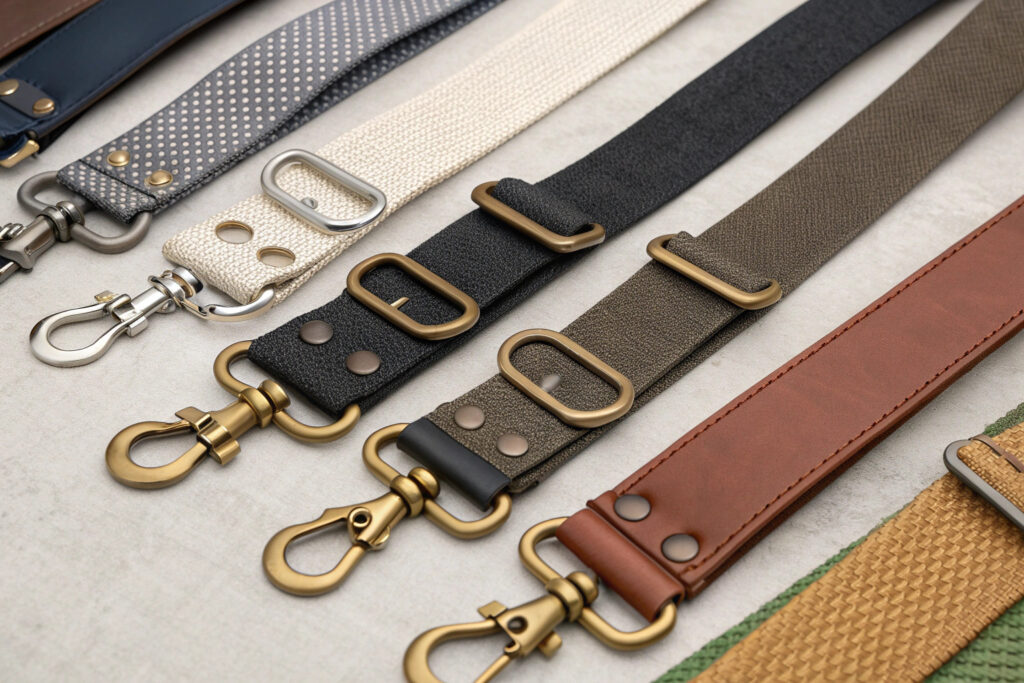
What strap materials provide the best balance?
Elasticated woven bands (typically 15-20mm width) offer the ideal combination of stretch recovery, durability, and comfort against skin. Unlike round elastics that can dig into skin under higher tension, wider flat bands distribute pressure more effectively. Our 18mm nylon-spandex woven straps maintain consistent tension through 8+ hours of wear without causing pressure points.
How does hardware selection impact functionality?
Lightweight but secure components prevent the system from becoming heavy or cumbersome while maintaining adjustment integrity. For oversized coverings, plastic hardware typically outperforms metal alternatives due to better weight characteristics and reduced risk of skin irritation. Our hardware specification uses glass-filled nylon for durability at 40% lighter weight than equivalent metal components.
What Are the Ergonomic Considerations for Extended Wear?
Oversized coverings often require more tension to maintain seal, making ergonomic design crucial for comfort during prolonged use.
How can pressure points be minimized?
Strategic padding at high-pressure areas prevents discomfort from the increased tension needed to control oversized coverings. Silicone grip strips, foam padding, or wider contact surfaces distribute force more effectively. Our padded nape strap has reduced pressure complaints by 65% for wearers using oversized coverings for 4+ hour periods.
What about heat and moisture management?
Breathable strap materials with moisture-wicking properties prevent the sweat accumulation that can occur under adjustment points. Mesh-backed straps or channels that create air space between straps and skin significantly improve comfort. Our airflow channel design has reduced strap-area moisture by 50% compared to solid strap constructions.
Conclusion
The best strap adjustment systems for oversized face coverings address the fundamental challenge of controlling extended surface area through multiple anchor points, precision adjustment mechanisms, and ergonomic design that distributes tension comfortably. Four-point harness systems typically provide the most comprehensive control, while toggle and bead systems offer the micro-adjustment capability needed for perfect sealing. Integrated adjustment features can further enhance performance by managing excess material directly within the covering structure.
Success with oversized coverings requires recognizing that traditional two-point adjustment is fundamentally inadequate for the increased surface area. The additional investment in sophisticated adjustment systems pays dividends through improved protection, enhanced comfort, and better wearer compliance—particularly important for extended use scenarios where basic systems fail.
Ready to develop oversized face coverings with advanced adjustment systems? Contact our Business Director, Elaine, at elaine@fumaoclothing.com to discuss our adjustment system expertise and how we can help you create oversized coverings that deliver both comprehensive coverage and custom fit. We'll provide samples demonstrating the performance differences between various adjustment approaches.