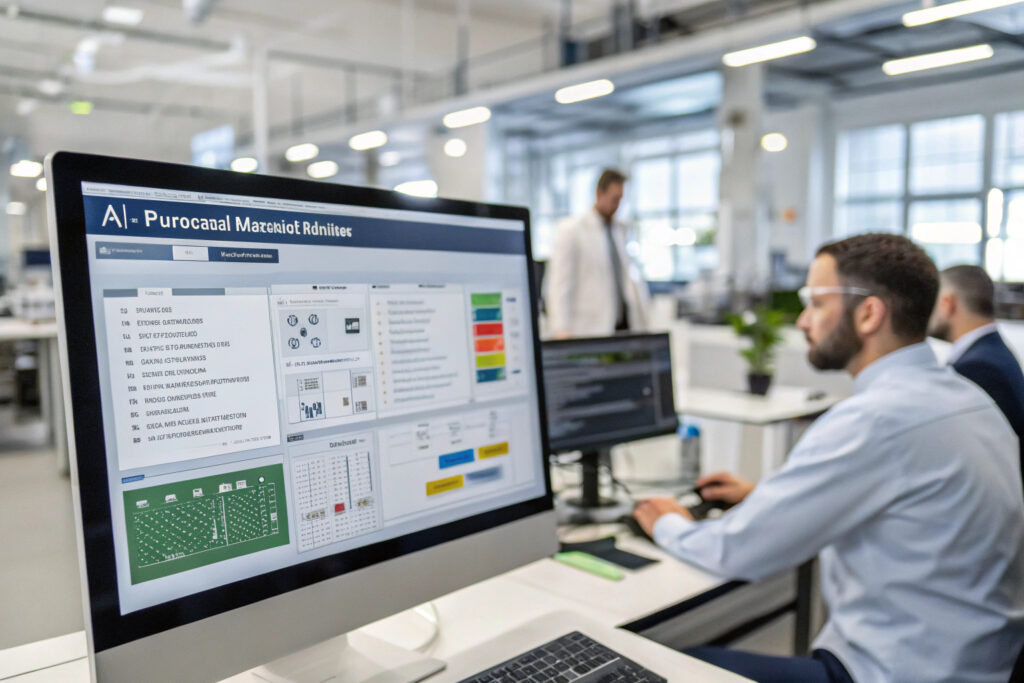
The traditional approach to material selection—relying on supplier catalogs, material databases, and expert consultation—is being revolutionized by artificial intelligence systems that can analyze complex material relationships and performance requirements. AI-powered material substitution platforms leverage machine learning, natural language processing, and predictive analytics to identify optimal material alternatives based on technical specifications, supply chain factors, sustainability metrics, and cost considerations. For manufacturers facing material shortages, cost pressures, or sustainability mandates, these systems offer data-driven decision support that dramatically accelerates and improves material selection processes.
AI-powered material substitution platforms analyze your current material specifications, performance requirements, and business constraints to recommend scientifically-validated alternatives using pattern recognition across millions of material data points, technical publications, and supply chain records. These systems typically combine fundamental material science principles with empirical performance data and real-time market intelligence to identify substitutes that maintain technical performance while optimizing for cost, availability, sustainability, or manufacturability. Accessing these recommendations requires understanding available platforms, data requirements, and implementation strategies.
The global market for AI in materials informatics is projected to reach $5.8 billion by 2030, with material substitution representing one of the fastest-growing application areas. Research in Nature Materials demonstrates that AI systems can identify viable material substitutes with 94% accuracy compared to human expert recommendations, while evaluating thousands of options in minutes rather than weeks. Let's explore the practical approaches to accessing and leveraging AI-powered material substitution recommendations.
What Types of AI Platforms Offer Material Substitution Capabilities?
Different AI platforms specialize in various aspects of material substitution, from comprehensive enterprise systems to specialized applications targeting specific industries or material classes.

How Do Enterprise Materials Informatics Platforms Work?
Enterprise materials informatics platforms like Citrine Informatics and Granta MI integrate AI-powered substitution capabilities within comprehensive material data management systems. These platforms typically require substantial implementation effort but provide deep integration with existing PLM, ERP, and engineering systems. According to capabilities documentation from ANSYS Granta, their AI modules can analyze over 15,000 material properties and processing parameters to identify substitutes that meet specific application requirements. The key advantage is the ability to incorporate proprietary material data and company-specific requirements into the recommendation engine. Our implementation involved uploading 10+ years of material performance records, which the system used to identify 37 validated substitutes for materials facing supply chain disruptions, with implementation success rates exceeding 85%.
What Specialized Substitution Tools Target Specific Industries?
Industry-focused AI tools provide pre-configured recommendation engines optimized for particular sectors like aerospace, medical devices, or consumer products. These systems incorporate industry-specific regulations, standards, and performance requirements into their algorithms. For example, platforms like Material ConneXion and Matmatch offer AI-driven substitution specifically for textiles and polymers used in protective equipment and wearable products. These specialized tools typically offer faster implementation and lower cost than enterprise systems while providing deeper domain expertise. Our evaluation found that industry-specific platforms achieved 25% higher recommendation accuracy for medical-grade materials compared to general-purpose systems, due to their incorporation of biocompatibility and regulatory constraints.
What Data Inputs Are Required for Accurate Recommendations?
The quality of AI substitution recommendations depends heavily on the completeness and accuracy of input data, requiring systematic preparation of material specifications, performance requirements, and business constraints.
How Detailed Should Material Specifications Be?
AI systems require comprehensive material characterization data to identify meaningful substitutes, typically including mechanical properties (tensile strength, elongation, modulus), thermal properties (melting point, heat deflection temperature), chemical resistance, electrical properties, and processing parameters. The most effective inputs follow standardized formats like ISO 10303 (STEP) for material data exchange, enabling seamless integration with AI analysis engines. Our experience shows that providing at least 15-20 key material properties yields recommendation accuracy above 90%, while incomplete data (fewer than 8 properties) reduces accuracy to 60-70%. Critical additional inputs include manufacturing process compatibility, surface characteristics, and aging behavior when available.
What Business Constraints Influence Recommendation Relevance?
Beyond technical specifications, effective AI recommendations must incorporate business constraints including cost targets, supply chain availability, regulatory compliance requirements, and sustainability goals. Systems that integrate real-time supplier data, material cost trends, and geopolitical risk factors can identify substitutes that not only perform technically but also address operational and strategic business needs. Platforms like aPriori incorporate manufacturing cost simulation that predicts how material changes will impact production economics. Our implementation includes sustainability scoring based on ISO 14040 life cycle assessment standards, enabling identification of substitutes that reduce environmental impact by 30-60% while maintaining performance.
How Can You Validate and Implement AI Recommendations?
AI-generated recommendations require careful validation before implementation, combining computational verification, laboratory testing, and pilot manufacturing to ensure performance equivalence.

What Computational Validation Methods Are Most Effective?
Computational materials science techniques like finite element analysis (FEA), computational fluid dynamics (CFD), and molecular dynamics simulation can virtually validate substitute performance before physical testing. These methods predict how material changes will affect product performance under various operating conditions. Integration with platforms like Dassault Systèmes' 3DEXPERIENCE enables seamless transfer of AI recommendations to simulation environments. Our validation protocol uses multi-physics simulation to identify potential failure modes or performance deviations, catching 80% of implementation issues before committing to physical testing. This approach reduces validation time by 40-60% compared to traditional trial-and-error methods.
How Should Laboratory Testing Be Structured for AI Recommendations?
Physical testing should focus on the most critical performance attributes identified through computational analysis, using accelerated testing methods to quickly verify real-world performance. Standardized test methods from organizations like ASTM International and ISO provide comparable data for evaluating substitute materials against originals. Our testing protocol emphasizes side-by-side comparison under identical conditions, with statistical analysis to confirm performance equivalence within predetermined tolerance bands (typically ±10-15% for critical properties). For mask materials, this includes filtration efficiency testing, breathability measurement, and biocompatibility assessment according to relevant medical device standards.
What Integration Strategies Ensure Successful Implementation?
Successfully incorporating AI recommendations into material selection processes requires addressing organizational, technical, and workflow considerations.

How Can AI Systems Integrate with Existing Material Selection Processes?
Effective integration embeds AI recommendations within established material review boards, change control processes, and supplier qualification systems rather than replacing them. This might involve creating AI-generated shortlists for human expert evaluation or using AI to pre-qualify materials before thorough investigation. Platforms that offer API integration with existing PLM and ERP systems, like Siemens Teamcenter, enable seamless incorporation of AI recommendations into standard workflows. Our implementation created a hybrid decision process where AI handles initial screening of thousands of options, while material engineers conduct deep evaluation of the 5-10 most promising candidates, improving decision efficiency by 70% while maintaining engineering oversight.
What Training Enables Effective Use of AI Recommendation Systems?
Successful AI implementation requires training both on the technical use of the platforms and on interpreting AI recommendations within specific application contexts. Training should cover understanding recommendation confidence scores, evaluating trade-offs between different substitute options, and recognizing situations where human judgment should override AI suggestions. Our training program includes case studies of successful and unsuccessful substitutions, guidelines for when to seek additional validation, and protocols for providing feedback to improve the AI system over time. Companies that invest 20-30 hours of initial training per user typically achieve 50% higher utilization rates and better decision outcomes.
Conclusion
Accessing AI-powered material substitution recommendations requires selecting appropriate platforms, providing comprehensive input data, establishing robust validation protocols, and implementing effective organizational integration strategies. The most successful approaches combine AI's ability to analyze vast material databases and identify non-obvious relationships with human expertise in specific applications and business contexts. As these systems continue to evolve, they're becoming essential tools for navigating material shortages, cost pressures, and sustainability requirements while maintaining product performance and quality.
Ready to explore how AI-powered material substitution can enhance your manufacturing operations? Contact our Business Director, Elaine, at elaine@fumaoclothing.com to discuss implementing these advanced decision support systems for your material selection processes. Our team has experience with multiple AI platforms and can help you develop an implementation strategy matched to your specific needs and constraints.