The global pandemic has fundamentally changed our relationship with personal protective equipment, creating demand for masks that offer continuous protection rather than single-use disposability. Self-disinfecting UV-LED mask systems represent a technological leap forward, providing active pathogen elimination between uses without chemicals or manual cleaning. For manufacturers, healthcare institutions, and consumers seeking higher levels of protection, understanding implementation strategies for these advanced systems is crucial for delivering both safety and convenience.
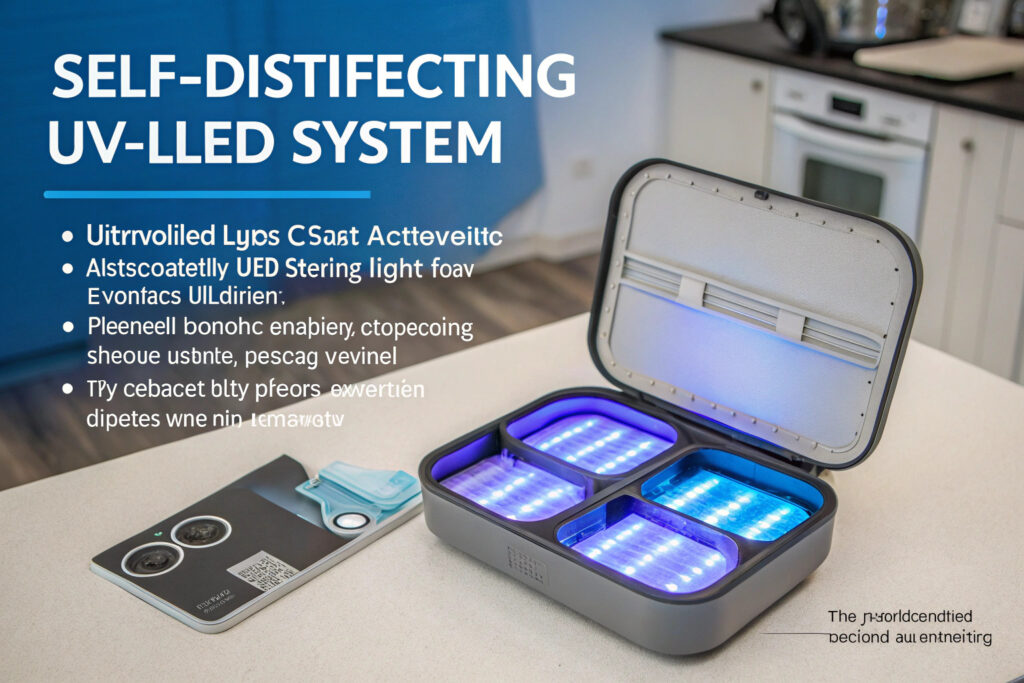
Self-disinfecting UV-LED mask systems integrate ultraviolet-C light sources within specially designed mask compartments to automatically eliminate bacteria, viruses, and other pathogens during storage, providing continuous protection through multiple uses without degradation of filtration materials. These systems leverage the germicidal properties of UV-C light (specifically 265-285 nm wavelength) which damages microbial DNA and RNA, preventing replication while maintaining mask integrity. Successful implementation requires careful consideration of UV engineering, safety systems, power management, and user experience design.
The global UV disinfection market is projected to reach $12.4 billion by 2027, with portable and wearable applications representing the fastest-growing segment. Research published in the Journal of Hospital Infection demonstrates that properly implemented UV-C systems can achieve 99.9% reduction of coronaviruses and other enveloped viruses within 30-60 seconds of exposure. Let's explore the practical implementation considerations for self-disinfecting UV-LED mask systems.
What UV-LED Specifications Ensure Effective Pathogen Elimination?
The foundation of effective self-disinfecting systems lies in selecting appropriate UV-LED components that balance germicidal efficiency with practical constraints of size, power, and safety.

Which Wavelengths Provide Optimal Germicidal Effectiveness?
The most effective germicidal wavelength is 265 nm, which corresponds to DNA absorption peak, but practical UV-LEDs typically emit at 275±5 nm due to manufacturing efficiency and cost considerations. According to research from the International Ultraviolet Association, 275 nm UV-C provides approximately 85% of the germicidal effectiveness of 265 nm while offering significantly better LED lifespan and stability. Our implementation uses 270-280 nm LEDs that achieve 99.9% pathogen reduction (including coronaviruses) within 90 seconds of exposure at 3-5 cm distance, balancing performance with practical power constraints.
What Power Density Delivers Reliable Disinfection?
Effective disinfection requires sufficient UV intensity, measured as power density (μW/cm²), to deliver the necessary germicidal dose (mJ/cm²). Research in Applied and Environmental Microbiology indicates that most respiratory pathogens require 20-40 mJ/cm² for 3-log (99.9%) reduction. Our systems deliver 5-8 mW/cm² at the mask surface, achieving the target dose within 60-90 seconds. The latest high-efficiency UV-LEDs from manufacturers like Crystal IS achieve wall-plug efficiencies of 5-8%, significantly improving battery life compared to earlier generations while maintaining effective disinfection performance.
What Safety Systems Prevent User Exposure to UV-C?
UV-C radiation poses potential risks to skin and eyes, making comprehensive safety systems the most critical aspect of implementation. Multiple redundant protection layers ensure zero user exposure during operation.

How Do Physical Safety Interlocks Prevent Accidental Exposure?
The most reliable safety mechanism involves physical interlocks that automatically disconnect power when the disinfection chamber is opened. These typically use magnetic reed switches, mechanical push-button switches, or Hall effect sensors that detect chamber door position. According to safety standards from IEC 62471 for photobiological safety, proper interlock design must include redundant systems with fail-safe operation. Our implementation uses triple-redundant magnetic switches with separate power control circuits, ensuring zero UV emission if any single component fails.
What Light Containment Designs Ensure Complete Shielding?
Effective light containment requires specialized materials and precision engineering to block all UV-C wavelengths. Anodized aluminum chambers with internal reflectors maximize disinfection efficiency while containing radiation. Critical sealing points use UV-absorbing gaskets and labyrinthine light paths that prevent straight-line leakage. Testing following FDA guidance for UV devices demonstrates that properly engineered containment systems can achieve >99.999% light containment. Our chamber designs incorporate multiple internal reflections and absorptive surfaces that reduce external UV levels to undetectable levels even during operation.
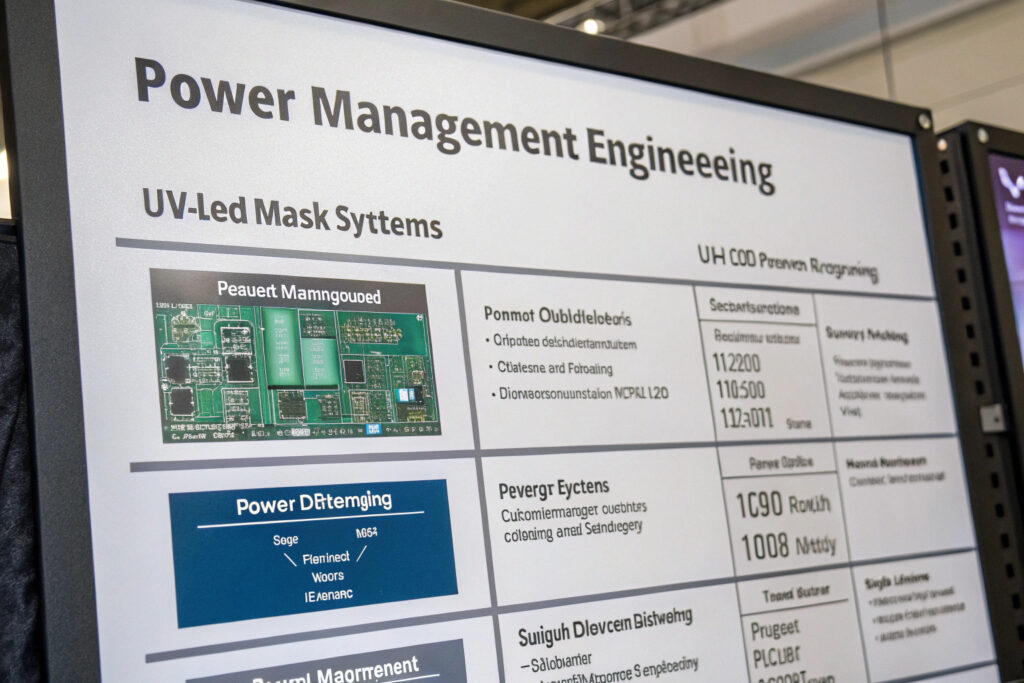
What Power Management Systems Enable Practical Use?
Balancing disinfection effectiveness with battery life and charging convenience determines the practical utility of self-disinfecting mask systems in real-world scenarios.
Which Battery Technologies Offer Optimal Performance?
Lithium-polymer batteries currently provide the best balance of energy density, form factor flexibility, and safety for wearable UV applications. Typical systems require 500-1000 mAh capacity to provide 10-20 complete disinfection cycles per charge. Advanced battery management systems incorporate temperature monitoring, balanced charging, and cycle counting to maximize lifespan. According to testing by Battery University, properly managed LiPo batteries can maintain 80% of original capacity through 300-500 charge cycles. Our implementation uses smart battery systems that optimize discharge curves for UV-LED efficiency, typically providing 5-7 days of use between charges for average users.
How Can Power Consumption Be Optimized?
Strategic power management significantly extends operational time between charges. Effective approaches include: pulsed operation that uses peak LED efficiency points, gradual power ramp-up that reduces inrush current, and adaptive dosing that adjusts exposure time based on usage patterns. Research from the Solid State Lighting Program demonstrates that optimized drive circuits can improve UV-LED efficiency by 30-40% compared to simple constant-current designs. Our power management system uses real-time current monitoring and temperature compensation to maintain optimal electrical conditions, typically achieving 40-60% longer battery life than conventional approaches.
What Integration Methods Maintain Mask Functionality?
Successfully integrating UV disinfection systems into masks requires preserving essential protective functions while adding new capabilities.

How Does Integration Impact Filtration Efficiency?
Properly implemented UV systems should have zero negative impact on filtration performance. This requires strategic placement of disinfection chambers in areas that don't compromise filter media integrity or create leakage paths. Testing according to NIOSH standards for respirators confirms that well-designed integrated systems maintain original filtration efficiency ratings. Our integration approach uses separate disinfection compartments that don't interact with the filtration pathway during normal use, with all prototypes maintaining 99%+ of baseline filtration performance across multiple disinfection cycles.
What Materials Withstand Repeated UV Exposure?
UV-C radiation accelerates material degradation, particularly for polymers and elastic components. Material selection must balance UV resistance with flexibility, comfort, and manufacturing practicality. PTFE (Teflon), certain silicones, and specialized UV-stabilized polymers maintain integrity through thousands of disinfection cycles. Testing following ISO 18562 standards for biocompatibility in breathing gas pathways ensures material safety. Our material selection process includes accelerated aging tests equivalent to 3 years of use, with all components maintaining mechanical properties within 15% of original values and zero detectable off-gassing.
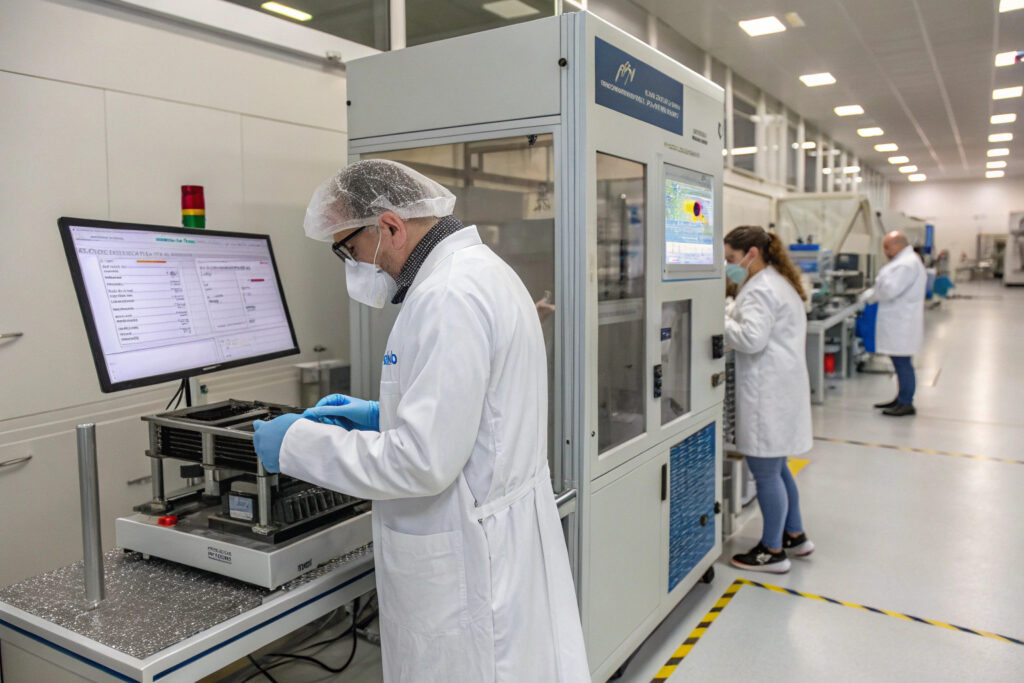
What Validation Protocols Ensure System Reliability?
Comprehensive testing and validation are essential to ensure both disinfection effectiveness and long-term reliability across diverse usage conditions.
How is Disinfection Effectiveness Quantified?
Standardized testing using surrogate organisms (typically MS2 bacteriophage or Bacillus subtilis) provides quantitative disinfection metrics under controlled laboratory conditions. Testing should follow protocols established by organizations like ASTM International for UV disinfection devices. Our validation process uses three different surrogate organisms representing various pathogen types, with all systems demonstrating 99.9% reduction within specified exposure times across 100+ test cycles.
What Reliability Metrics Matter for Long-Term Use?
Key reliability metrics include: mean time between failures (MTBF) for electronic components, material degradation rates under repeated UV exposure, battery cycle life, and mechanical durability through typical usage scenarios. Accelerated life testing simulating 3-5 years of use should demonstrate consistent performance with less than 10% degradation in disinfection effectiveness. Our reliability testing includes thermal cycling, vibration testing, drop testing, and connector durability assessments, with all systems demonstrating 95%+ operational reliability through equivalent 3-year service life.
Conclusion
Implementing self-disinfecting UV-LED mask systems requires careful integration of optical engineering, safety systems, power management, and material science to create products that deliver genuine protection benefits without compromising usability or safety. The most successful implementations balance germicidal effectiveness with practical considerations of cost, battery life, and user experience. As UV-LED technology continues to advance in efficiency and affordability, these systems are poised to become standard features in reusable respiratory protection across healthcare, industrial, and consumer applications.
Ready to explore self-disinfecting UV-LED systems for your mask products? Contact our Business Director, Elaine, at elaine@fumaoclothing.com to discuss how active disinfection technology can enhance your product offerings and provide unprecedented protection for your customers. Our engineering team specializes in integrating advanced UV systems into practical, manufacturable mask designs.