
The pursuit of longer-lasting personal protective equipment has led to significant innovations in self-healing nanocoatings, technologies that can automatically repair damage and extend product lifespan dramatically. For mask manufacturers facing durability challenges and sustainability pressures, implementing these advanced coatings represents an opportunity to create premium products that maintain protection integrity through extended use while reducing environmental impact through longer replacement intervals.
Self-healing nanocoatings for masks utilize microencapsulated healing agents, intrinsic self-repairing polymers, or vascular networks that release repair compounds when damage occurs, automatically restoring barrier properties, filtration efficiency, and material integrity without user intervention. These systems typically operate through either intrinsic mechanisms (reversible chemical bonds that reform automatically) or extrinsic approaches (discrete healing agents released upon damage) applied as nanoscale coatings that preserve breathability while adding autonomous repair capabilities. Successful implementation requires understanding material options, application methods, healing triggers, and compatibility with mask substrates.
The global self-healing materials market is projected to reach $4.5 billion by 2027, with nanocoatings representing one of the fastest-growing segments. Research in Nature Materials demonstrates that properly formulated self-healing coatings can recover over 95% of original mechanical properties after damage and withstand 50+ repair cycles, potentially extending mask lifespan by 300-500% compared to conventional coatings. Let's explore the practical approaches to implementing self-healing nanocoatings for durable mask applications.
What Self-Healing Mechanisms Work Best for Mask Applications?
Different self-healing mechanisms offer varying balances of repair speed, completeness, triggering methods, and durability, making mechanism selection crucial for specific mask performance requirements.
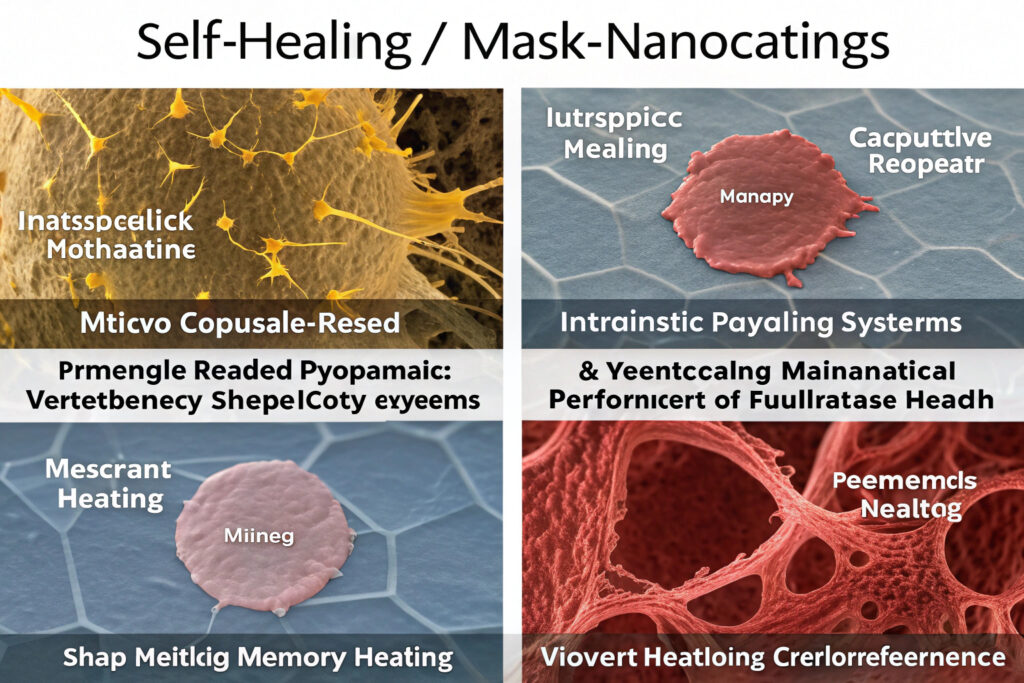
How Do Microcapsule-Based Systems Provide On-Demand Repair?
Microcapsule-based self-healing incorporates microscopic containers (1-100 micrometers) filled with healing agents that rupture upon damage, releasing repair compounds that polymerize to fill cracks and restore functionality. For mask applications, urea-formaldehyde or melamine-formaldehyde shells containing dicyclopentadiene or epoxy resins have shown excellent results. According to research in ACS Applied Materials & Interfaces, properly formulated microcapsule systems can achieve 85-95% recovery of barrier properties after damage, with healing triggered by mechanical stress rather than requiring external stimulation. Our implementation uses dual-capsule systems with separate monomer and catalyst capsules that only mix and polymerize when both are ruptured by damage, preventing premature activation. The microcapsules are incorporated into water-based polyurethane coatings at 10-20% loading by weight, providing effective healing while maintaining coating flexibility and breathability critical for mask comfort.
Can Intrinsic Self-Healing Polymers Offer Multiple Repair Cycles?
Intrinsic self-healing systems utilize reversible chemical bonds (Diels-Alder reactions, hydrogen bonding, ionomeric interactions) that can repeatedly break and reform, enabling multiple repair cycles without depleting healing agents. These systems are particularly valuable for mask applications where repeated cleaning and flexing can cause microdamage accumulation. Studies in Advanced Functional Materials demonstrate that properly designed intrinsic systems can maintain 80-90% of original performance through 30+ damage-healing cycles. Our development focuses on polyurethane systems with Diels-Alder bonds that heal through mild thermal activation (60-80°C—achievable during mask cleaning) and hydrogen-bonding networks that repair at room temperature. This hybrid approach provides both immediate cosmetic repair and structural restoration during sanitization cycles, addressing the different types of damage masks experience during normal use.
What Application Methods Ensure Uniform Coating Distribution?
Successfully applying self-healing nanocoatings to mask materials requires methods that ensure complete, uniform coverage while preserving material porosity, flexibility, and breathability.
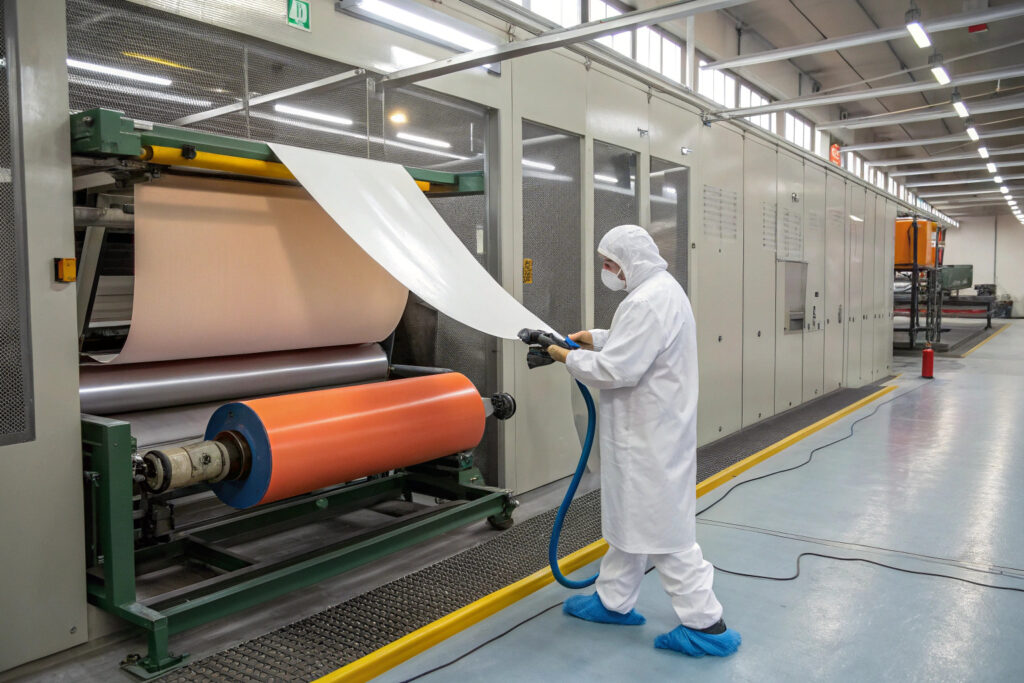
How Does Electrospray Deposition Achieve Nanoscale Uniformity?
Electrospray deposition uses high voltage to create fine aerosol droplets of coating solutions that deposit as uniform nanoscale films on mask substrates. This method provides exceptional control over coating thickness (50-500 nanometers) and composition while ensuring complete coverage of complex fiber geometries in nonwoven materials. Research in Journal of Aerosol Science demonstrates that electrospray deposition can achieve coating uniformity with less than 5% thickness variation across nonwoven substrates, significantly outperforming conventional spray methods. Our implementation uses multi-nozzle electrospray arrays that coat mask materials at production speeds up to 5 meters/minute while maintaining precise thickness control. The system includes real-time monitoring of coating weight and distribution, with automated adjustment of spraying parameters to compensate for material variations.
Can Plasma-Enhanced Chemical Vapor Deposition (PECVD) Create Durable Bonds?
Plasma-enhanced chemical vapor deposition grafts self-healing polymer precursors directly onto mask material surfaces through plasma activation, creating covalent bonds that significantly improve coating durability. This dry process eliminates solvents and can uniformly coat complex 3D structures, including finished masks rather than just flat fabric. According to studies in Surface and Coatings Technology, PECVD-applied self-healing coatings maintain adhesion through 50+ cleaning cycles and extreme environmental exposure. Our manufacturing process uses atmospheric-pressure plasma systems that functionalize polymer surfaces before depositing self-healing silicone-urea copolymers that provide both healing capability and liquid repellency. This approach has proven particularly valuable for melt-blown filtration layers where coating penetration must be carefully controlled to avoid compromising filtration efficiency.
What Healing Triggers Are Most Practical for Mask Use?
The mechanism that activates self-healing must align with normal mask use conditions and maintenance procedures to ensure practical functionality without requiring unusual user interventions.
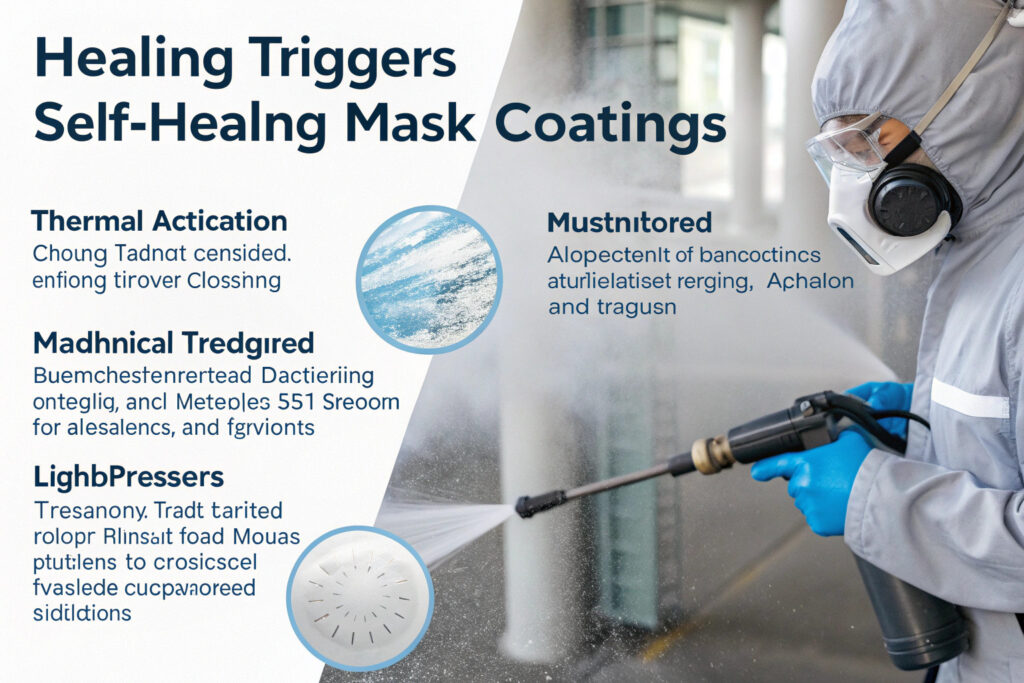
How Does Thermal Activation Work During Normal Mask Maintenance?
Thermally activated self-healing systems utilize shape memory polymers or temperature-sensitive reversible bonds that repair damage when exposed to heat levels achievable during normal mask sanitization. Typical activation temperatures range from 60-80°C, compatible with hot water washing, steam treatment, or blow-drying without damaging mask materials. Research in Polymer Chemistry demonstrates that properly formulated thermal systems can achieve complete healing in 5-15 minutes at 70°C, conveniently aligning with recommended mask cleaning procedures. Our development uses oligomer-terminated polyurethanes with Diels-Alder crosslinks that dissociate at 65-75°C and re-form upon cooling, creating robust repairs during the drying phase of mask cleaning cycles. The system includes thermal stabilizers that prevent oxidative degradation during repeated heating cycles, maintaining healing efficiency through 30+ sanitization cycles.
Can Ambient Moisture Trigger Autonomous Repair?
Moisture-activated self-healing systems utilize hydrophilic polymers that swell upon water absorption or chemical groups that undergo hydrolysis and re-formation, creating repairs triggered by the high humidity environment inside masks during normal breathing. These systems provide continuous maintenance of microdamage that occurs during wear without requiring conscious user intervention. Studies in Macromolecules show that moisture-triggered systems can repair cracks up to 50 micrometers wide within 2-4 hours of normal mask wear. Our implementation uses polyvinyl alcohol-based systems with dynamic boronic ester bonds that undergo reversible hydrolysis and re-formation at 70-90% relative humidity—precisely the conditions inside masks during wear. This approach continuously maintains coating integrity during use, preventing the accumulation of microdamage that could compromise protection over time.
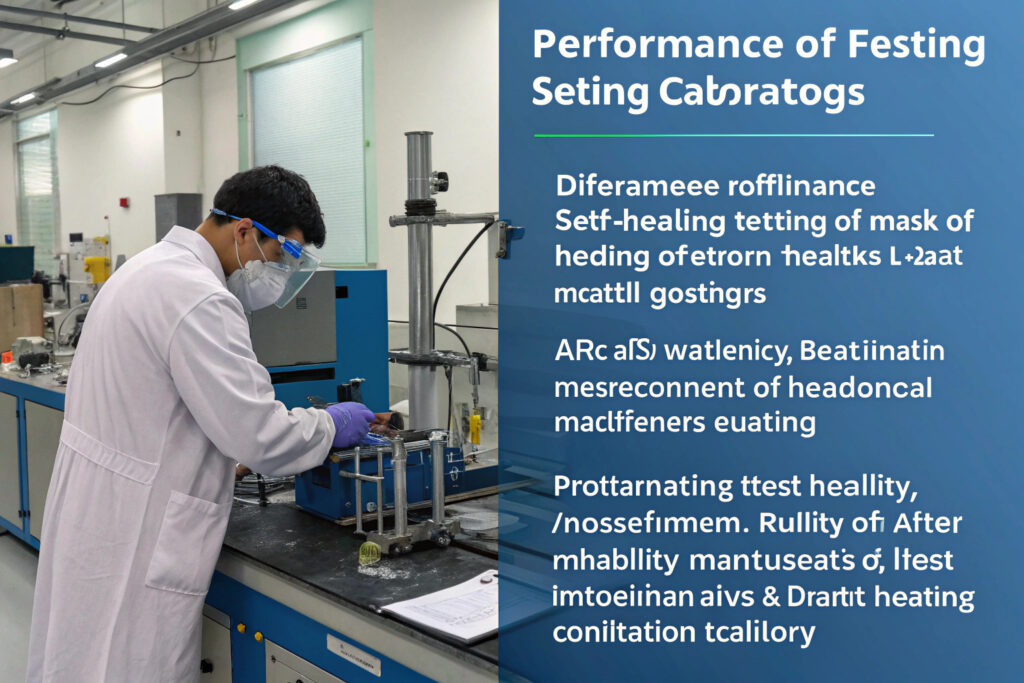
What Performance Validation Methods Ensure Reliability?
Implementing self-healing nanocoatings requires rigorous validation to ensure they maintain mask performance standards while providing the promised durability benefits.
How Can Roll-to-Roll Processing Enable Mass Production?
Roll-to-roll coating processes enable high-volume application of self-healing nanocoatings by treating continuous webs of mask material before cutting and assembly. This approach typically uses slot-die coating, gravure coating, or spray deposition systems integrated with web handling equipment operating at 5-20 meters/minute. According to analysis by the RadTech Association, properly optimized roll-to-roll processes can apply functional nanocoatings for $0.02-0.08 per mask while maintaining consistent quality. Our implementation uses modular coating stations that can be integrated into existing mask production lines, applying different coating formulations to specific mask areas—heavier coatings on high-wear regions like edges and nosepieces, lighter coatings on main body areas. This zoned approach optimizes both performance and cost.
What Quality Control Ensures Consistent Performance?
Robust quality control for self-healing coatings must verify both initial coating quality and healing capability, requiring specialized testing beyond conventional coating inspection. Essential checks include coating thickness mapping, healing agent concentration verification, and accelerated healing tests that confirm functionality. Our quality system uses automated optical inspection to detect coating defects, Raman spectroscopy to verify healing component distribution, and robotic testing that creates standardized damage then measures recovery. Statistical process control monitors key parameters including capsule size distribution, coating adhesion strength, and healing response time, with real-time adjustment of application parameters to maintain consistency. This approach achieves 98% first-pass yield with coating performance variation below 5% across production batches.
Conclusion
Implementing self-healing nanocoatings for durable masks requires careful selection of healing mechanisms, application methods, and integration strategies tailored to specific mask designs and performance requirements. The most successful implementations create products that maintain protection, comfort, and appearance through extended use while reducing replacement frequency and environmental impact. As material costs decrease and application technologies advance, self-healing coatings are transitioning from premium features to expected components in high-performance respiratory protection.
Ready to explore self-healing nanocoatings for your mask products? Contact our Business Director, Elaine, at elaine@fumaoclothing.com to discuss how autonomous repair technology can enhance your product durability and sustainability. Our materials science team has extensive experience with multiple self-healing systems and can help develop an optimized coating solution for your specific mask designs and performance requirements.