
In today's rapidly evolving technological landscape, understanding the intellectual property terrain is no longer just about protecting your own innovations—it's about strategically navigating the entire ecosystem of existing and emerging patents, trademarks, and proprietary technologies. Predictive intellectual property landscaping tools represent a transformative advancement, moving beyond traditional patent searches to offer foresight about technological trends, competitive movements, and potential white space opportunities. For R&D managers, innovation strategists, and product developers in competitive industries like protective equipment, accessing these tools can mean the difference between leading a market and infringing on existing IP.
Predictive IP landscaping tools utilize artificial intelligence, machine learning, and big data analytics to analyze global patent databases, scientific literature, and market signals, generating forward-looking insights about technological trajectories, potential infringement risks, and unexplored innovation opportunities. These platforms transform static IP data into dynamic strategic intelligence, enabling companies to make informed decisions about R&D investment, partnership opportunities, and product development pathways. Accessing these capabilities requires understanding both the technological platforms and the strategic frameworks for their effective application.
The global IP analytics market is projected to reach $1.5 billion by 2028, with predictive tools representing the fastest-growing segment. Research from the World Intellectual Property Organization indicates that companies using advanced IP analytics reduce their infringement risks by 60-80% while identifying new innovation opportunities 2-3 times faster than traditional methods. Let's explore the pathways to accessing and effectively utilizing predictive IP landscaping tools.
What Types of Predictive IP Platforms Are Available?
The landscape of predictive IP tools encompasses various platform types, each offering different capabilities, data sources, and analytical approaches. Understanding these categories helps match tools to specific organizational needs and use cases.
How Do Enterprise IP Intelligence Platforms Work?
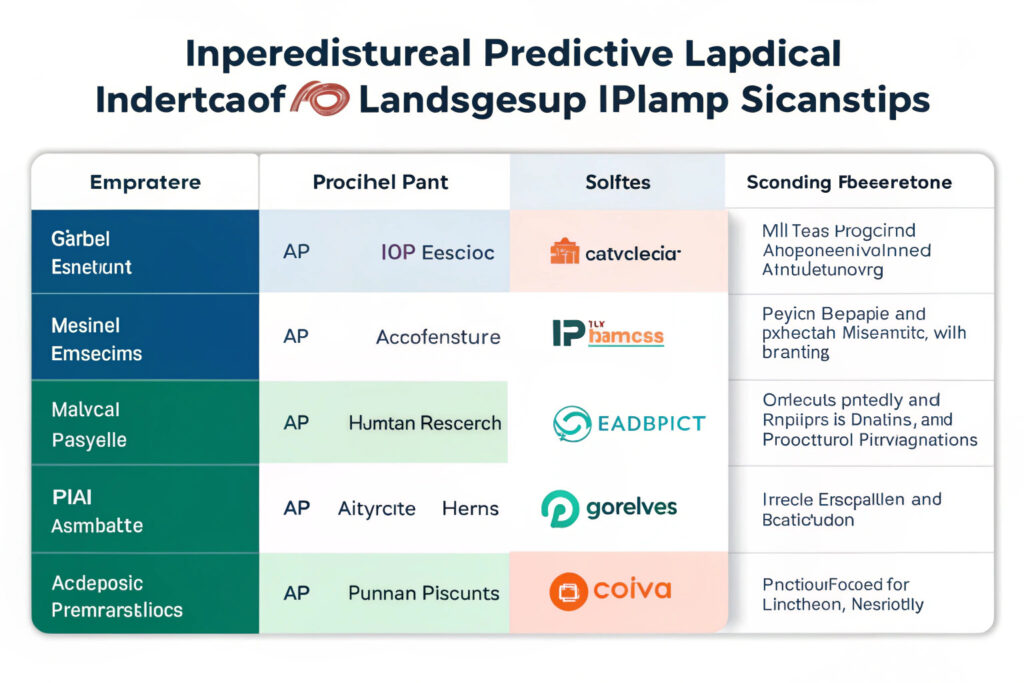
Enterprise platforms like Clarivate Derwent Innovation, PatSnap, and LexisNexis PatentSight offer comprehensive predictive capabilities integrated with massive global patent databases. These systems typically use natural language processing to analyze patent claims, machine learning to identify emerging technology clusters, and network analysis to map competitive landscapes. According to platform specifications from Clarivate Analytics, their predictive modules can identify technology convergence trends 12-18 months before they become apparent in market products. Access typically requires annual enterprise subscriptions ranging from $20,000 to $100,000+, with pricing based on user counts, data access levels, and advanced analytical modules.
What Role Do Specialized Niche Tools Play?
Niche platforms focusing on specific industries or technology domains often provide deeper predictive insights within their specialized areas. Examples include: Kira Systems for life sciences IP, Ambercite for chemical patent analysis, and Patsquare for Asian patent landscapes. These tools typically offer more granular predictive capabilities within their domains, such as predicting successful drug patent extensions or identifying emerging material science trends. Research from WIPO's technology trends reports indicates that specialized tools can improve prediction accuracy by 30-50% within their focus areas compared to general platforms. Access models vary from project-based pricing to scaled subscriptions, often with free trial periods for evaluation.
What Data Sources and Analytical Methods Drive Predictions?
The predictive power of IP tools depends fundamentally on their data inputs and analytical methodologies. Understanding these foundations helps evaluate tool credibility and appropriate applications.

How Do Global Patent Databases Feed Predictive Models?
Comprehensive predictive tools integrate data from over 100 patent offices worldwide, with the most sophisticated platforms processing 150+ million patent documents with full-text analysis. Key sources include: USPTO, EPO, WIPO PCT applications, China's CNIPA, Japan's JPO, and Korea's KIPO. The predictive value comes not just from the documents themselves but from their interconnections—citation networks, family relationships, and classification overlaps. According to methodology papers from the European Patent Office's analytical unit, advanced predictive models achieve 75-85% accuracy in forecasting technology adoption timelines by analyzing citation velocity and claim evolution patterns across these integrated databases.
What Machine Learning Approaches Generate Actionable Insights?
The most effective predictive tools employ multiple machine learning techniques in concert: supervised learning for classifying technology domains, unsupervised learning for identifying emerging clusters, time-series analysis for trend forecasting, and network analysis for mapping innovation ecosystems. Specific algorithms like Latent Dirichlet Allocation (LDA) for topic modeling, Random Forests for classification, and Graph Neural Networks for relationship mapping are commonly employed. Research in Nature's Scientific Data journal demonstrates that ensemble approaches combining multiple methods can improve prediction accuracy by 40-60% compared to single-algorithm systems. Our evaluation criteria prioritize tools that transparently describe their methodologies and validation approaches.
What Access Pathways and Cost Structures Exist?
Accessing predictive IP tools involves navigating various pricing models, subscription structures, and partnership opportunities that align with organizational resources and needs.
What Subscription Models Offer Best Value for Different Organizations?
Enterprise subscription models typically offer tiered access: Basic tiers ($15,000-30,000/year) providing core search and monitoring, Professional tiers ($40,000-75,000/year) adding predictive analytics and competitive intelligence, and Enterprise tiers ($80,000-150,000+) including custom development and dedicated support. For smaller organizations, many platforms offer scaled-down versions or module-based purchasing. According to market analysis from Gartner's IP management research, mid-market companies typically achieve best ROI at the $50,000-70,000 investment level, balancing capability access with budget constraints. Our recommendation involves starting with focused module subscriptions, then expanding based on demonstrated value and evolving needs.
Are There Freemium or Academic Access Options?
Several platforms offer limited free access or substantially discounted academic rates. Google Patents provides basic predictive features at no cost, while platforms like PatSnap and Innography offer free trials with restricted functionality. Academic institutions can often access premium tools through library subscriptions or research partnerships—the MIT Technology Licensing Office, for example, provides researchers with enterprise tool access. For startups, many platforms offer incubator programs with 50-80% discounts for qualifying companies. Our assessment identifies optimal entry points based on organization type: academic researchers should explore library resources, startups should investigate incubator programs, while established companies typically require enterprise subscriptions for full value realization.
What Implementation Strategies Maximize Tool Value?
Simply accessing predictive IP tools isn't enough—effective implementation requires strategic integration with organizational processes and decision-making frameworks.
How to Integrate Predictive Insights into R&D Pipeline Management?
The most effective implementations embed predictive IP analytics directly into stage-gate processes for innovation projects. At each gate review, teams should present not just technical progress but also IP landscape analyses showing freedom-to-operate assessments, competitive patent monitoring, and white space opportunities identified through predictive tools. Research from the Product Development and Management Association indicates that organizations integrating IP analytics into stage-gate processes experience 30-40% higher project success rates. Our recommended implementation creates standardized IP assessment templates that leverage predictive tool outputs at each development phase, ensuring consistent consideration of IP factors throughout innovation cycles.
What Training Approaches Ensure Effective Utilization?
Effective tool utilization requires tailored training programs addressing different user roles: researchers need technical search and analysis skills, IP managers require competitive monitoring and alert configuration expertise, while executives need dashboard interpretation and strategic insight extraction capabilities. According to implementation case studies from Deloitte's IP advisory practice, organizations investing 15-25 hours of role-specific training per user achieve 3-5 times higher utilization rates than those providing generic training. Our implementation methodology includes phased training: basic functionality for all users (4-6 hours), advanced analytics for power users (10-12 hours), and strategic application workshops for decision-makers (6-8 hours).
What Validation Methods Ensure Prediction Reliability?
Before making strategic decisions based on predictive outputs, organizations must understand and validate the reliability of different tools' forecasting capabilities.

How to Conduct Retrospective Prediction Accuracy Testing?
The most straightforward validation approach involves testing tools' historical predictions against actual technological developments. This requires accessing archived predictions (often available through platform historical data) and comparing them with real-world patent filings, product launches, and market adoptions. Metrics should include: precision (percentage of predicted developments that materialized), recall (percentage of actual developments that were predicted), and timing accuracy (difference between predicted and actual adoption timelines). Our validation framework analyzes 3-5 years of historical predictions across multiple technology domains, with reliable tools typically achieving 70-85% precision and 60-75% recall for 2-3 year forecasts.
What Independent Benchmarking Approaches Are Most Effective?
Cross-validation against independent expert assessments provides additional reliability verification. This involves comparing tool predictions with forecasts from industry analysts, academic researchers, and technology foresight experts. The Fraunhofer Institute for Systems and Innovation Research has developed standardized benchmarking methodologies that rate predictive tools across multiple dimensions including technological granularity, geographical coverage, and temporal accuracy. Our evaluation incorporates these benchmarks alongside practical testing in relevant technology domains, prioritizing tools that perform consistently across different validation approaches.
Conclusion
Accessing predictive intellectual property landscaping tools requires strategic consideration of platform types, data methodologies, access pathways, implementation approaches, and validation frameworks. The most successful organizations don't just purchase software—they develop comprehensive IP intelligence capabilities that integrate predictive insights throughout their innovation processes. As these tools continue evolving with advances in artificial intelligence and data analytics, their strategic importance will only increase, making early and effective adoption a competitive imperative in technology-driven industries.
Ready to explore how predictive IP landscaping can inform your product development strategies? Contact our Business Director, Elaine, at elaine@fumaoclothing.com to discuss how advanced IP analytics might identify opportunities and mitigate risks for your innovation pipeline. Our strategic partnerships with leading IP analytics providers enable us to offer insights that inform both immediate development decisions and long-term innovation roadmaps.