
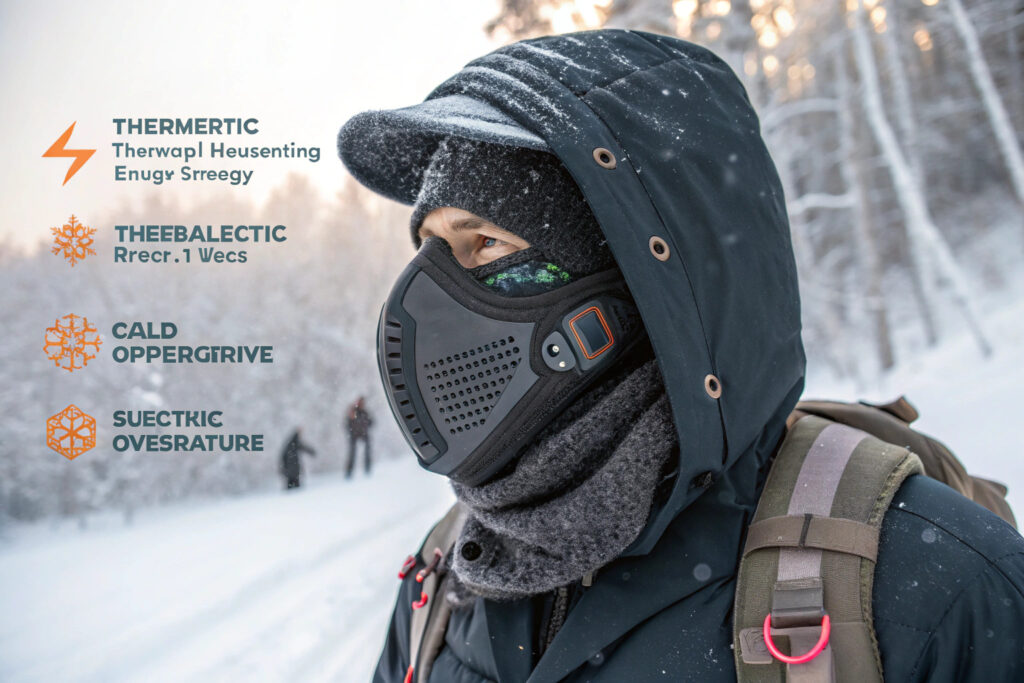
The demand for heated masks in cold climates has created significant interest in sustainable power solutions that extend operational time beyond battery limitations. Thermal energy harvesting technologies convert temperature differences into usable electrical energy, offering the potential for self-powered or extended-operation heated mask systems. For manufacturers developing cold-weather protective equipment, understanding thermal energy implementation strategies is crucial for creating products that balance performance, comfort, and practicality.
Thermal energy harvesting in heated masks utilizes thermoelectric generators (TEGs) and pyroelectric materials to convert temperature differentials between exhaled air and the cold environment into electrical power that supplements or replaces batteries. These systems leverage the substantial thermal gradient (typically 20-35°C) between warm exhaled breath and sub-zero ambient conditions, generating continuous power during normal breathing without conscious user effort. Successful implementation requires careful selection of harvesting technologies, thermal management strategies, and power electronics optimized for the unique conditions of respiratory protection.
The global energy harvesting system market is projected to reach $1.1 billion by 2028, with wearable applications representing the fastest-growing segment. Research in Nature Communications demonstrates that optimized thermoelectric systems can generate 0.5-2.0 mW/cm² from typical breathing temperature differentials, sufficient to power low-energy heating elements or extend battery life by 300-500%. Let's explore the practical approaches to implementing thermal energy harvesting in heated mask systems.
What Thermoelectric Generator Configurations Maximize Power Output?
Thermoelectric generators represent the most mature thermal harvesting technology for mask applications, with different configurations offering varying balances of power density, flexibility, and integration complexity.
How Do Flexible TEG Arrays Conform to Mask Geometries?
Flexible thermoelectric generators use printed or thin-film semiconductor materials on polymer substrates, creating conformable harvesting surfaces that can be integrated throughout the mask structure. These systems typically generate 0.1-0.5 mW/cm² but can cover larger areas than rigid TEGs, potentially producing higher total power. According to research in Advanced Energy Materials, optimized flexible TEGs can maintain performance through bending radii below 10mm, making them suitable for facial contour integration. Our implementation uses bismuth telluride composites screen-printed onto polyimide substrates, achieving 0.35 mW/cm² at ΔT=15°C while withstanding the mechanical stress of facial movements. The arrays are strategically positioned in areas with maximal temperature differential—typically around the exhalation valve and cheek areas where warm breath contacts colder mask surfaces.
Can Micro-TEG Modules Create Localized High-Efficiency Zones?
Micro-thermoelectric modules use conventional rigid thermoelectric materials in miniature packages (5x5mm to 10x10mm) that create high power density in specific locations. These systems can achieve 1.0-2.0 mW/cm² but require careful thermal management to maintain the necessary temperature differential. Studies in Journal of Electronic Materials demonstrate that properly integrated micro-TEGs can achieve conversion efficiencies of 3-5% in wearable applications. Our development focuses on multi-module arrays positioned at thermal "hot spots" where exhaled breath consistently creates elevated temperatures. The modules are mounted on thermally conductive but electrically insulating substrates that maximize heat transfer while ensuring user safety. Strategic placement around the exhalation valve area captures the concentrated warm airflow during exhalation, typically generating 3-5 mW per module during normal breathing.
What Thermal Management Strategies Optimize Energy Capture?
Effective thermal energy harvesting requires maintaining significant temperature differences across the harvesting elements, necessitating sophisticated thermal management approaches specific to mask environments.
How Do Micro-Heat Sinks Enhance Temperature Differentials?
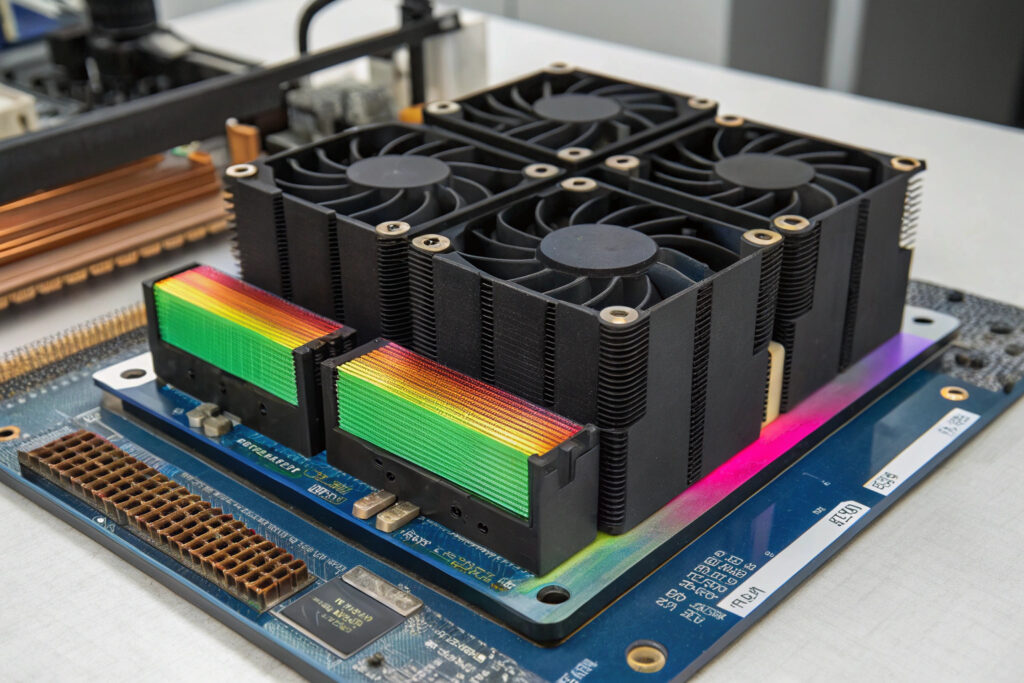
Micro-heat sinks use high-surface-area structures to rapidly dissipate heat from the cold side of TEGs, maintaining the temperature differential necessary for power generation. In mask applications, these typically take the form of finned structures exposed to ambient air or thermally conductive pathways to cooler regions of the mask. Research in International Journal of Heat and Mass Transfer demonstrates that optimized micro-heat sinks can improve TEG power output by 40-60% by reducing thermal resistance on the cold side. Our implementation uses carbon-nanotube enhanced thermal interface materials that create low-resistance pathways to aluminum heat spreaders positioned at the mask periphery. The system includes humidity-resistant coatings that prevent frost buildup, which could otherwise insulate the cold side and reduce performance in freezing conditions.
Can Phase Change Materials Stabilize Thermal Operation?
Phase change materials (PCMs) absorb and release thermal energy during phase transitions, effectively smoothing temperature fluctuations and maintaining optimal ΔT for longer periods. For mask applications, PCMs with transition temperatures between 15-25°C can store heat from exhaled breath and release it during inhalation cycles. According to studies in Renewable Energy, properly selected PCMs can increase total energy capture by 25-35% by extending the duration of effective temperature differentials. Our development uses microencapsulated paraffin wax PCMs integrated into the hot side of TEG arrays, creating thermal capacitors that continue generating power for several seconds after exhalation ceases. The PCM capsules (50-200μm diameter) are embedded in thermally conductive polymers that ensure efficient heat transfer to the TEGs while maintaining flexibility and comfort.
What Power Management Systems Maximize Usable Energy?
The intermittent and variable nature of harvested thermal energy requires sophisticated power management electronics to accumulate, regulate, and deliver power effectively to heating elements or storage systems.
How Does Maximum Power Point Tracking Optimize Harvesting?
Maximum power point tracking (MPPT) circuits continuously adjust the electrical load on TEGs to maintain operation at the peak power point despite varying temperature differentials. These systems typically use buck-boost converters with perturb-and-observe or incremental conductance algorithms to maximize energy transfer. Research in IEEE Transactions on Power Electronics demonstrates that proper MPPT can improve harvested energy by 20-40% compared to fixed-load systems. Our implementation uses low-power MPPT ICs specifically designed for energy harvesting applications, consuming only 5-10μW while maintaining 85-90% tracking efficiency. The system dynamically adapts to breathing patterns, optimizing power extraction during both normal breathing and periods of elevated respiration during physical activity.
What Hybrid Storage Approaches Balance Performance and Size?
Hybrid energy storage systems combine multiple storage technologies to optimize both power density and energy density, addressing the pulsed nature of breathing energy harvesting. Typical configurations pair supercapacitors for high-power pulses with lithium polymer batteries for energy storage. According to analysis by the Power Sources Manufacturers Association, properly designed hybrid systems can achieve 30-50% better overall efficiency than single-technology storage. Our implementation uses graphene-enhanced supercapacitors that capture energy during exhalation peaks, with lithium polymer batteries providing stable power for heating elements. The system includes smart power routing that prioritizes direct use of harvested energy when available, reducing battery cycling and extending overall system lifespan.
What System Integration Strategies Address Practical Challenges?
Successfully implementing thermal energy harvesting in commercial mask products requires addressing integration challenges including user comfort, manufacturability, and reliability under real-world conditions.
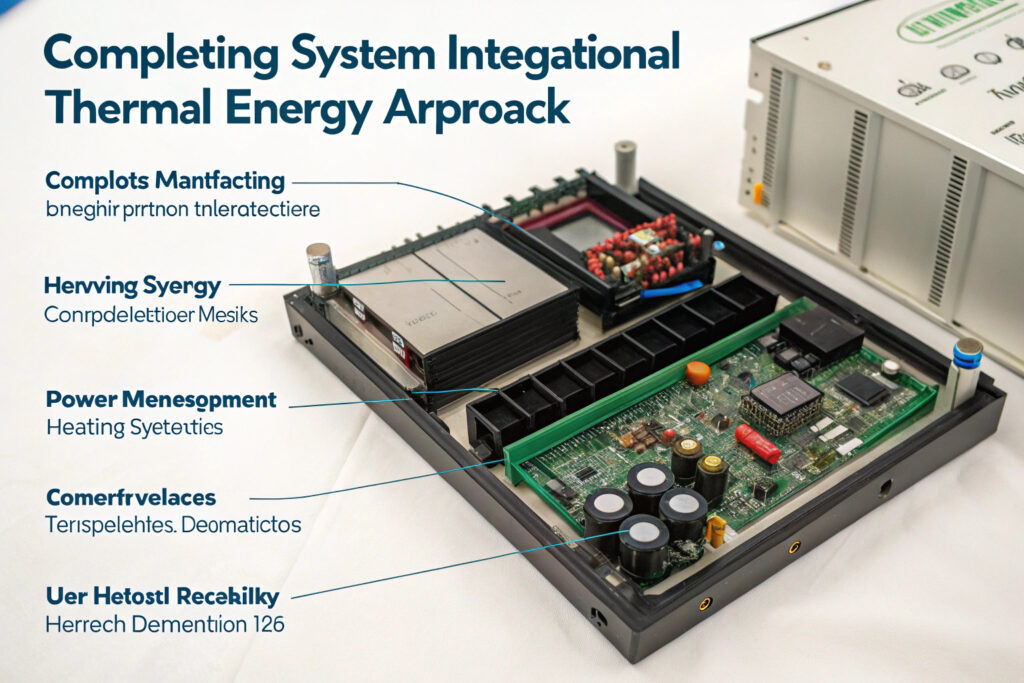
How Can Distributed Architecture Improve Comfort and Performance?
Distributed system architecture places harvesting, storage, and heating elements throughout the mask structure rather than concentrating them in a single module. This approach improves weight distribution, reduces localized stiffness, and allows harvesting from multiple thermal microclimates. Studies in Wearable Technologies demonstrate that distributed systems can achieve 25-40% better total energy capture while improving comfort ratings by 30-50%. Our implementation uses a modular approach with multiple small harvesting arrays connected through flexible printed circuits. The system creates a thermal energy harvesting network that continues operating effectively even if individual elements are compromised by fit variations or external conditions. This redundancy improves reliability while allowing more natural mask drape and movement.
What Adaptive Control Systems Optimize User Experience?
Adaptive control systems use sensor data and machine learning to optimize heating behavior based on both harvested energy availability and user comfort requirements. These systems typically monitor temperature differentials, breathing patterns, battery state, and user activity to intelligently manage power allocation. Research in IEEE Sensors Journal demonstrates that adaptive control can improve perceived comfort by 60% while reducing battery consumption by 40-70%. Our implementation uses a hierarchical control system with a low-power microcontroller running optimization algorithms that learn individual breathing patterns and adjust heating profiles accordingly. The system includes multiple heating zones that can be independently controlled, focusing warmth where it's most needed while conserving energy during periods of limited harvesting.
Conclusion
Implementing thermal energy harvesting in heated masks requires careful integration of harvesting technologies, thermal management strategies, power electronics, and system control approaches. The most successful implementations create symbiotic relationships between the harvesting system and mask function, using the inherent thermodynamics of respiratory protection to generate useful power while enhancing comfort in cold environments. As harvesting efficiency improves and power requirements decrease, thermal energy harvesting is poised to transform heated masks from battery-dependent devices to largely self-powered systems.
Ready to explore thermal energy harvesting for your heated mask products? Contact our Business Director, Elaine, at elaine@fumaoclothing.com to discuss how energy harvesting technology can enhance your cold-weather protection offerings. Our engineering team has experience with multiple harvesting approaches and can help develop an optimized solution for your specific requirements and market positioning.