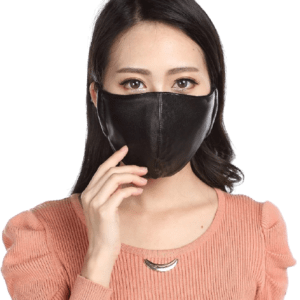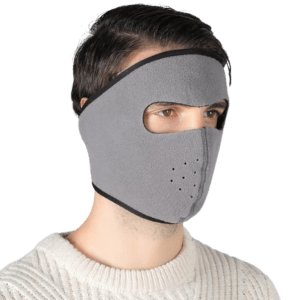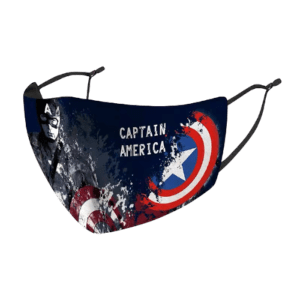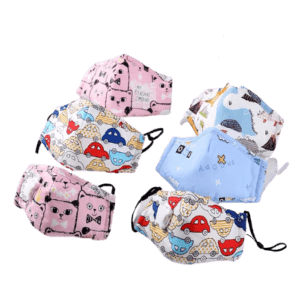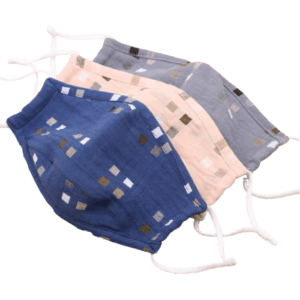

Navigating the FDA 510(k) pathway for medical-apparel masks requires understanding the fine line between general wellness products and regulated medical devices. Many mask manufacturers unintentionally cross into regulated territory by making specific medical claims or designing products that qualify as surgical masks or respirators. The 510(k) process demands substantial scientific evidence demonstrating your device is substantially equivalent to a legally marketed predicate device.
To navigate FDA 510(k) pathways for medical-apparel masks, you must first determine if your product meets the definition of a medical device, identify an appropriate predicate device, conduct rigorous performance testing, prepare comprehensive technical documentation, and submit for FDA review—a process typically requiring 6-12 months and $20,000-$100,000 in direct costs. Most fabric masks intended for general public use don't require 510(k) clearance unless specific medical claims are made.
The classification of masks has been particularly challenging since the pandemic began, with the FDA providing specific guidance about when masks transition from general use products to regulated medical devices. Understanding this distinction and the subsequent regulatory pathway is essential for companies developing masks with medical aspirations. Let's examine the specific steps and considerations for proper 510(k) navigation.
When Does a Fabric Mask Require 510(k) Clearance?
Understanding the triggering conditions that move masks from general use to regulated medical devices is the critical first step.
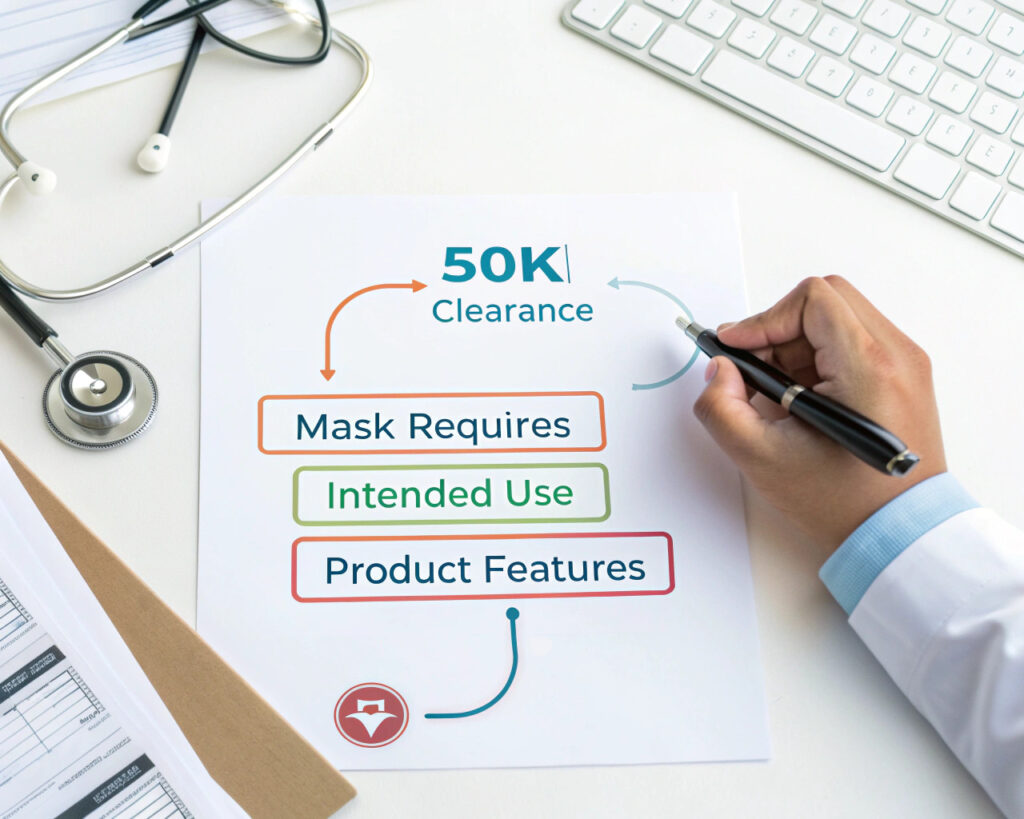
What claims trigger medical device classification?
Specific medical benefit claims including "surgical mask," "protective against infectious diseases," "reduces transmission of pathogens," or "provides antimicrobial protection" typically trigger FDA regulation. Similarly, describing the product for use in healthcare settings or by medical professionals often qualifies it as a medical device. Even more subtle claims like "clinically proven" or "tested to medical standards" can cross the regulatory threshold. Our regulatory team reviews all marketing materials and labeling to ensure claims remain within appropriate boundaries for general wellness products.
How does intended use impact classification?
The stated intended use in your labeling and marketing materials determines FDA jurisdiction more than the physical product characteristics. A mask identical to a surgical mask but marketed for general public use typically doesn't require 510(k) clearance, while the same mask marketed for use in healthcare settings would. The FDA examines the objective intent of your product based on how it's presented in labeling, advertising, and accompanying documents. We help clients carefully craft intended use statements that accurately reflect product capabilities without triggering unnecessary regulatory requirements.
What Are the Key Steps in the 510(k) Preparation Process?
The 510(k) pathway involves meticulous preparation long before the actual submission to the FDA.

How do you identify an appropriate predicate device?
Substantial equivalence demonstration requires identifying a legally marketed device (predicate) with similar intended use and technological characteristics. For medical-apparel masks, common predicates include surgical masks (21 CFR 878.4040) or antimicrobial surgical masks. The predicate must have been legally marketed before May 28, 1976, or have been cleared through the 510(k) process itself. Our regulatory database includes extensive predicate information that helps identify the most appropriate comparison devices for specific mask designs.
What testing is required for 510(k) submission?
Performance testing must demonstrate equivalence to your predicate device, typically including bacterial filtration efficiency (BFE), particulate filtration efficiency (PFE), fluid resistance, breathability (delta P), and flammability testing. Additionally, biocompatibility testing (ISO 10993) is required for devices contacting skin, and any antimicrobial claims require specific efficacy testing. Our testing protocol follows FDA-recognized standards including ASTM F2100, ASTM F2101, and MIL-M-36954C, ensuring data acceptance.
What Documentation Must You Prepare for Submission?
The 510(k) submission is a comprehensive document that must address specific FDA requirements with scientific rigor.

What goes into the substantial equivalence comparison?
A detailed comparison table must demonstrate how your device is both similar to and different from the predicate, with justification why any differences don't raise new questions of safety and effectiveness. This includes comparisons of materials, design, energy source, mechanism of action, and intended use. The most successful submissions anticipate FDA questions and provide scientific rationale for all differences. Our substantial equivalence comparisons typically run 15-25 pages with extensive supporting data.
How should performance data be presented?
Testing results must follow FDA-recognized standards with complete methodology descriptions, raw data, and statistical analysis. The data should clearly demonstrate that your device meets or exceeds the performance characteristics of the predicate. For masks, this typically means presenting BFE ≥95%, PFE ≥98% at 0.1 micron, fluid resistance ≥80 mmHg, and delta for Level 1 masks. Our technical documentation includes complete test reports from FDA-accredited laboratories with appropriate quality controls.
What Are Common Pitfalls in the 510(k) Process?
Understanding where other manufacturers struggle helps avoid costly mistakes and delays.

Why do predicate selection errors cause problems?
Insufficient predicate justification is among the most common reasons for 510(k) hold or denial. The predicate must share substantial equivalence in both intended use and technological characteristics, with differences adequately explained. Selecting a predicate that's too dissimilar or one that itself has regulatory issues inevitably leads to submission problems. Our predicate selection process involves multiple verification steps to ensure appropriate matches.
How can testing inadequacies derail submissions?
Incomplete or non-compliant testing using non-recognized standards or inadequate sample sizes frequently causes FDA requests for additional information. The testing must use FDA-recognized standards with appropriate statistical power and controls. Additionally, testing should be conducted on final, production-equivalent devices rather than prototypes. Our quality system ensures all testing follows recognized standards with documentation sufficient to withstand FDA scrutiny.
What Are the Alternatives to Full 510(k) Clearance?
For some mask products, alternative regulatory pathways may be more appropriate than traditional 510(k).
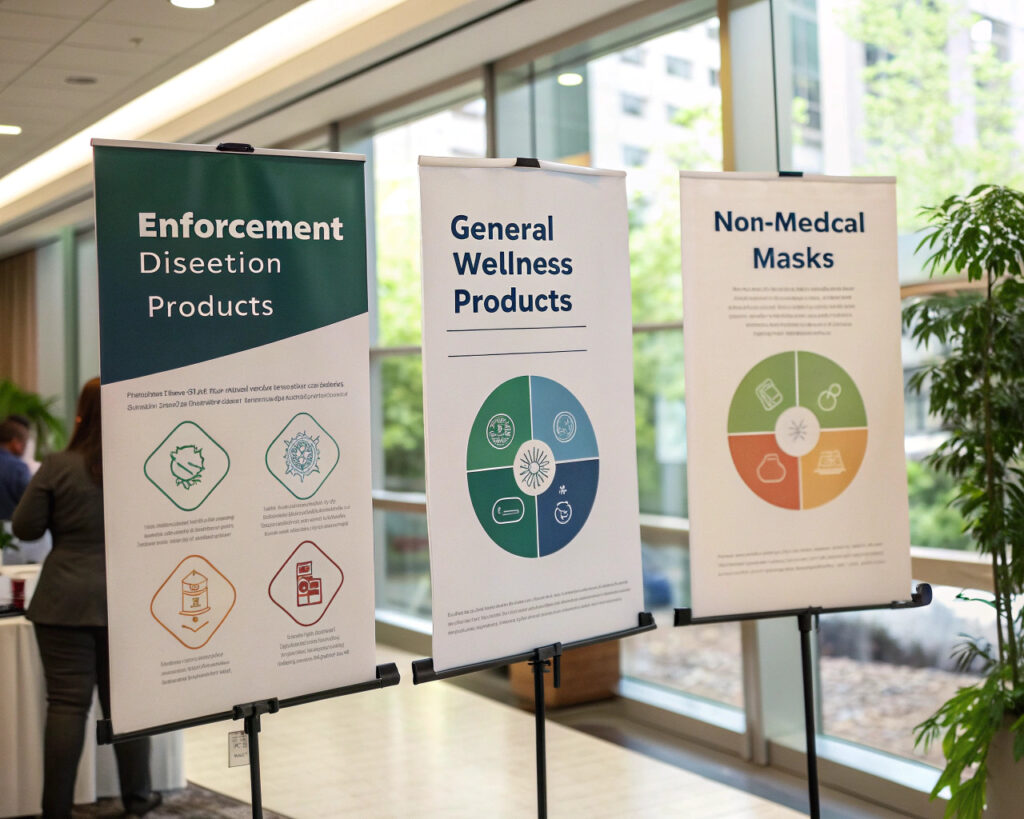
When might enforcement discretion apply?
During public health emergencies, the FDA may exercise enforcement discretion for certain devices, allowing marketing without full 510(k) clearance. However, this is temporary and doesn't constitute formal clearance. Manufacturers must monitor FDA announcements about when enforcement discretion begins and ends. We help clients understand current enforcement policies and transition plans when discretion periods conclude.
What about the general wellness pathway?
Products that only make general wellness claims without referencing specific diseases or conditions typically fall outside FDA regulation. These products must be low-risk and their claims must be supported by accepted scientific information. We've successfully positioned numerous mask products within this category by carefully crafting claims and ensuring product design aligns with general wellness parameters.
Conclusion
Navigating FDA 510(k) pathways for medical-apparel masks requires careful analysis of your product's intended use, claims, and design characteristics against FDA regulatory thresholds. For products that do require clearance, the process demands substantial scientific evidence, comprehensive documentation, and strategic predicate selection. The investment in proper regulatory navigation protects against enforcement actions while building consumer and healthcare provider confidence in your products.
The most successful approaches begin with regulatory assessment during product development rather than after design finalization, allowing for strategic decisions that optimize both performance and regulatory pathway. Companies that understand these requirements can make informed decisions about whether to pursue medical claims or position products for general wellness use.
Ready to navigate the FDA 510(k) pathway for your medical-apparel masks? Contact our Business Director, Elaine, at elaine@fumaoclothing.com to discuss our regulatory expertise and how we can help determine the appropriate pathway for your specific product. We'll provide a comprehensive regulatory assessment and roadmap for successful FDA engagement.