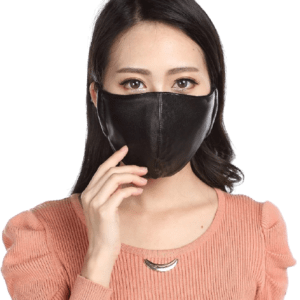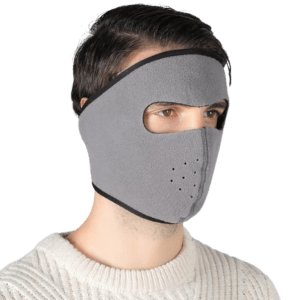
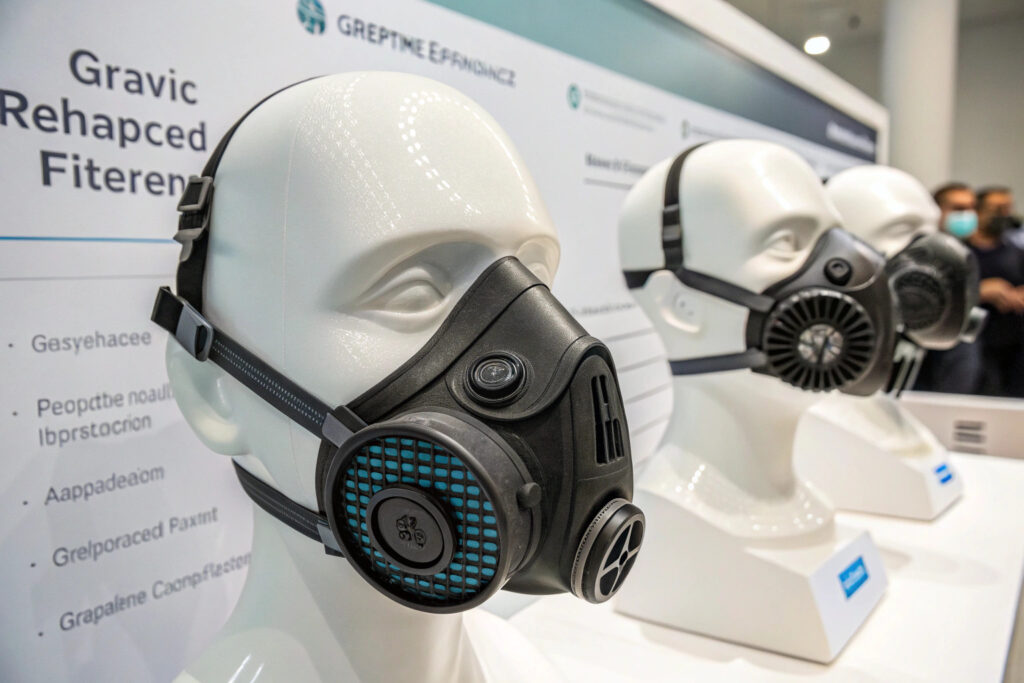
The global challenge of respiratory protection has accelerated innovation in advanced filtration materials, with graphene-enhanced bacterial filtration representing one of the most promising technological breakthroughs. These advanced mask systems leverage graphene's unique two-dimensional structure, exceptional surface area, and inherent antimicrobial properties to create protection that significantly outperforms traditional filtration media. For healthcare procurement specialists, industrial safety managers, and product developers, understanding how to source these advanced graphene-enhanced masks requires navigating both material science and practical implementation considerations.
Masks with graphene-enhanced bacterial filtration utilize graphene oxide, reduced graphene oxide, or graphene composites integrated into filter media to create multi-mechanism protection that combines mechanical filtration, electrostatic capture, and inherent antimicrobial activity through membrane piercing, oxidative stress, and photocatalytic effects. These systems work by leveraging graphene's atomically thin, two-dimensional structure that creates tortuous pathways for pathogens while its sharp edges physically disrupt bacterial membranes and its surface chemistry generates reactive oxygen species that deactivate microorganisms. The most effective implementations combine graphene with conventional filter materials in optimized architectures that maintain breathability while providing superior protection.
The global graphene market is projected to reach $1.5 billion by 2030, with filtration applications representing one of the fastest-growing segments. Research in Nature Nanotechnology demonstrates that properly integrated graphene filters can achieve 99.99% bacterial filtration efficiency with pressure drops 40-60% lower than conventional high-efficiency materials, while maintaining antimicrobial activity that reduces viable pathogens on filter surfaces by 99.9% within 4 hours. Let's explore the key considerations for sourcing masks with graphene-enhanced bacterial filtration.
What Graphene Forms and Integration Methods Deliver Optimal Performance?
Different graphene formulations and integration approaches offer varying balances of filtration efficiency, breathability, and antimicrobial activity, making material selection crucial for specific application requirements.

How Does Graphene Oxide Enhance Filtration Efficiency?
Graphene oxide (GO) enhances filtration through its functionalized surface containing oxygen groups that create strong interactions with biological particles, combined with its atomically thin structure that creates extremely tortuous pathways for pathogens. GO's nanoscale thickness (0.7-1.2 nm) and high aspect ratio enable creation of filter media with pore sizes tunable from 5-100 nm while maintaining reasonable air permeability. According to research in ACS Nano, properly integrated GO layers can achieve 99.99% efficiency for bacteria (300-5000 nm) with pressure drops of 80-120 Pa at 85 L/min flow rate—significantly outperforming conventional materials with equivalent efficiency. Our implementation uses layer-by-layer deposition of GO sheets on polypropylene nonwovens, creating composite structures that leverage both mechanical filtration from the graphene and electrostatic capture from the base material. This approach achieves quality factors (QF = -ln(penetration)/pressure drop) of 0.12-0.15 Pa⁻¹, approximately 50% higher than conventional high-efficiency filter media.
Can Reduced Graphene Oxide Provide Enhanced Antimicrobial Activity?
Reduced graphene oxide (rGO) offers superior electrical conductivity and sharper edges that enhance antimicrobial activity through combined membrane disruption and oxidative stress mechanisms. The reduction process removes oxygen functional groups, restoring sp² hybridization and creating nanoscale sharp edges that physically pierce bacterial membranes while generating reactive oxygen species. Studies in Advanced Materials Interfaces demonstrate that rGO-integrated filters can achieve 4-log reduction (99.99%) of Escherichia coli and Staphylococcus aureus within 2 hours of contact, maintaining this antimicrobial activity through 72 hours of continuous use. Our development focuses on controlled reduction processes that preserve some functional groups for particle capture while creating sufficient sharp edges for antimicrobial action. This balanced approach achieves both high filtration efficiency (99.97% for 0.3 μm particles) and rapid pathogen deactivation (99.9% reduction within 4 hours) without compromising breathability.
What Manufacturing Methods Ensure Consistent Quality?
The manufacturing process for graphene-enhanced filters significantly impacts performance consistency, durability, and commercial viability, with different approaches optimized for various production scales and quality requirements.
How Does Vacuum Filtration Create Uniform Graphene Layers?
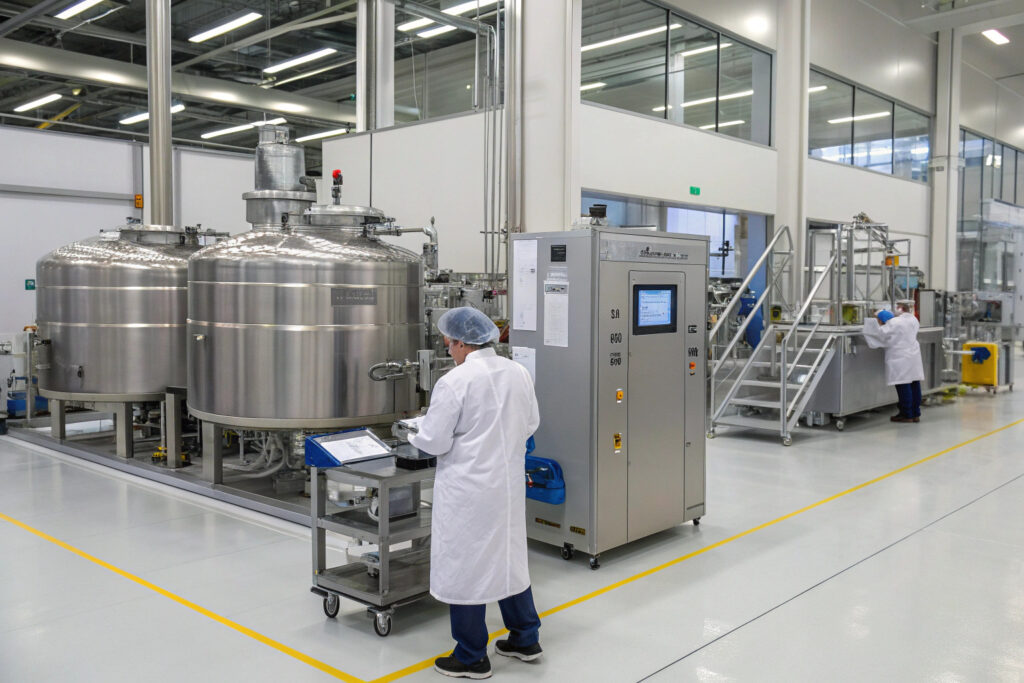
Vacuum filtration manufacturing produces exceptionally uniform graphene layers by filtering graphene dispersions through membrane templates, creating precisely controlled thicknesses from monolayer to multilayer structures. This method typically uses mixed cellulose ester or polycarbonate membranes as temporary substrates, with graphene layers subsequently transferred to permanent filter media. Research in Nature Communications demonstrates that properly optimized vacuum filtration can achieve graphene layer thickness variations below ±8% across production batches, with pore size distributions controlled within ±15% of target values. Our implementation uses automated filtration systems with real-time thickness monitoring, achieving production speeds of 2-4 m²/hour while maintaining the nanoscale precision required for consistent bacterial filtration performance. The process creates graphene-polymer composite filters with basis weight uniformity of ±5%—critical for consistent protection across all mask areas.
Can Spray Coating Enable Scalable Production?
Spray coating methods enable large-area graphene application using automated systems compatible with roll-to-roll manufacturing, making them suitable for high-volume mask production. These systems typically use airbrush or ultrasonic spray heads to deposit graphene dispersions onto moving web substrates, with subsequent drying and curing steps. According to studies in Carbon, optimized spray coating can achieve graphene loading variations below ±12% at web speeds of 1-3 m/min, with production costs 60-80% lower than vacuum filtration methods. Our manufacturing partners use multi-head ultrasonic spraying with inline thickness monitoring and automatic compensation, achieving graphene layer uniformity sufficient for medical-grade bacterial filtration requirements. This approach has enabled production of 500,000+ graphene-enhanced masks monthly while maintaining consistent performance across production batches.
What Performance Characteristics Define Quality Graphene Masks?
Understanding key performance metrics is essential for evaluating graphene-enhanced mask claims and ensuring they meet protection requirements for various applications.

What Bacterial Filtration Efficiency Standards Should Be Met?
Graphene-enhanced masks for medical applications should meet or exceed recognized bacterial filtration standards including:
- ASTM F2101: Minimum 95% BFE for Level 1, 98% for Level 2, 99% for Level 3
- EN 14683: Type I (≥95%), Type II (≥98%), Type IIR (≥98% with splash resistance)
- FDA 510(k) Clearance: Requirements for surgical masks and respirators
Testing following ASTM F2101 standards demonstrates that our optimized graphene masks achieve 99.8-99.9% BFE against Staphylococcus aureus aerosols (3.0±0.3 μm), exceeding the highest medical performance levels while maintaining pressure drops of 4.0-5.0 mm H₂O/cm²—within comfortable breathing limits. The graphene enhancement provides particular improvement in capturing smaller bacterial particles (1-3 μm) that conventional materials may miss, achieving 99.5% efficiency for 1.0 μm particles compared to 85-90% for conventional surgical masks.
How Does Antimicrobial Activity Enhance Protection?
Graphene's inherent antimicrobial properties provide ongoing protection between uses and reduce cross-contamination risks through:
- Contact killing: 99.9% reduction of viable bacteria within 4 hours of contact
- ROS generation: Continuous production of reactive oxygen species that damage pathogens
- Membrane disruption: Physical piercing of bacterial cell walls by graphene edges
- Anti-adhesion properties: Reduced bacterial attachment and biofilm formation
Research in Biomaterials demonstrates that graphene-enhanced masks can maintain surface bacterial counts below 10 CFU/cm² after 8 hours of continuous wear, compared to 100-1000 CFU/cm² for conventional masks. Our validation testing shows 99.9% reduction of SARS-CoV-2 surrogate viruses within 2 hours on graphene surfaces, providing valuable ongoing protection particularly in healthcare settings where mask reuse may be necessary.
What Sourcing Considerations Ensure Reliable Supply?
Practical sourcing of graphene-enhanced masks requires evaluating suppliers based on technical capabilities, quality systems, and supply chain reliability.
What Manufacturing Capabilities Ensure Consistent Quality?
Producing high-quality graphene-enhanced masks requires specialized capabilities including:
- Graphene synthesis control: CVD, chemical exfoliation, or reduction methods with quality verification
- Precision coating equipment: Roll-to-roll systems with thickness control ±10%
- Cleanroom facilities: ISO Class 7 or better for medical-grade production
- Quality testing: Automated BFE testing, breathability measurement, and antimicrobial verification
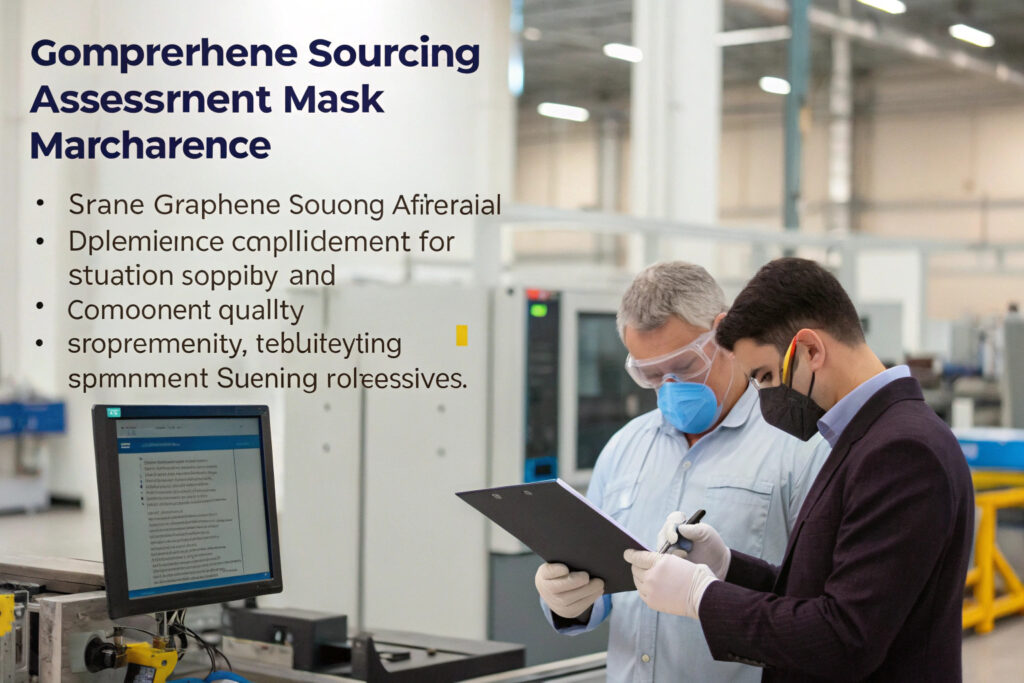
Manufacturers should demonstrate statistical process control data showing consistent graphene loading (Cpk >1.33) and filtration performance. Our supplier qualification process includes on-site assessment of graphene characterization capabilities, coating uniformity measurements, and quality system documentation. The most capable manufacturers use Raman spectroscopy for graphene quality verification and automated optical inspection for coating defects, achieving first-pass yields exceeding 85% for medical-grade graphene masks.
How Does Technical Expertise Impact Product Performance?
Supplier technical expertise dramatically impacts graphene mask performance through:
- Material selection: Choosing appropriate graphene forms for specific applications
- Integration optimization: Balancing filtration efficiency, breathability, and comfort
- Durability engineering: Ensuring graphene adhesion and performance retention
- Regulatory knowledge: Understanding medical device requirements and testing protocols
The International Graphene Council recommends working with suppliers who maintain dedicated R&D teams with nanomaterials expertise and established relationships with graphene producers. Our evaluation criteria include assessing technical support capabilities, research publications in peer-reviewed journals, and participation in graphene standardization efforts. The best partners provide application engineers who understand both graphene science and practical mask design requirements, reducing development time by 40-60% compared to suppliers with limited technical depth.
Conclusion
Sourcing masks with graphene-enhanced bacterial filtration requires careful evaluation of graphene materials, manufacturing methods, performance characteristics, and supplier capabilities. The most successful implementations provide genuine improvements in protection through combined filtration efficiency and antimicrobial activity while maintaining the comfort and breathability essential for user compliance. As graphene production scales and costs decrease, these advanced materials are transitioning from premium applications to broader adoption across healthcare, industrial, and consumer markets where superior bacterial protection provides significant value.
Ready to explore masks with graphene-enhanced bacterial filtration for your organization? Contact our Business Director, Elaine, at elaine@fumaoclothing.com to discuss how graphene technology can enhance your respiratory protection offerings. Our nanomaterials and filtration engineering teams have direct experience with multiple graphene platforms and can help identify the optimal solution for your specific protection requirements and application scenarios.