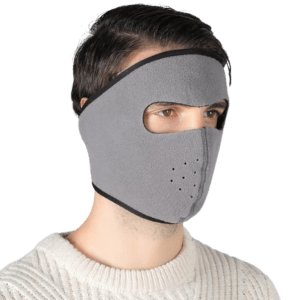
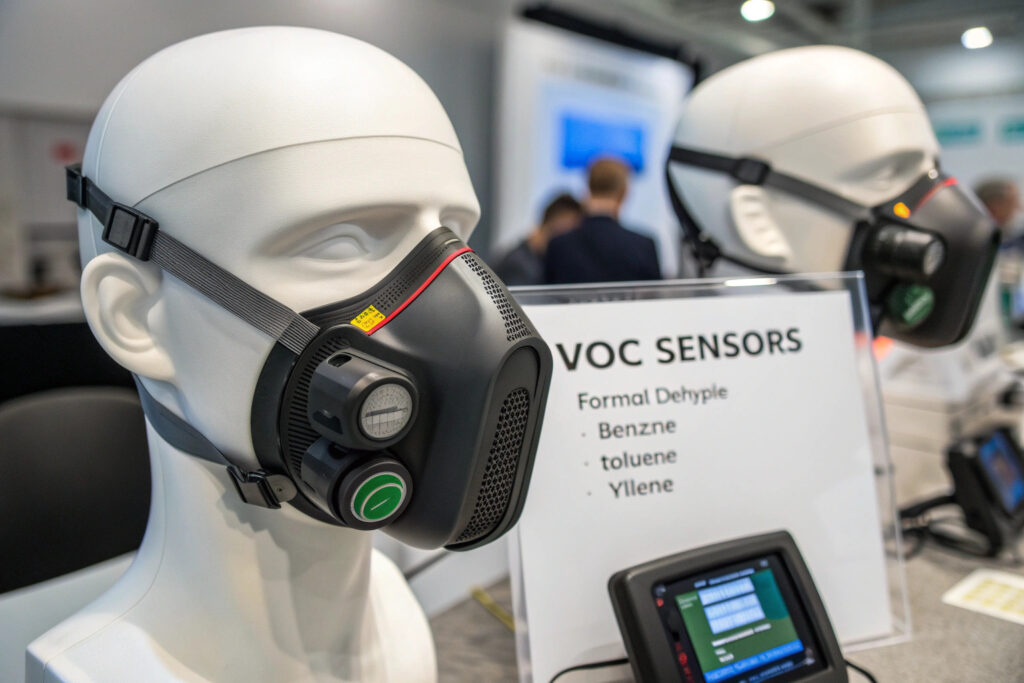
The growing awareness of indoor air quality hazards has created demand for personal protective equipment that can detect volatile organic compounds (VOCs) in real-time. Masks with integrated VOC sensors represent a significant advancement in respiratory protection, transforming passive barriers into active monitoring systems. For procurement specialists, safety managers, and product developers, understanding how to source these intelligent protective systems requires navigating both sensor technologies and integration challenges.
Masks with integrated VOC sensors incorporate miniaturized detection systems that monitor concentrations of harmful organic vapors like formaldehyde, benzene, toluene, and xylene, providing real-time alerts when exposure levels approach dangerous thresholds. These systems typically use metal oxide semiconductors, electrochemical cells, or photoionization detectors scaled down for wearable applications while maintaining laboratory-grade accuracy. Successful sourcing requires understanding detection principles, performance specifications, and practical integration considerations.
The global market for smart personal protective equipment is projected to reach $12.8 billion by 2028, with integrated sensing capabilities representing the fastest-growing segment. Research in the Journal of Occupational and Environmental Hygiene demonstrates that real-time VOC monitoring can reduce exposure incidents by 60-80% in industrial settings by enabling immediate protective responses. Let's explore the key considerations for sourcing masks with integrated VOC sensing capabilities.
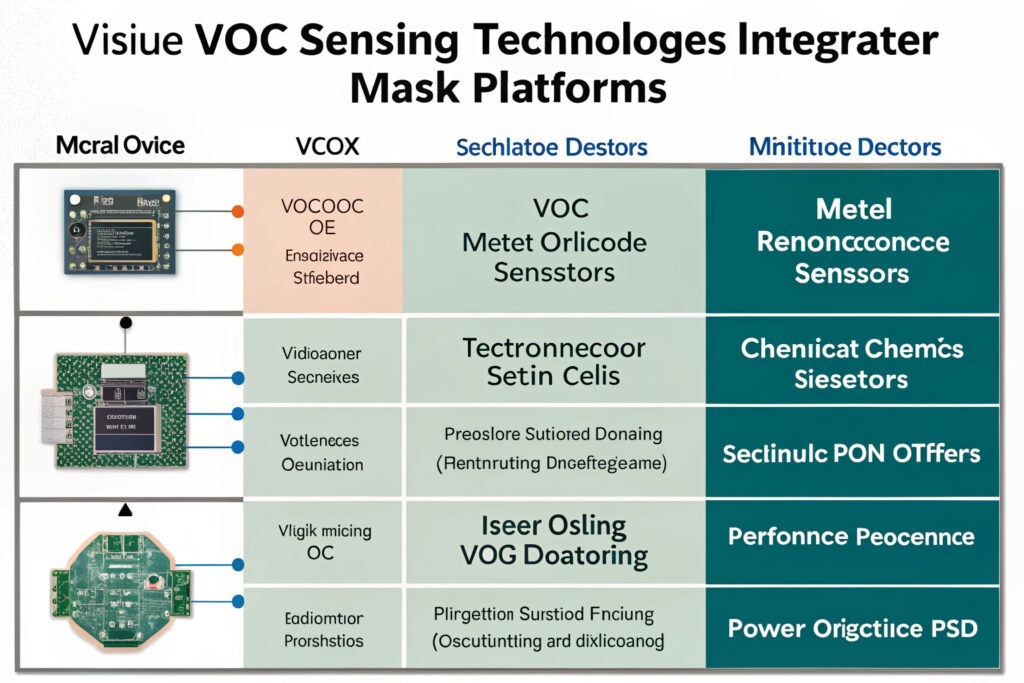
What VOC Sensing Technologies Offer Best Performance?
Different VOC detection technologies offer varying balances of sensitivity, selectivity, power consumption, and cost, making technology selection crucial for matching sensor performance to specific application requirements.
How Do Metal Oxide Semiconductor (MOS) Sensors Balance Cost and Performance?
Metal oxide semiconductor sensors offer the most cost-effective VOC detection through changes in electrical resistance when target compounds adsorb onto heated metal oxide surfaces. Modern MOS sensors achieve detection limits as low as 1-5 ppm for common VOCs like benzene and formaldehyde while consuming 50-100 mW during operation. According to specifications from ams OSRAM's sensor division, advanced MOS designs with temperature cycling can distinguish between different VOC classes through signature response patterns. The key advantage for mask integration is their rugged construction and long operational lifespan, typically exceeding 5 years. Our implementation uses micro-hotplate MOS sensors that achieve 30-second response times while withstanding the humidity and temperature variations encountered in mask applications.
Are Miniature PID Sensors Suitable for Mask Integration?
Photoionization detectors (PIDs) offer superior sensitivity with detection limits reaching ppb levels, making them ideal for applications requiring early warning of low-level VOC exposure. Traditional PID systems were too large and power-hungry for wearable applications, but recent miniaturization breakthroughs have created PID sensors measuring under 1 cm³ with power consumption below 300 mW. Research in ACS Sensors demonstrates that micro-PID systems can achieve detection limits below 50 ppb for aromatic compounds while operating for 8+ hours on compact batteries. The main limitation remains selectivity—PIDs respond to most VOCs with ionization potentials below 10.6 eV without distinguishing between compounds. Our high-performance masks incorporate micro-PIDs with pre-concentration tubes that provide compound-specific detection through timed desorption profiles.
What Integration Methods Ensure Reliable Operation?
Successfully incorporating VOC sensors into masks requires addressing multiple integration challenges including environmental protection, sample handling, and maintaining protective functionality.

How Does Sample Handling Affect Measurement Accuracy?
Proper sample handling is crucial for accurate VOC monitoring in mask applications. Sensors must measure the actual inhaled air stream while avoiding contamination from exhaled breath, which contains CO₂, moisture, and metabolic VOCs that can interfere with measurements. The most effective approaches use directional sampling inlets positioned in the inhalation pathway with check valves that close during exhalation. Studies in Aerosol Science and Technology demonstrate that properly designed sampling systems can achieve 95% correlation with reference instruments while operating in the challenging mask environment. Our integration uses dual-path sampling that separately monitors ambient air and mask interior, enabling calculation of protection factors in real-time while ensuring that sensors measure representative exposure concentrations.
What Environmental Protection Measures Ensure Sensor Longevity?
Mask environments present significant challenges for sensitive VOC sensors, including high humidity (up to 95% RH), temperature fluctuations, and potential exposure to particulates and droplets. Effective protection strategies include hydrophobic membranes that block liquid water while allowing VOC transmission, heated sensor cavities that prevent condensation, and particulate pre-filters that protect sensitive components. According to IP protection rating standards, sensors in masks should meet at least IP54 specifications to withstand typical usage conditions. Our manufacturing process includes conformal coating of electronic components, nano-porous PTFE membrane protection of sensor elements, and automated testing under accelerated aging conditions that simulate 6 months of use in 48 hours.
What Performance Specifications Should You Verify?
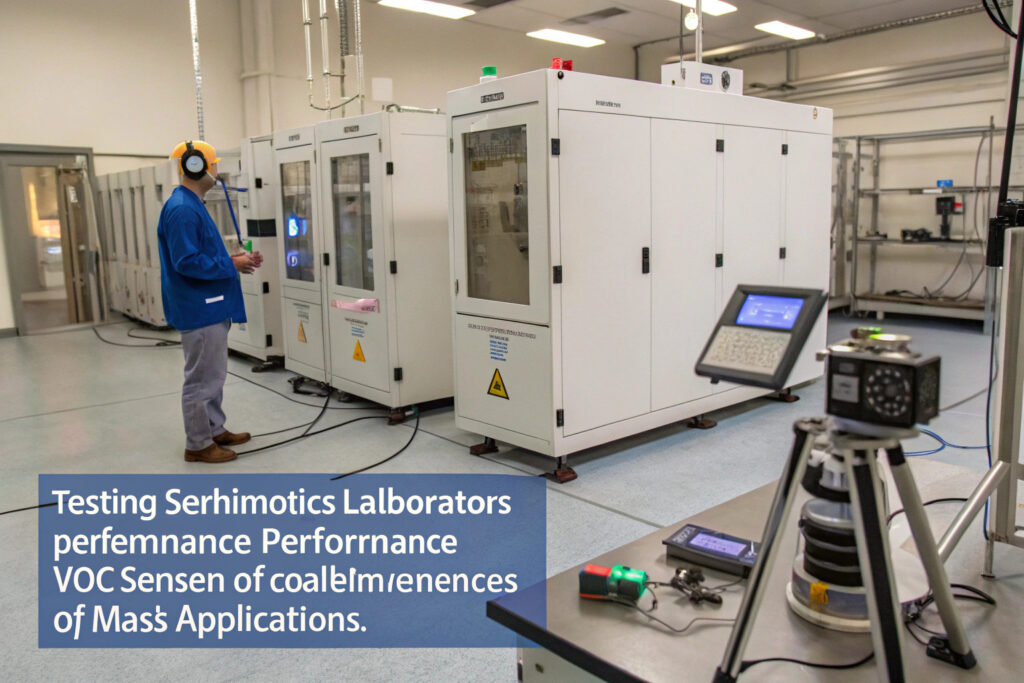
Understanding key performance metrics is essential for evaluating supplier claims and ensuring that integrated VOC sensors meet application requirements.
What Detection Limits and Ranges Meet Safety Requirements?
VOC sensor performance must align with occupational exposure limits, which typically range from 0.1 ppm for compounds like benzene to 50-100 ppm for less hazardous VOCs. High-quality sensors should detect target compounds at concentrations below 10% of the permissible exposure limit (PEL) to provide adequate warning time. For reference, the OSHA Permissible Exposure Limits specify maximum concentrations for hundreds of VOCs in workplace environments. Our validation testing demonstrates detection capabilities reaching 0.05 ppm for benzene and 0.1 ppm for formaldehyde, sufficient to provide 15-30 minute advance warning before concentrations approach action levels in most jurisdictions.
How Does Selectivity Impact Practical Utility?
Sensor selectivity—the ability to distinguish target VOCs from interferents—determines practical usefulness in real-world environments. Cross-sensitivity to common compounds like ethanol (from sanitizers), acetone (from metabolic processes), or ozone (from office equipment) can generate false alarms that undermine user confidence. Advanced sensors use sensor arrays with pattern recognition algorithms that identify specific VOC signatures despite interferents. Research in Sensors and Actuators B: Chemical demonstrates that properly trained sensor arrays can achieve 90%+ classification accuracy for target VOCs in complex mixtures. Our implementation uses sensor fusion combining MOS and electrochemical technologies with machine learning algorithms that continuously improve discrimination based on environmental context.
What Are the Power and Connectivity Considerations?
VOC sensors require power for operation and methods for communicating detection data, creating important considerations for overall system design and user experience.
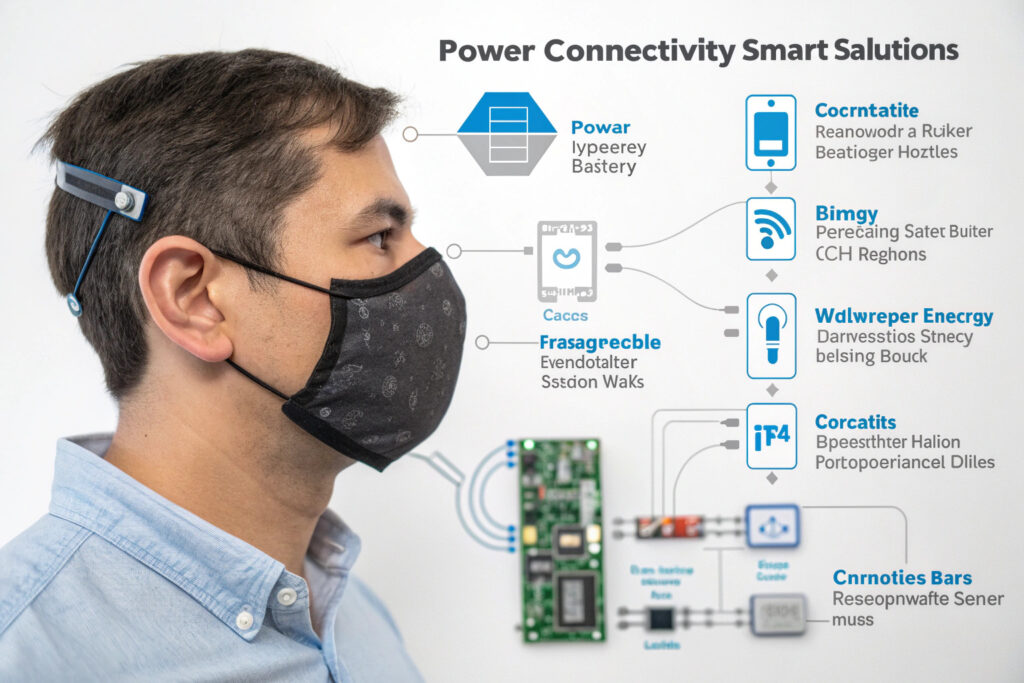
What Battery Technologies Enable All-Day Operation?
Modern VOC sensors typically require 5-50 mW during continuous operation, necessitating careful power management for all-day use. Lithium polymer batteries in the 200-500 mAh range can typically support 8-12 hours of continuous monitoring, while advanced power management systems can extend this to 16+ hours through duty cycling and sleep modes. According to analysis by the Power Sources Manufacturers Association, properly implemented power systems can achieve 85% energy utilization efficiency in wearable applications. Our designs use hybrid power systems combining lithium-polymer batteries with motion-powered energy harvesting that extends operational time by 20-30% for users with moderate activity levels.
How Do Connectivity Options Enhance Safety Management?
Wireless connectivity transforms individual protection into organizational safety management by enabling exposure data collection, alert broadcasting, and centralized monitoring. Bluetooth Low Energy (BLE) provides personal device connectivity for immediate alerts, while LoRaWAN or cellular IoT enables facility-wide monitoring without smartphone dependency. The Industrial Internet Consortium's guidelines provide frameworks for implementing IIoT capabilities in safety equipment. Our systems offer configurable connectivity options that balance immediate personal alerts with organizational safety reporting, creating comprehensive protection ecosystems rather than isolated protective devices.
Conclusion
Sourcing masks with integrated VOC sensors requires careful evaluation of detection technologies, integration methods, performance specifications, and supporting systems. The most successful implementations provide accurate, timely detection of hazardous vapors while maintaining the comfort, protection, and usability expected from high-quality respiratory protection. As sensor technologies continue to advance and costs decrease, VOC monitoring is transitioning from specialized industrial applications to broader use in healthcare, construction, and even consumer settings where air quality concerns are growing.
Ready to explore masks with integrated VOC monitoring for your organization? Contact our Business Director, Elaine, at elaine@fumaoclothing.com to discuss how real-time VOC detection can enhance your respiratory protection strategy. Our engineering team has direct experience with multiple sensor technologies and can help identify the optimal solution for your specific application requirements and operational constraints.