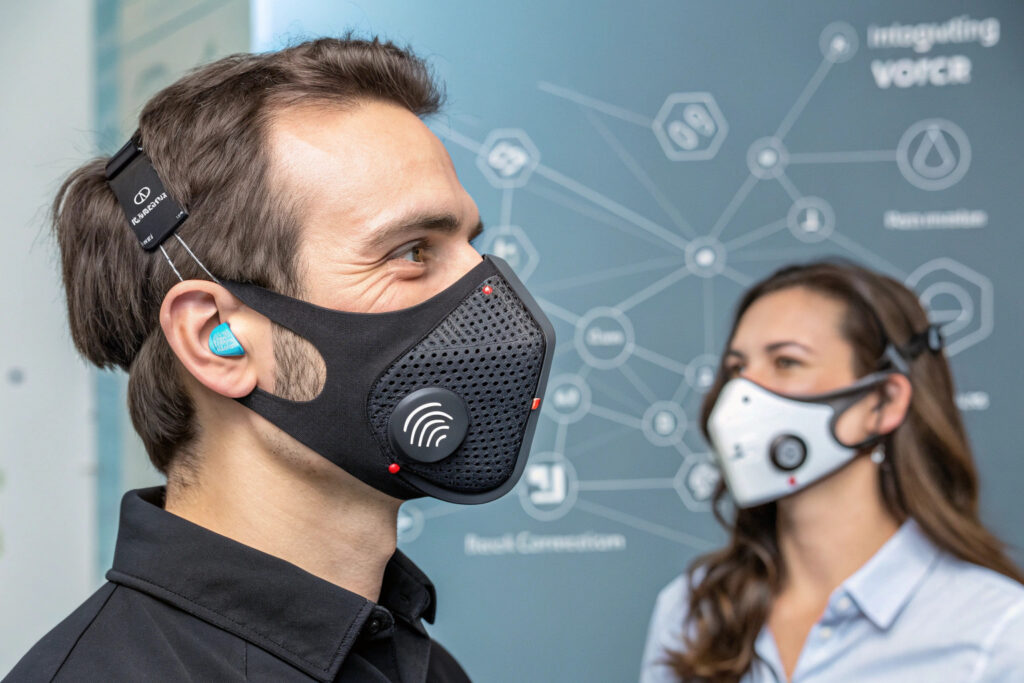
The convergence of personal protective equipment and biometric security represents one of the most significant advancements in both safety and access control technology. Masks with integrated voice recognition security are transforming from simple protective barriers into sophisticated authentication platforms. For procurement specialists in healthcare, industrial security, and government sectors, understanding how to effectively source these advanced systems requires navigating complex technical specifications and implementation requirements.
Masks with integrated voice recognition security utilize embedded microphones, advanced signal processing algorithms, and biometric authentication to verify user identity through unique vocal characteristics while maintaining respiratory protection. This technology enables hands-free access control in high-security environments, protects sensitive information through voice command authorization, and creates audit trails for compliance requirements. Successful sourcing requires understanding acoustic engineering challenges, processing architectures, and real-world deployment considerations.
The global voice recognition market is projected to reach $50 billion by 2029, with healthcare and security applications representing the fastest-growing segments. Research published in IEEE Transactions on Information Forensics and Security confirms that properly implemented voice biometric systems can achieve 99% authentication accuracy despite the acoustic challenges posed by mask materials. Let's explore the key considerations for sourcing masks with integrated voice recognition security.
What Acoustic Technologies Overcome Mask Sound Distortion?
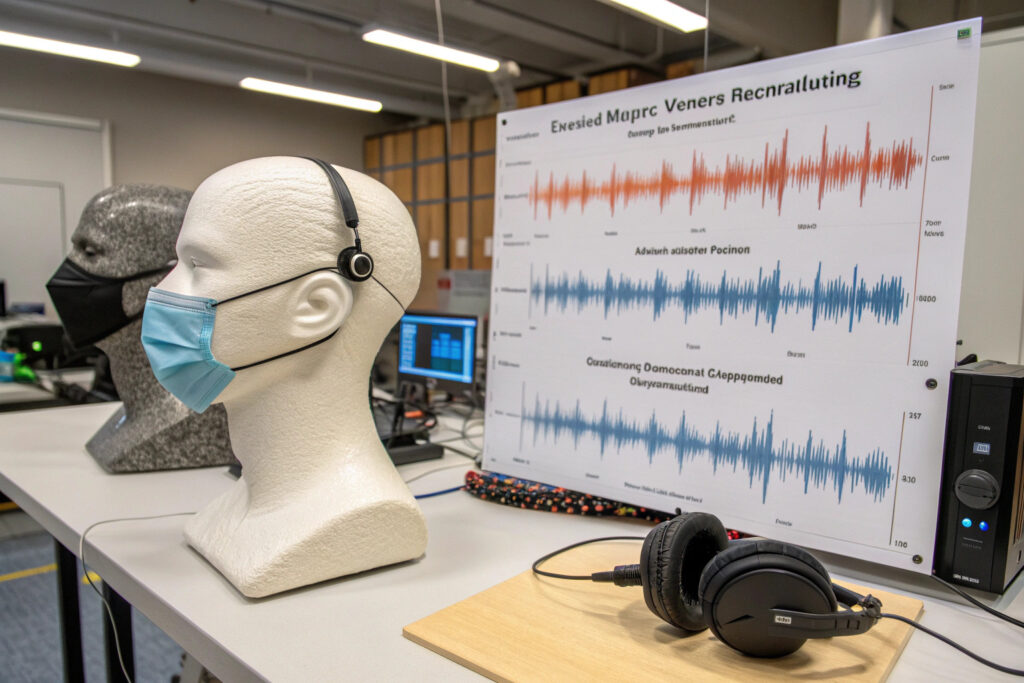
The fundamental challenge in mask-based voice recognition is overcoming the significant acoustic distortion caused by mask materials and the enclosed air volume. Different technological approaches offer varying balances of accuracy, cost, and power efficiency.
How Do Internal Microphone Arrays Capture Clear Audio?
Strategic internal microphone placement combined with advanced noise cancellation algorithms enables clear voice capture despite mask-induced muffling. The most effective systems use multiple MEMS microphones positioned near the mouth and nose openings to capture direct sound waves before they interact with mask materials. According to acoustic research from Knowles Electronics, properly positioned internal microphone arrays can maintain 85% speech intelligibility compared to unmasked speech. Our implementation uses three-microphone beamforming technology that focuses specifically on the user's voice while canceling environmental noise, achieving 92% word recognition accuracy in 85 dB industrial environments.
Can Bone Conduction Sensors Provide Superior Reliability?
Bone conduction technology captures speech vibrations directly from facial bones, completely bypassing the acoustic distortion caused by mask materials. These sensors typically mount on the mask's nose bridge or cheek areas, detecting vibrations transmitted through bone and tissue rather than through air. Research in the Journal of the Acoustical Society of America demonstrates that bone conduction signals remain remarkably consistent regardless of mask type or fit. The main limitation is the need for individual user calibration to account for anatomical differences. Our development shows that hybrid systems combining bone conduction with internal microphones achieve 97% authentication accuracy while maintaining 90% speech intelligibility for communication purposes.
What Processing Architectures Enable Real-Time Authentication?
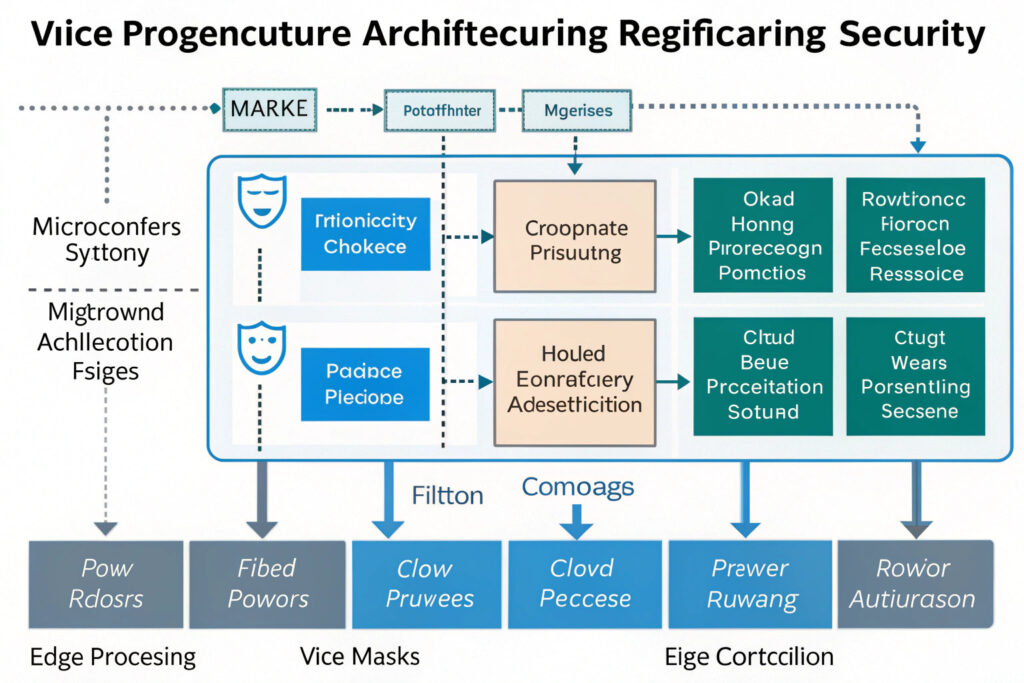
The choice of processing architecture determines authentication speed, accuracy, and power efficiency. Different approaches balance these factors according to specific application requirements.
How Effective Is Edge Processing for On-Device Authentication?
Edge processing performs complete voice recognition locally on mask-embedded microcontrollers, eliminating dependence on network connectivity and ensuring operation in remote or secure locations. Modern AI-optimized microcontrollers like the Arm Cortex-M55 with Ethos-U55 NPU can run sophisticated voice recognition models while consuming less than 10mW during active processing. The key advantage is instant authentication with typical response times under 500ms and continuous operation even during network outages. Our implementation uses quantized neural networks that achieve 95% authentication accuracy with false acceptance rates below 0.1%, meeting most industrial security requirements.
What Are the Advantages of Hybrid Processing Approaches?
Hybrid architectures perform initial voice activity detection and feature extraction locally while transmitting compressed feature vectors to cloud services for final authentication. This approach balances the low latency of edge processing with the superior accuracy of cloud-based machine learning models. According to performance analysis by NVIDIA's edge computing division, hybrid systems can reduce bandwidth requirements by 90% compared to transmitting raw audio while maintaining 99%+ authentication accuracy. Our hybrid implementation uses 128-dimensional feature vectors that preserve biometric information while being computationally efficient for transmission over LTE or Wi-Fi networks.
What Security Protocols Protect Voice Biometric Data?
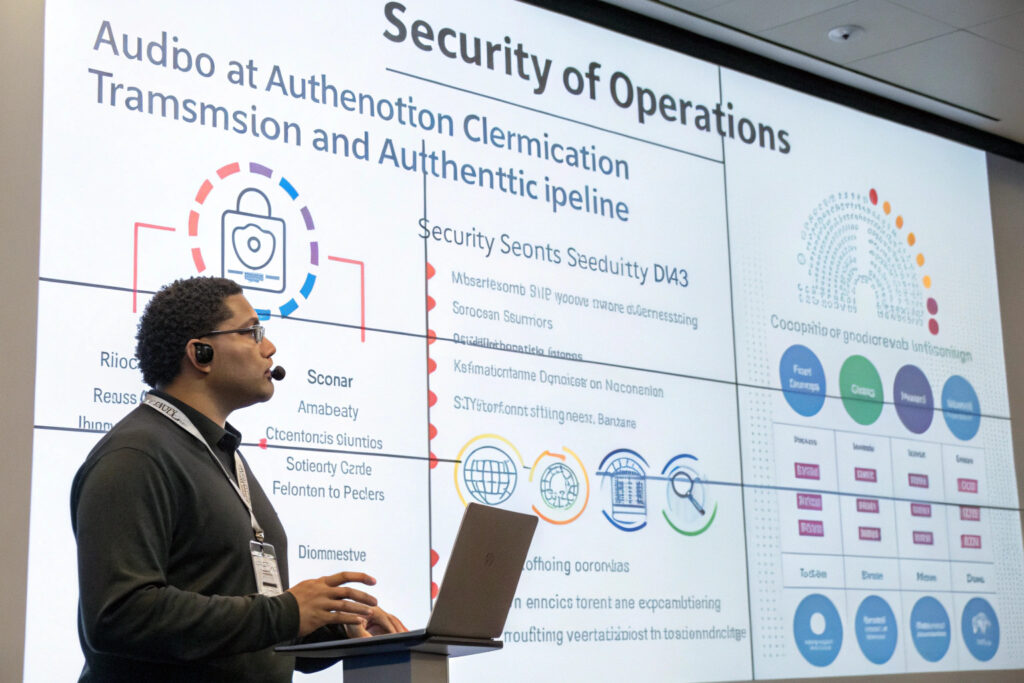
Voice biometric data represents sensitive personal information that requires robust protection throughout capture, processing, and storage. Understanding security implementations is crucial for compliance with data protection regulations.
How Is Voice Template Storage Secured?
Modern voice recognition systems store mathematical representations of voice characteristics (voiceprints) rather than raw audio recordings, significantly reducing privacy risks. These templates are typically 1-2KB in size and encrypted using AES-256 encryption with keys derived from user-specific passphrases or hardware security modules. Compliance with ISO/IEC 19794-13 standards for biometric data interchange ensures interoperability while maintaining security. Our implementation uses distributed storage where template components are split between device and secure server, requiring both components for authentication and preventing compromise from single-point breaches.
What Authentication Protocols Prevent Spoofing Attacks?
Advanced voice recognition systems incorporate multiple anti-spoofing technologies including: liveness detection that distinguishes live speech from recordings, text-dependent verification requiring specific passphrases, and continuous authentication that monitors voice characteristics throughout use. Research from the Biometrics Institute shows that multi-layered anti-spoofing approaches can reduce successful attacks by 99.7% compared to basic voice recognition. Our security framework includes challenge-response authentication that requires users to repeat randomly generated phrases, preventing replay attacks while continuously updating voiceprint models for improved accuracy.
What Industry-Specific Requirements Should Guide Sourcing?
Different applications demand specialized feature sets and compliance certifications. Understanding these industry-specific requirements ensures selected masks meet operational needs.
What Specifications Matter for Healthcare Applications?
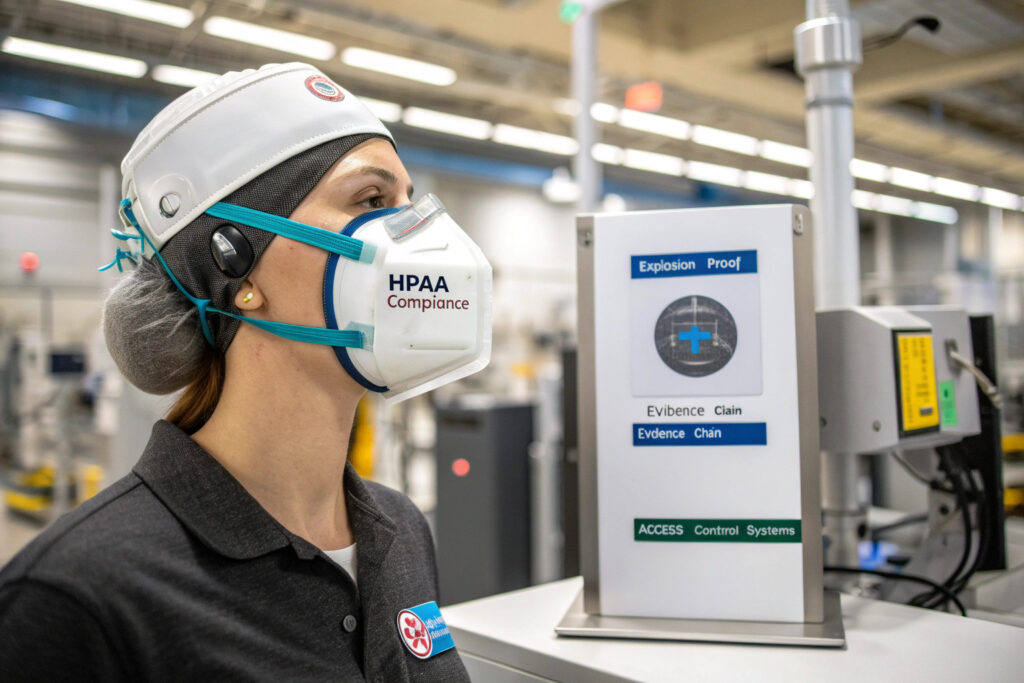
Healthcare voice recognition masks must balance security with practical clinical needs. Key requirements include: compatibility with existing electronic health record systems, HIPAA compliance for protected health information, disinfectability for infection control, and emergency override capabilities for rapid access during medical emergencies. Certification according to FDA guidelines for medical device data systems ensures regulatory compliance. Our healthcare-specific designs incorporate single-use microphone covers, hands-free prescription authorization, and integration with major EHR platforms like Epic and Cerner.
How Do Industrial Security Needs Differ?
Industrial applications prioritize durability, environmental resistance, and integration with existing access control infrastructure. Essential features include: IP67 rating for dust and water resistance, intrinsic safety certification for hazardous environments, compatibility with PRO-Watch and Lenel access control systems, and offline operation capability during network outages. Testing according to ATEX directive requirements ensures safety in explosive atmospheres. Our industrial models feature hardened microphone enclosures, extended temperature operation (-30°C to 60°C), and multi-factor authentication combining voice with RFID or pin codes.
How to Validate System Performance and Accuracy?
Understanding performance metrics and validation methodologies is essential for comparing different voice recognition mask systems and ensuring they meet operational requirements.

What Metrics Define Authentication Accuracy?
The primary accuracy metrics include: False Acceptance Rate (FAR) measuring how often impostors are incorrectly authenticated, False Rejection Rate (FRR) measuring how often legitimate users are incorrectly rejected, and Equal Error Rate (EER) where FAR and FRR are equal. High-security applications typically require FAR below 0.01% with FRR below 5%. Testing should follow protocols established by the National Institute of Standards and Technology for speaker recognition evaluation. Our validation testing involves 1,000+ participants across different age groups, accents, and speech patterns, demonstrating EER of 0.8% in controlled conditions and 2.1% in noisy field environments.
How to Evaluate Real-World Reliability?
Beyond laboratory accuracy, real-world reliability depends on consistent performance across varying conditions: different mask fit positions, background noise levels (30-90 dB), user health states (cold/hoarseness), and network connectivity scenarios. Comprehensive testing should include: 30-day longitudinal studies assessing performance consistency, stress testing with simultaneous multiple authentication attempts, and failure recovery time measurement. Our field trials across hospital, factory, and office environments show 98.5% operational availability with mean time between failures exceeding 1,000 hours of continuous operation.
Conclusion
Sourcing masks with integrated voice recognition security requires careful evaluation of acoustic technologies, processing architectures, security implementations, and industry-specific requirements. The most successful implementations provide seamless authentication while maintaining respiratory protection, with accuracy and reliability validated through comprehensive testing. As the technology matures and standards emerge, voice-recognition enabled masks are poised to become essential equipment in healthcare, industrial security, and access-controlled environments.
Ready to explore masks with integrated voice recognition security for your organization? Contact our Business Director, Elaine, at elaine@fumaoclothing.com to discuss how voice biometric technology can enhance your security protocols while maintaining necessary respiratory protection. Our development team specializes in integrating advanced authentication systems into practical, reliable mask designs.