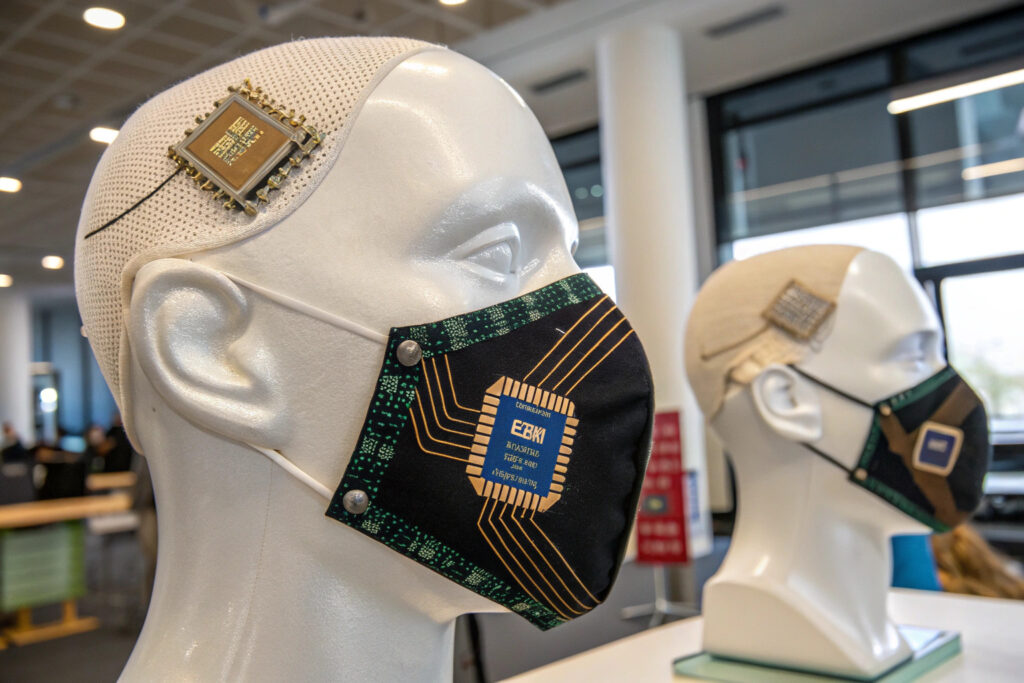
The integration of neuromorphic computing into edge devices represents one of the most significant leaps in wearable technology. Masks embedded with neuromorphic chips are at the forefront of this evolution, enabling real-time, intelligent sensor processing with unprecedented energy efficiency. For product developers in smart healthcare, industrial safety, and advanced human-computer interaction, understanding how to source these sophisticated systems is critical for creating the next generation of responsive, adaptive personal protective equipment.
Masks with neuromorphic computing chips incorporate specialized silicon processors that mimic the architecture and functioning of biological neural networks, enabling them to process complex sensor data (like audio, visual, or physiological signals) locally with extreme efficiency, low latency, and minimal power consumption—often operating for days or weeks on a small battery. This technology moves beyond traditional microcontrollers to enable true on-device intelligence, capable of learning, pattern recognition, and decision-making without constant cloud connectivity. Successful sourcing requires evaluating chip architecture, software ecosystems, integration challenges, and application-specific performance.
The global neuromorphic computing market is projected to reach $8 billion by 2028, with edge AI applications driving rapid adoption. Research in Nature Electronics demonstrates that neuromorphic chips can achieve energy efficiency improvements of 100-1000x over conventional CPUs for specific sensory processing tasks. For applications like real-time cough detection, respiratory anomaly identification, or adaptive noise cancellation in masks, this efficiency is transformative. Let's explore the practical pathway to sourcing this advanced technology.
What Neuromorphic Chip Architectures Are Suitable for Wearables?
Not all neuromorphic chips are created equal. Their design—whether based on Spiking Neural Networks (SNNs), memristor crossbars, or digital approximations—determines their suitability for the constrained environment of a smart mask.
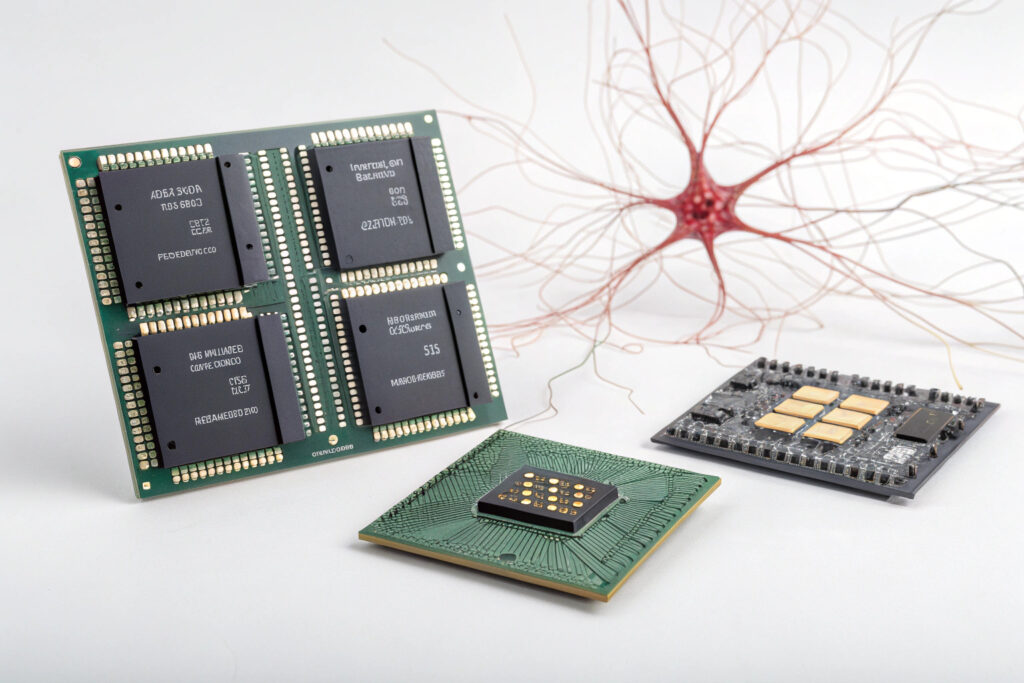
How Do Spiking Neural Network (SNN) Chips Operate?
SNN chips are the most biologically inspired. They communicate via sparse, asynchronous electrical "spikes," similar to neurons. This makes them exceptionally energy-efficient for processing sparse, event-based sensory data.
- Key Advantage: Ultra-low power consumption when idle; power is only used when a spike occurs. Perfect for processing intermittent events like a cough, a specific word in audio, or a sudden change in breathing pattern.
- Example Chips: Intel's Loihi and Loihi 2, SynSense's Speck and Xylo (audio-focused).
- Consideration: Programming SNNs requires a different paradigm (often using frameworks like Nengo or Intel's Lava) compared to traditional deep learning. Sourcing may require partnering with developers experienced in this space.
For mask applications involving real-time acoustic event detection (e.g., cough, speech keyword) with extreme battery life, SNN chips are a leading candidate.
What Are the Benefits of Digital Neuromorphic Accelerators?
These chips use more conventional digital circuits but are architected from the ground up to accelerate neural network operations efficiently. They often support both traditional Artificial Neural Networks (ANNs) and can be configured to approximate SNN behavior.
- Key Advantage: Easier software development, as they can often run models converted from popular frameworks like TensorFlow or PyTorch (via tools like TensorFlow Lite Micro). Broader developer ecosystem.
- Example Chips: BrainChip's Akida™, Qualcomm's research platforms.
- Consideration: While more power-efficient than a standard microcontroller, they may not reach the extreme ultra-low-power idle states of pure SNNs.
These are excellent for masks requiring continuous sensor fusion (e.g., combining accelerometer, pressure, and microphone data for comprehensive respiratory analysis) where developer accessibility is key.
What Software and Development Tools Are Available?
The chip's hardware is only half the story. The associated software ecosystem, development tools, and pre-trained models determine how quickly and effectively you can implement your intelligent features.

What Frameworks Support Model Development and Deployment?
The ecosystem is maturing but still specialized. Key frameworks include:
- Intel Lava: An open-source framework for developing applications for Intel's Loihi neuromorphic research chips.
- Nengo: A graphical and scriptable framework for building and deploying neural networks on various neuromorphic and conventional hardware backends.
- SynSense's End-to-End Toolchain: For their Speck and Xylo chips, offering tools from data conversion (to spikes) to deployment.
- BrainChip MetaTF™: A development environment for the Akida platform, allowing developers to design, train, and quantize networks.
When sourcing, investigate whether the chip vendor provides a complete, supported toolchain. The ability to convert models from standard frameworks (like PyTorch) is a significant advantage, as it allows you to leverage the vast existing world of deep learning research and pre-trained models.
Are There Pre-Trained Models for Relevant Mask Applications?
Developing a high-performing SNN model from scratch is complex. Sourcing is easier if the chip vendor or its partners offer pre-trained or pre-validated models for common use cases. For masks, relevant models might include:
- Audio Event Detection: Models trained to detect coughs, sneezes, specific keywords, or respiratory distress sounds.
- Time-Series Anomaly Detection: For identifying irregular patterns in breathing sensor data.
- Sensor Fusion: Models that combine data from multiple low-power sensors.
Ask potential suppliers about their model zoo or partnerships with AI model developers. The availability of such models can drastically reduce your development risk and time-to-market.
What Are the Key Integration and Power Considerations?
Successfully embedding a neuromorphic chip into a wearable mask presents unique challenges related to size, heat, power supply, and sensor interfacing.
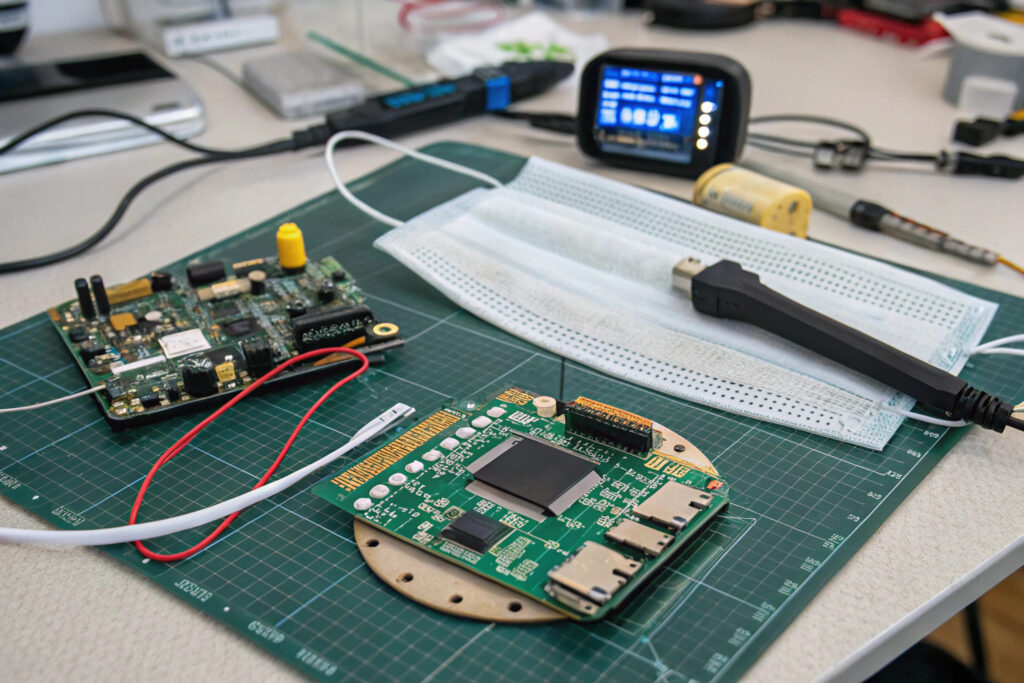
How is Ultra-Low-Power Operation Achieved in Practice?
The theoretical power savings of neuromorphics are realized through careful system design:
- Chip Selection: Choose a chip with sub-milliwatt idle/active power budgets (e.g., SynSense's Xylo audio processor claims ~100 µW for keyword spotting).
- Sensor Selection: Pair the chip with equally low-power sensors (e.g., MEMS microphones with low-power modes, nanopower operational amplifiers for analog conditioning).
- Power Gating and Duty Cycling: The entire system (sensors, chip, peripherals) should sleep aggressively, waking only when a simple wake-up circuit (perhaps analog) detects a potential event of interest.
- Efficient Power Regulation: Use high-efficiency, low-quiescent-current DC-DC converters and LDOs.
The system's average power consumption will determine battery choice (coin cell, small Li-Po) and operational lifespan. Demand detailed power budget analyses from your potential technology suppliers.
How Are Sensor Interfaces and Data Acquisition Managed?
Neuromorphic chips excel at processing spike-based or streaming data. The interface between analog sensors and the chip is critical:
- For SNNs: You often need an encoding layer that converts raw analog sensor data (e.g., audio waveforms, voltage levels) into a spike train. Some chips have built-in encoders; for others, this requires a small, low-power front-end microcontroller or a dedicated encoding IC.
- For Digital Accelerators: They may accept pre-processed digital data frames more readily.
The integration complexity increases with the number and type of sensors. Look for supplier reference designs that show a complete signal chain from sensor to processed output.
What Are the Primary Application Verticals and Value Propositions?
Understanding the concrete benefits will help you identify the right sourcing partners and justify the investment in this advanced technology.
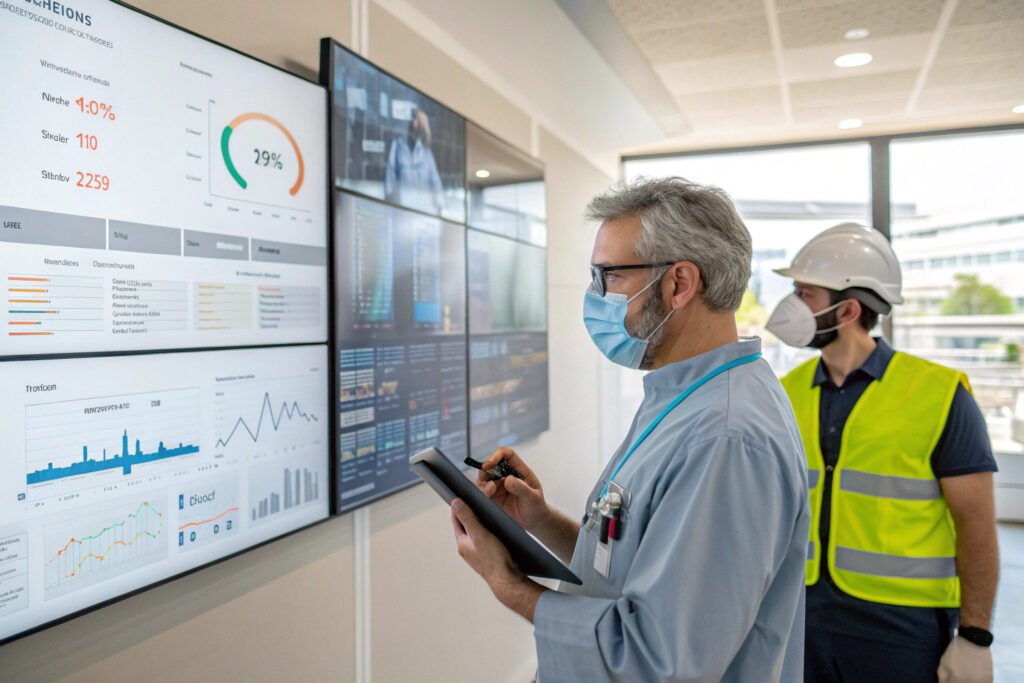
What Makes Neuromorphic Masks Revolutionary for Healthcare?
- Real-Time, Private Health Monitoring: Continuous, on-device analysis of cough frequency/type, respiratory sounds, and breathing patterns without streaming raw audio/data to the cloud, preserving privacy. This enables long-term monitoring for conditions like COPD, asthma, or post-operative recovery.
- Early Warning Systems: Detecting subtle, pre-symptomatic changes in respiratory acoustics or patterns that could indicate infection onset or exacerbation of a chronic condition.
- Efficient Data Collection: For clinical trials, providing highly processed, relevant summary metrics (e.g., "cough events per hour") instead of terabytes of raw audio, reducing data storage and transmission costs.
Sourcing for healthcare requires a technology partner with a strong understanding of medical device regulations (like MDR/FDA) and the clinical validation pathway.
How Do They Enhance Industrial and Consumer Masks?
- Adaptive Hearing Protection/Augmentation: In industrial settings, a neuromorphic mask could instantly classify sounds—amplifying speech, suppressing harmful noise, and alerting to specific machine failure sounds—all in real time on the device.
- Context-Aware Functionality: A consumer mask could switch modes automatically (e.g., from noise cancellation to transparent hearing) based on classified acoustic environments (office, street, subway).
- Extreme Battery Life: Enabling "always-on" intelligent features for the full duration of a long work shift or intercontinental flight without recharging.
For these applications, sourcing partners should demonstrate robust performance in real-world noise environments and have a user-centric design philosophy.
Conclusion
Sourcing masks with neuromorphic computing chips involves selecting the right chip architecture (balancing efficiency and developer friendliness), navigating a specialized but growing software ecosystem, and overcoming integration challenges to achieve true ultra-low-power operation. The payoff is the ability to embed sophisticated, real-time intelligence directly into the mask—enabling privacy-preserving health monitoring, context-aware audio processing, and adaptive functionality that was previously impossible due to power and latency constraints. As this technology transitions from research to production, early adopters who successfully source and integrate it will create a significant competitive advantage in the smart wearable space.
Ready to integrate true on-device intelligence into your next-generation smart mask? Contact our Business Director, Elaine, at elaine@fumaoclothing.com to discuss how we can help you source neuromorphic computing technology or collaborate on developing intelligent, efficient wearable solutions tailored to your application.