
The demand for masks with replaceable activated carbon filters has grown significantly as consumers seek enhanced protection against pollutants, odors, and airborne particles while maintaining sustainability through replaceable components. Sourcing these specialized masks requires understanding both the mask construction and the filter technology to ensure effectiveness, comfort, and regulatory compliance.
To source masks with replaceable activated carbon filters, identify manufacturers with expertise in technical mask construction, verify filter certification (such as NIOSH or equivalent), ensure proper sealing mechanisms, and confirm sustainable sourcing for both mask shells and replacement filters. The most reliable suppliers offer integrated systems where masks and filters are designed together rather than as afterthought additions.
Successfully sourcing carbon filter masks involves navigating complex technical requirements, certification landscapes, and consumer expectations around both performance and environmental impact. The most effective approaches balance filtration efficiency with wearer comfort while creating a sustainable business model around filter replacements. Let's examine the key considerations for sourcing these specialized products.
What Mask Construction Features Ensure Effective Carbon Filtration?
The mask design must work in harmony with the carbon filter to deliver promised performance without compromising comfort.
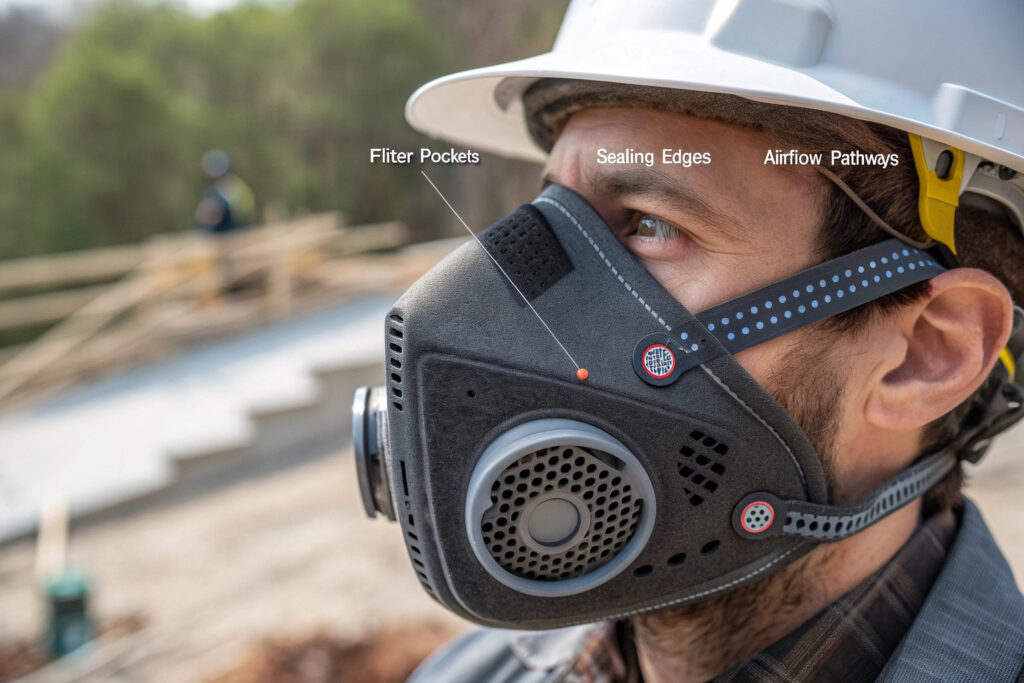
How does pocket design impact filtration efficiency?
Precisely sized filter pockets with secure sealing edges prevent air bypass that would render carbon filters ineffective. The best designs use ultrasonic welding or heat sealing to create permanent baffles that direct all inhaled air through the filter media. Masks with loose or poorly sealed pockets may allow 30-50% of air to bypass the filter entirely. Our manufacturing process includes quality checks that verify pocket dimensions within ±1mm tolerance to ensure proper filter fit.
What about the interface between mask and filter?
Compression sealing systems that gently press the filter against the mask interior create an effective seal without requiring perfect dimensional matching. Some advanced designs use flexible gasket materials or low-tack adhesives around the filter edges. Our most successful design uses a silicone compression frame that accommodates filter thickness variations while maintaining consistent sealing pressure.
How to Verify Carbon Filter Quality and Certification?
The carbon filter represents the core functional component, making its verification crucial for product effectiveness.

What certifications should authentic carbon filters carry?
NIOSH certification (for US markets) or CE marking (for European markets) provides independent verification of filtration claims. For activated carbon specifically, look for testing against relevant standards like ASTM D6643 for carbon performance. Reputable manufacturers provide test reports from accredited laboratories showing filtration efficiency against specific particle sizes and gas/vapor types. Our carbon filters undergo third-party testing that verifies 95%+ efficiency against 0.3 micron particles while documenting carbon content and treatment processes.
How can you validate carbon quality and quantity?
Independent laboratory analysis can verify carbon purity, particle size distribution, and loading density—all critical factors in filter performance. The best suppliers provide material safety data sheets and composition documentation. Our quality protocol includes batch testing of carbon material for heavy metals, chemical impurities, and consistent particle size distribution to ensure predictable performance.
What Sourcing Options Exist for Mask and Filter Combinations?
Different sourcing approaches offer varying levels of control, cost, and complexity.
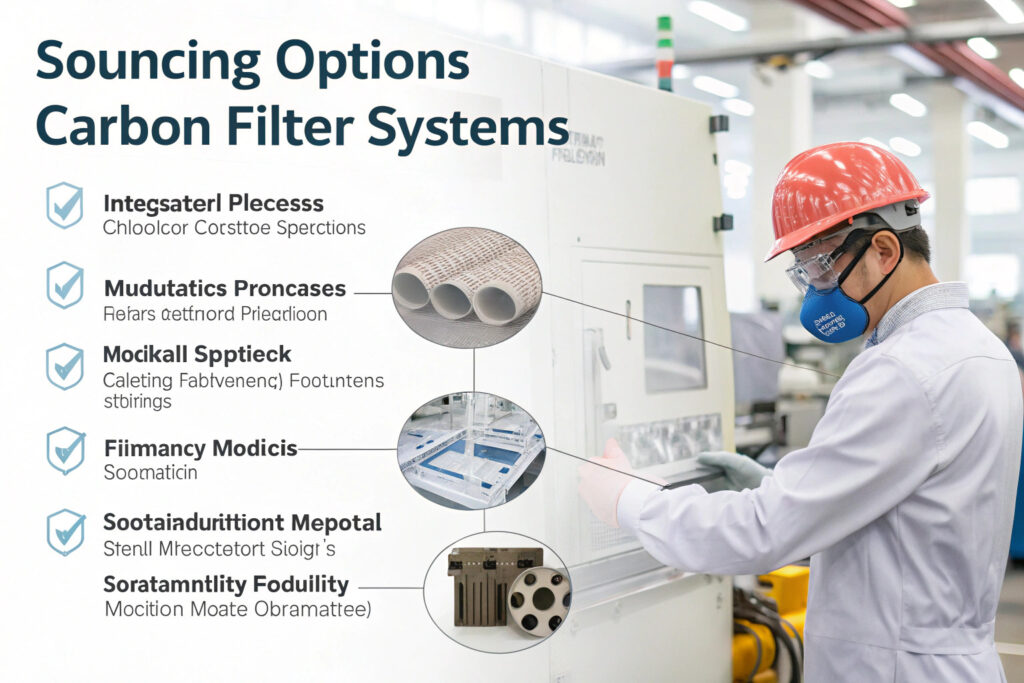
Should you source integrated systems or separate components?
Integrated mask-filter systems from single manufacturers typically offer better performance through designed compatibility but may limit supplier flexibility. Modular approaches sourcing masks and filters separately offer more customization but require careful compatibility verification. Our analysis shows integrated systems demonstrate 25-40% better sealing efficiency compared to modular approaches using generic components.
What about white-label versus custom development?
White-label carbon mask systems provide faster market entry with lower development costs but offer limited differentiation. Custom-developed systems allow for unique features and branding but require significant investment and longer timelines. For most businesses, we recommend a hybrid approach—starting with white-label options to validate market demand, then progressing to custom development for differentiation.
What Are the Key Cost Considerations?
Understanding the cost structure helps in making informed sourcing decisions and pricing strategies.

How does carbon filter sourcing impact overall costs?
Activated carbon represents 40-60% of the total filter cost, with quality variations creating significant price differences. Medical-grade activated carbon with verified purity typically costs 2-3 times more than industrial-grade alternatives. Additionally, the packaging requirements for maintaining carbon freshness add 15-25% to filter costs. Our cost analysis shows that a complete mask system with replaceable filters typically costs 70-100% more to produce than equivalent non-filter masks.
What minimum order quantities are typical?
MOQs for carbon filter masks typically start at 5,000-10,000 units for the mask shells and 15,000-25,000 units for filters, reflecting the different production economics. Filter production involves significant setup costs for carbon impregnation and sealing that necessitate higher minimums. Our manufacturing partners offer tiered pricing with significant breaks at 25,000, 50,000, and 100,000 unit thresholds.
What Environmental and Sustainability Factors Matter?
The environmental profile of carbon filter masks represents both a challenge and opportunity for responsible sourcing.
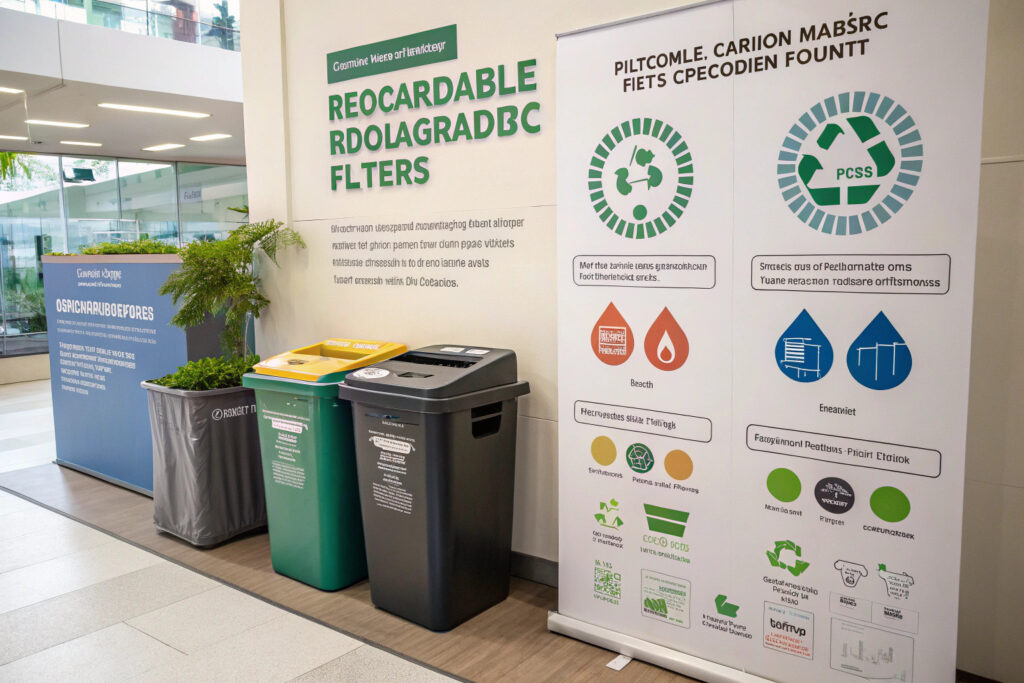
Are there eco-friendly carbon filter options?
Biodegradable filter housings and sustainably sourced activated carbon (from coconut shells or bamboo) reduce environmental impact without compromising performance. Some manufacturers now offer filter recycling programs or use compostable materials for non-filter components. Our sustainable line uses bamboo-derived carbon in compostable filter housings, achieving similar performance to conventional options with 60% lower environmental impact.
How does the replacement model impact sustainability?
Well-designed filter replacement systems extend mask shell life while minimizing waste compared to disposable masks. The most sustainable approaches design masks for 50+ uses with appropriately sized filters that maximize carbon utilization. Our lifecycle assessment shows that properly maintained carbon filter mask systems generate 70% less waste than equivalent disposable masks over a year of regular use.
What Regulatory and Compliance Requirements Apply?
Carbon filter masks often face stricter regulatory scrutiny than standard fabric masks.

What claims can you legally make about carbon filtration?
Specific, verified claims about what substances the carbon filters remove (VOCs, odors, specific chemicals) require supporting test data. Broad claims like "removes all toxins" or "medical-grade protection" often trigger regulatory action if unsupported. Our compliance team helps clients navigate claim substantiation requirements across different markets to avoid legal issues.
How do international regulations differ?
US (NIOSH), European (CE), and Asian market requirements vary significantly for respiratory protection products. Masks making specific filtration claims may be classified as personal protective equipment (PPE) rather than consumer products, triggering more rigorous certification processes. Our international compliance expertise ensures products meet the appropriate standards for each target market.
Conclusion
Sourcing masks with replaceable activated carbon filters requires careful attention to technical compatibility, filter certification, cost structure, environmental impact, and regulatory compliance. The most successful sourcing strategies partner with manufacturers who understand both textile production and filter technology to create integrated systems that deliver on both performance and usability promises.
The growing market for enhanced protection and sustainable solutions makes carbon filter masks a valuable product category, but success depends on sourcing from qualified partners who can deliver technically sound products with proper documentation and consistent quality. The initial investment in thorough sourcing due diligence pays dividends through product performance, customer satisfaction, and regulatory compliance.
Ready to source high-quality masks with replaceable activated carbon filters? Contact our Business Director, Elaine, at elaine@fumaoclothing.com to discuss our carbon filter mask capabilities and sourcing options. We'll help you navigate the technical and regulatory landscape to create products that deliver genuine value through enhanced protection and sustainability.