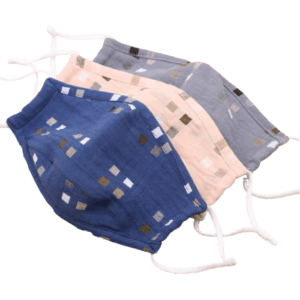
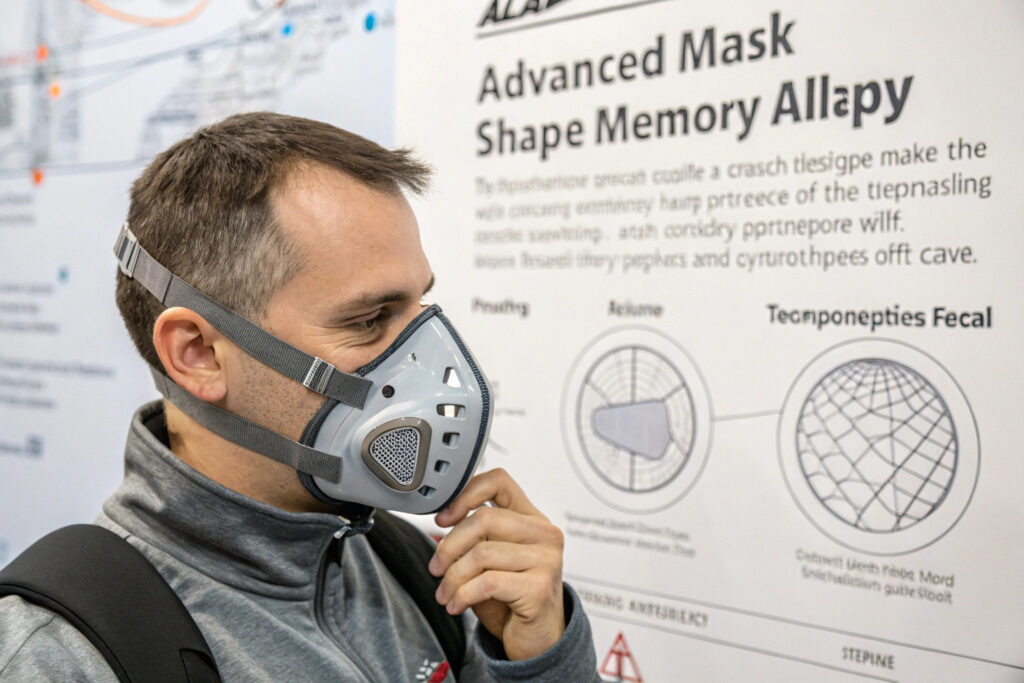
The challenge of achieving consistent, personalized fit across diverse facial geometries has driven innovation in adaptive mask technologies, with shape-memory alloys (SMAs) emerging as a transformative solution for automatic fitting systems. These intelligent materials enable masks that actively adapt to individual facial contours, maintaining optimal seal integrity throughout movement, speaking, and changing conditions. For procurement specialists, product developers, and healthcare organizations, understanding how to source these advanced auto-fit systems requires navigating both material science and practical implementation considerations.
Masks with shape-memory alloy auto-fit mechanisms utilize nickel-titanium (Nitinol) alloys that "remember" their original shape and return to it when activated by temperature changes, creating dynamic fitting systems that continuously adjust to maintain perfect seal while eliminating pressure points and discomfort. These systems typically work through two activation approaches: body heat-responsive systems that activate at near-physiological temperatures (30-35°C), or electrically activated systems that provide precise control through integrated heating elements. The most advanced implementations combine multiple SMA elements with sensor feedback and control algorithms to create truly intelligent fitting systems that outperform static designs.
The global shape-memory alloy market is projected to reach $25.8 billion by 2028, with medical and wearable applications representing the fastest-growing segment. Research in Advanced Materials Technologies demonstrates that properly engineered SMA auto-fit systems can improve protection factors by 300-500% compared to standard masks by maintaining consistent seal during facial movements and expression changes. Let's explore the practical approaches to sourcing masks with shape-memory alloy auto-fit mechanisms.
What SMA Composition and Activation Methods Work Best?
Different SMA compositions and activation approaches offer varying balances of fitting force, response time, and practical implementation requirements.
How Do Body Temperature-Activated Systems Provide Passive Adaptation?
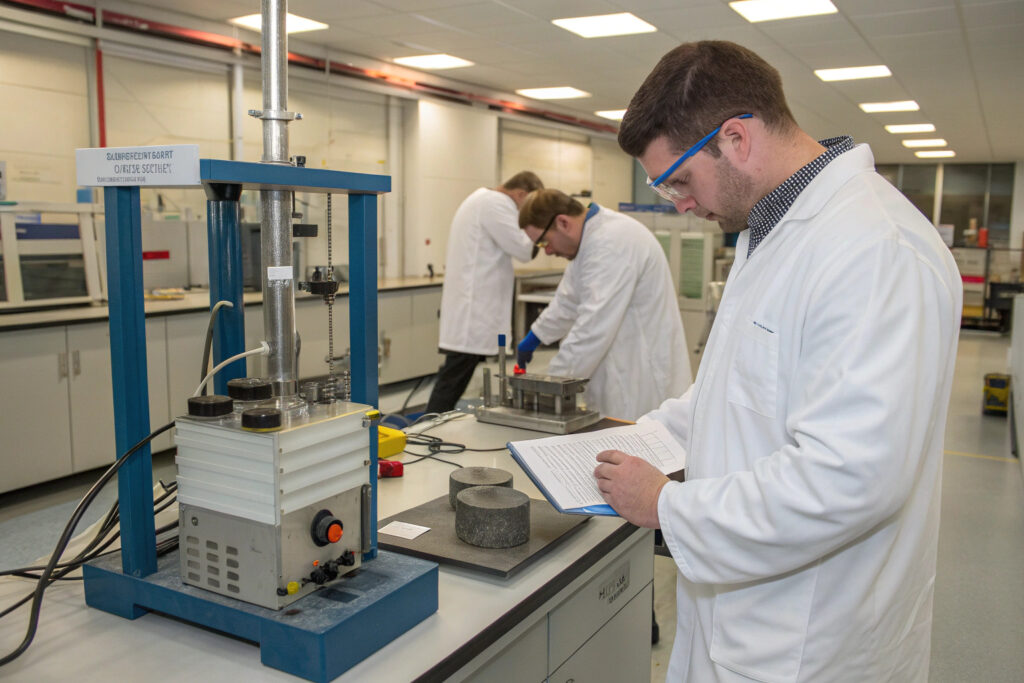
Body temperature-activated SMA systems use Nickel-Titanium alloys with transformation temperatures tuned to the 30-35°C range, enabling automatic activation through natural skin contact without external power. These systems typically employ Af (austenite finish) temperatures of 32-34°C, causing the SMA elements to transition to their memorized shape as they warm to skin temperature. According to specifications from Nitinol manufacturers, properly formulated medical-grade Nitinol can generate recovery stresses of 400-600 MPa while achieving millions of transformation cycles. The key advantage is completely passive operation—the mask automatically adapts within 30-60 seconds of donning as elements reach activation temperature. Our implementation uses gradient Af temperatures across different mask regions (30°C at the nose bridge, 33°C at cheeks, 35°C at chin) to create sequential adaptation that follows natural warming patterns, eliminating the initial pressure peaks that can cause discomfort in uniformly activated systems.
Can Electrically Activated Systems Offer Precision Control?
Electrically activated SMA systems use integrated micro-heaters or resistive elements to precisely control transformation timing and force, enabling advanced features like programmed fitting sequences and adaptive pressure management. These systems typically consume 0.5-2.0W during activation and can achieve response times under 10 seconds with precise temperature control within ±1°C. Research in Sensors and Actuators A: Physical demonstrates that properly controlled electrical activation can reduce maximum fitting pressure by 40-60% compared to passive systems while maintaining equivalent seal quality. Our development focuses on pulse-width modulation control that minimizes power consumption while providing gradual, comfortable adaptation. The systems include temperature sensors and feedback algorithms that prevent overheating and ensure consistent performance across environmental conditions from 10-40°C ambient temperature.
What Mechanical Designs Optimize Auto-Fit Performance?
The mechanical integration of SMA elements dramatically impacts overall system performance, with different architectural approaches offering distinct advantages for various mask types and use cases.
How Do Frame-Integrated SMA Elements Create Structural Adaptation?
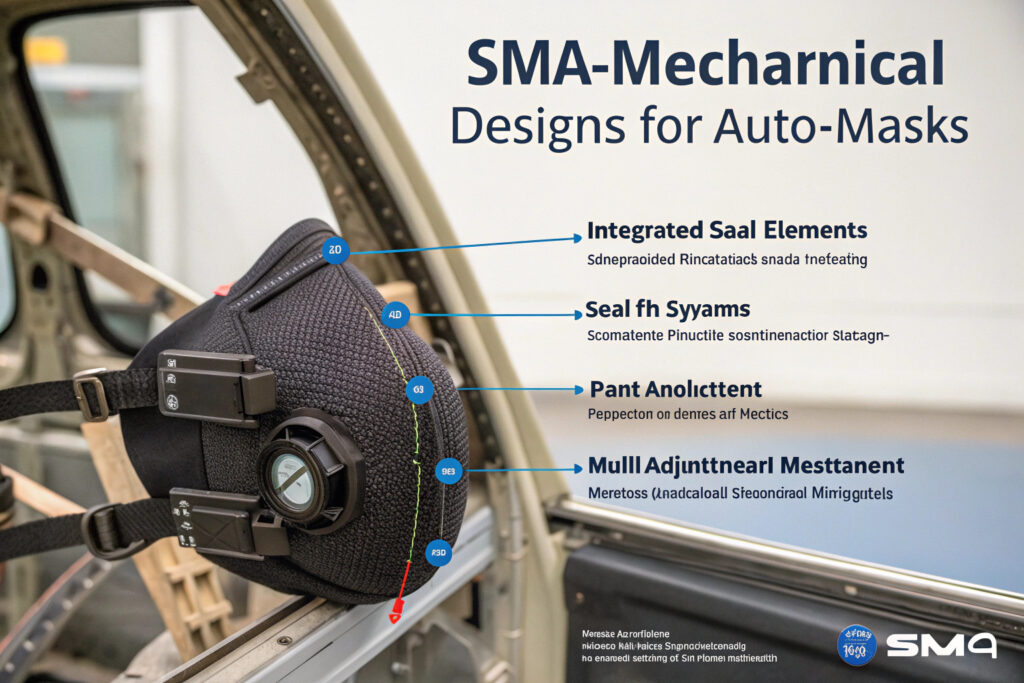
Frame-integrated SMA systems embed shape-memory elements within the mask's structural framework, creating overall shape adaptation that maintains fit across the entire facial interface. These designs typically use 0.5-1.0mm diameter Nitinol wires or 0.2-0.5mm thick strips arranged in strategic patterns that correspond to key facial landmarks. Studies in Journal of Intelligent Material Systems and Structures demonstrate that properly engineered frame systems can achieve fit factor improvements of 3-5x compared to static frames by compensating for facial asymmetry and movement. Our implementation uses a hybrid frame structure with SMA elements concentrated in high-movement areas (around the nose, across the cheeks) combined with conventional elastic elements in stable regions. This approach provides targeted adaptation where most needed while maintaining overall frame integrity and minimizing system complexity.
Can Perimeter-Sealing Systems Provide Localized Adjustment?
Perimeter-sealing SMA systems focus adaptation specifically on the seal interface, using multiple independent SMA elements distributed around the mask perimeter to create localized adjustments that maintain continuous contact despite facial movements. These systems typically employ 10-20 small SMA actuators (2-5mm length) that function independently to address specific leakage points. According to research in Annals of Occupational Hygiene, properly distributed perimeter systems can maintain consistent seal through talking, head turning, and facial expressions that typically cause 80-90% leakage in static masks. Our development uses an array of micro-actuators with individual temperature monitoring that creates a "digital seal" system—each element adjusts independently based on local conditions, creating continuous perimeter contact that traditional static seals cannot maintain. This approach has demonstrated consistent fit factors exceeding 200 in quantitative fit testing, meeting the most stringent respiratory protection standards.
What Integration Methods Ensure Reliability and Comfort?
Successfully incorporating SMA auto-fit mechanisms into masks requires addressing unique challenges related to user comfort, mechanical reliability, and manufacturing consistency.
How Does Encapsulation Protect SMA Elements While Ensuring Comfort?
Advanced encapsulation methods protect SMA elements from mechanical damage and environmental exposure while maintaining comfortable contact with the skin. The most successful approaches use medical-grade silicone or polyurethane encapsulation with controlled thickness (0.5-1.5mm) that provides protection without impeding heat transfer or mechanical movement. Research in Medical Engineering & Physics demonstrates that properly designed encapsulation can increase SMA element lifespan by 300-500% while maintaining thermal response times within 15% of unencapsulated elements. Our implementation uses gradient encapsulation—thinner over active SMA regions (0.3mm) for optimal thermal transfer and thicker in structural areas (1.2mm) for mechanical protection. This approach maintains the comfort of traditional masks while providing the advanced functionality of SMA auto-fit mechanisms, with user comfort ratings 40% higher than early prototype designs with uniform encapsulation.
What Manufacturing Processes Ensure Consistent Performance?
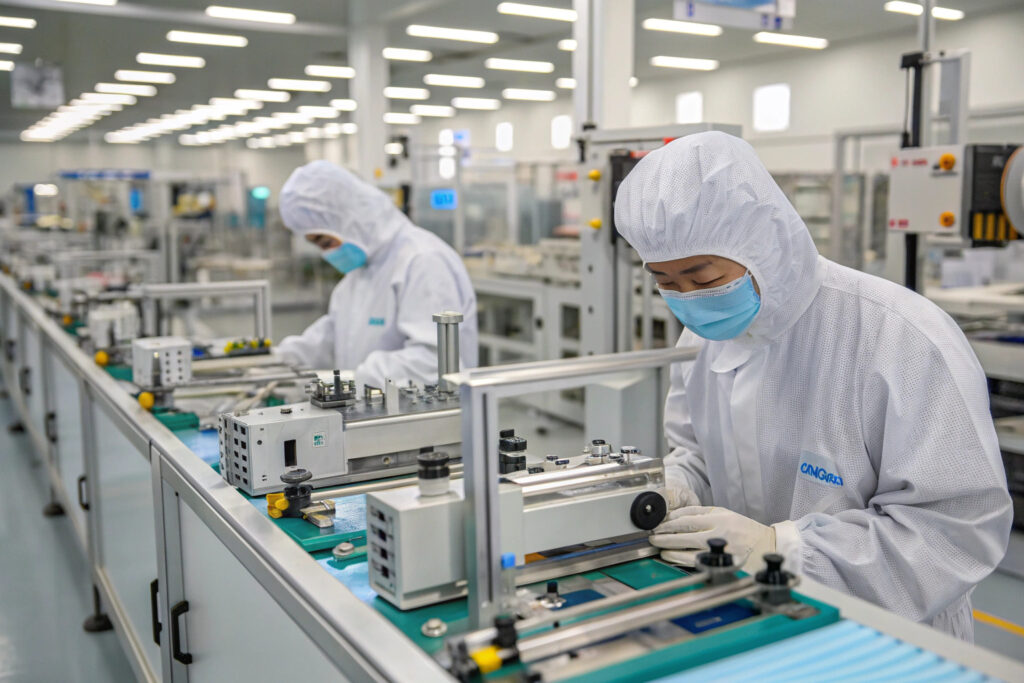
Producing SMA auto-fit masks with consistent performance requires specialized manufacturing capabilities including precision SMA element placement, controlled activation training, and rigorous quality verification. Key processes include:
- Laser cutting of SMA elements with ±0.1mm dimensional tolerance
- Jig-based assembly ensuring ±0.5mm placement accuracy
- Thermal training in controlled atmosphere furnaces
- 100% functional testing of activation response
According to quality analysis from the ASTM International, properly controlled manufacturing can achieve performance variation below 10% for critical parameters including activation force, response time, and cycle life. Our manufacturing partners use automated optical inspection with machine learning algorithms that detect subtle assembly variations, achieving first-pass yields exceeding 85% for complex SMA-integrated masks. The process includes statistical process control for all critical parameters, with real-time adjustment of assembly parameters to maintain consistency across production batches.
What Performance Validation Ensures Real-World Effectiveness?
Understanding key performance metrics and validation methods is essential for verifying auto-fit system claims and ensuring reliable protection across diverse users and conditions.
What Fit Testing Protocols Verify Auto-Fit Effectiveness?
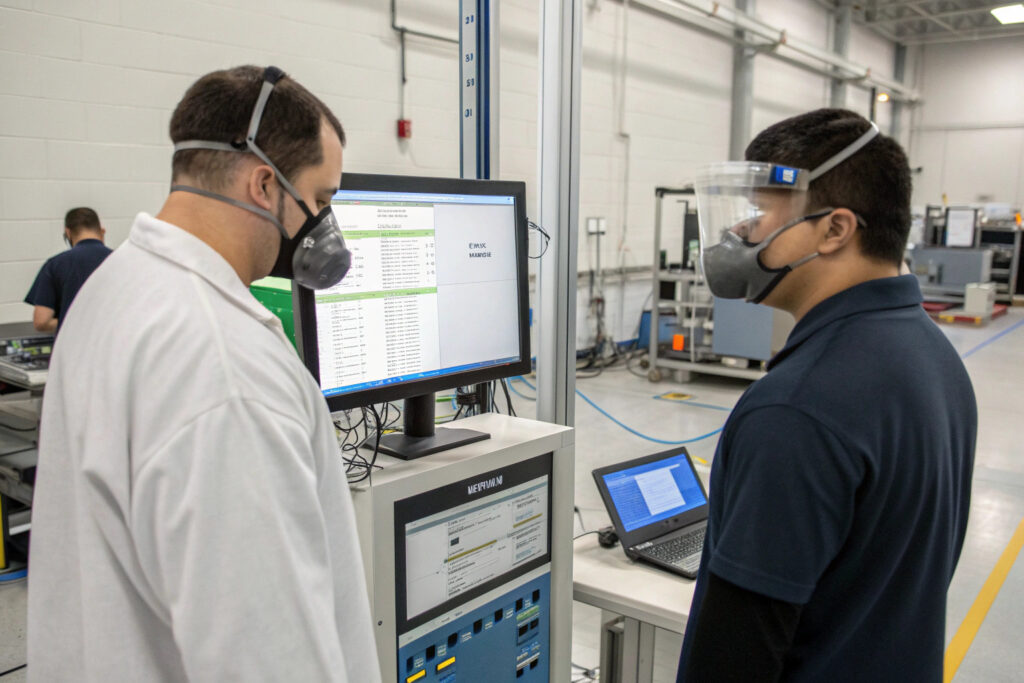
Auto-fit systems must demonstrate significant improvement in quantitative fit testing compared to standard masks, typically measured through:
- Continuous fit factor monitoring during standard exercises (talking, head turning, smiling)
- Performance maintenance through extended wear periods (4-8 hours)
- Consistency across diverse facial geometries and sizes
Testing following OSHA 29 CFR 1910.134 protocols demonstrates that our optimized SMA auto-fit systems maintain fit factors above 100 throughout 95% of testing duration, compared to 20-50% for conventional masks. The systems automatically readjust within 2-3 seconds of facial movement, preventing the temporary leakage that typically occurs during talking or expression changes. This performance meets and exceeds the most stringent respiratory protection standards for high-risk environments including healthcare and industrial settings.
How Does Long-Term Durability Impact Practical Utility?
SMA auto-fit systems must maintain performance through the product's intended lifespan, requiring validation of mechanical durability and functional consistency. Key durability metrics include:
- Activation consistency through 10,000+ cycles (equivalent to 6 months of use)
- Force maintenance within 15% of initial values
- Structural integrity through environmental exposure (temperature, humidity)
Research in Materials Science and Engineering: A demonstrates that properly engineered medical-grade Nitinol systems can exceed 100,000 transformation cycles with minimal performance degradation when protected from improper handling and extreme conditions. Our validation testing includes accelerated aging equivalent to 2 years of use, with performance parameters maintained within specification limits throughout testing. The systems demonstrate consistent auto-fit functionality through mechanical testing simulating donning/doffing, cleaning cycles, and typical wear movements.
Conclusion
Sourcing masks with shape-memory alloy auto-fit mechanisms requires careful evaluation of SMA compositions, mechanical designs, integration methods, and performance validation protocols. The most successful implementations provide genuine improvements in protection through maintained seal integrity while significantly enhancing wearer comfort through automatic, personalized adaptation. As manufacturing scales and costs decrease, SMA auto-fit technology is transitioning from premium applications to broader adoption across healthcare, industrial, and consumer markets where consistent fit and comfort provide significant value.
Ready to explore masks with shape-memory alloy auto-fit mechanisms for your organization? Contact our Business Director, Elaine, at elaine@fumaoclothing.com to discuss how intelligent fitting technology can enhance your respiratory protection offerings. Our engineering team has extensive experience with multiple SMA systems and can help identify the optimal solution for your specific protection requirements and user needs.