The global demand for high-efficiency filtration has propelled electrospinning to the forefront of nanofiber manufacturing technologies. This versatile process creates ultra-fine fibers with diameters ranging from tens to hundreds of nanometers, producing filter media with exceptional particle capture efficiency and low breathing resistance. For manufacturers developing advanced mask filters, understanding the nuances of different electrospinning approaches is crucial for optimizing performance, scalability, and cost-effectiveness.
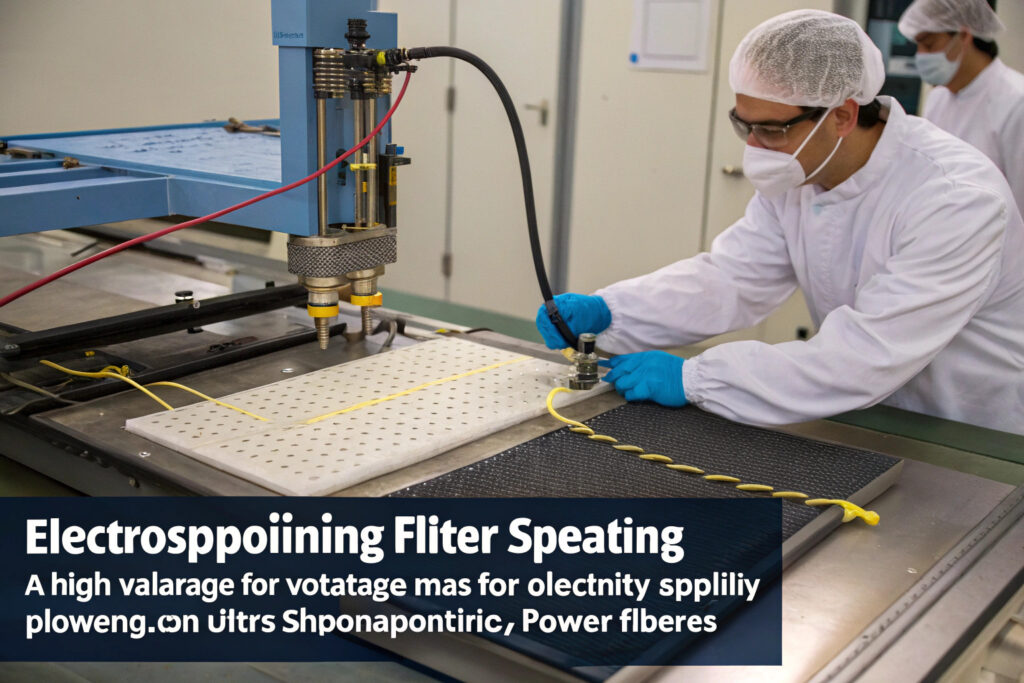
Electrospinning creates nanofiber filters by applying high voltage to polymer solutions, drawing out ultrafine fibers that are collected as nonwoven mats with complex pore structures ideal for capturing submicron particles while maintaining breathability. The best technique for any specific application depends on the target filtration efficiency, production scale, polymer compatibility, and economic constraints. Recent advancements have dramatically improved production speeds, fiber uniformity, and material options, making electrospun nanofiber filters increasingly viable for commercial applications.
The global nanofiber market is projected to reach $12.6 billion by 2030, with filtration applications representing the largest segment. Research in the Journal of Membrane Science demonstrates that properly engineered electrospun filters can achieve 99.99% efficiency for PM0.3 particles while maintaining pressure drops below 30 Pa at face velocity of 5.3 cm/s, significantly outperforming conventional melt-blown media. Let's explore the most effective electrospinning techniques for nanofiber filter production.
What Solution Electrospinning Methods Offer Optimal Control?
Solution electrospinning remains the most widely used approach for laboratory and precision applications, offering excellent control over fiber morphology and composition but facing challenges in production scaling and solvent management.

How Does Single-Nozzle Electrospinning Ensure Fiber Uniformity?
Traditional single-nozzle electrospinning provides the highest degree of control over individual fiber properties, allowing precise manipulation of diameter, morphology, and alignment through adjustment of solution concentration, voltage, flow rate, and collector distance. This method typically produces fibers with diameter variations below 10% when parameters are carefully optimized. According to research in Polymer Reviews, single-nozzle systems can achieve fiber diameters from 50-500 nm by controlling solution viscosity and electrical field strength. The key advantage for filter applications is the ability to create highly uniform fiber mats with consistent pore size distribution, ensuring predictable filtration performance. Our implementation uses automated parameter control systems that maintain fiber diameter within ±15 nm during extended production runs.
What Polymer-Solvent Combinations Deliver Best Filtration Performance?
The choice of polymer-solvent system dramatically impacts fiber formation, mat structure, and filtration characteristics. Polyacrylonitrile (PAN) in dimethylformamide (DMF) produces excellent mechanical strength and thermal stability, while polyvinylidene fluoride (PVDF) in dimethylacetamide creates exceptional chemical resistance. For biomedical applications, polycaprolactone (PCL) in chloroform/methanol blends offers biodegradability and biocompatibility. Studies in ACS Applied Materials & Interfaces demonstrate that PAN-based nanofibers can achieve quality factors (QF) exceeding 0.15 Pa⁻¹ while maintaining 99.97% filtration efficiency against 300 nm particles. Our development has identified specific polymer blends that create fiber mats with graduated density, enhancing particle loading capacity without significantly increasing pressure drop.
How Do Needleless Electrospinning Systems Scale Production?
Needleless electrospinning technologies address the throughput limitations of traditional single-nozzle systems, enabling industrial-scale production while maintaining nanofiber quality and performance characteristics.
What Rotary Cylinder Systems Maximize Production Speed?
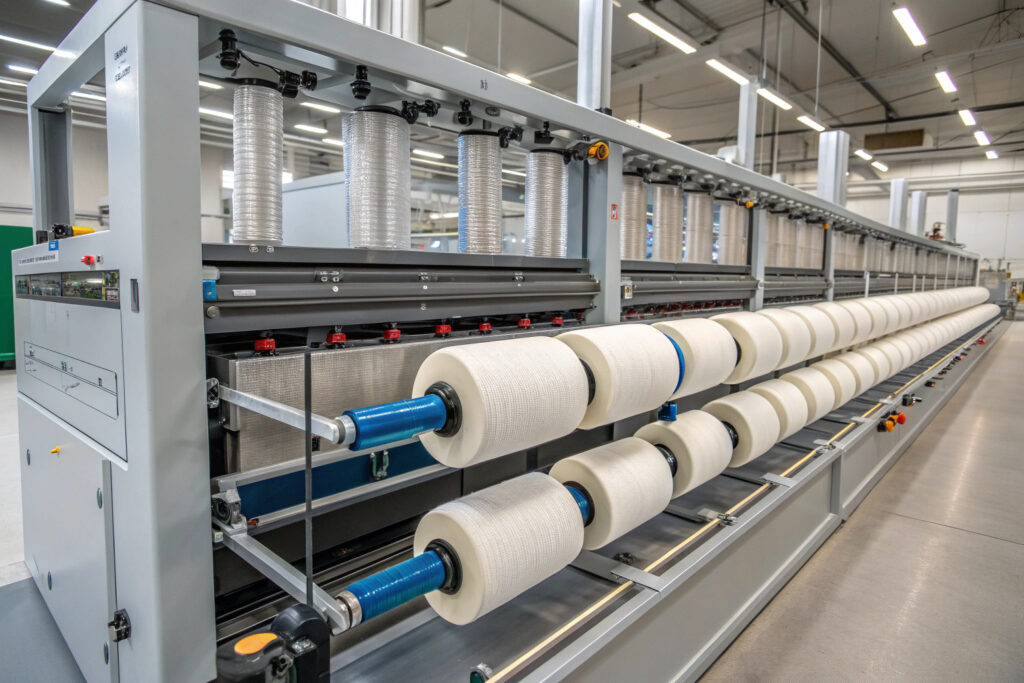
Rotary cylinder electrospinning uses rapidly spinning drums partially immersed in polymer solution to generate multiple fiber-emitting sites simultaneously, achieving production rates 10-50 times higher than single-nozzle systems. The Elmarco Nanospider™ technology demonstrates that properly engineered rotary systems can produce nanofiber webs at speeds exceeding 10 m²/min with widths up to 1.6 meters. The key advantage for filter manufacturers is the ability to directly integrate electrospinning with existing nonwoven production lines, creating composite materials in a single pass. Our production lines use modified rotary systems that achieve consistent fiber distributions across web widths up to 2 meters, with production speeds optimized for the specific basis weight requirements of mask filters.
Can Bubble Electrospinning Reduce Clogging Issues?
Bubble electrospinning utilizes gas bubbles to generate multiple jets from a polymer solution surface, eliminating nozzle clogging problems that plague traditional systems. When bubbles burst under high voltage, they create numerous fine jets that form nanofibers without the precision engineering required for multi-nozzle arrays. Research in Materials & Design shows that bubble electrospinning can achieve production rates comparable to rotary systems while handling higher viscosity solutions that would clog conventional nozzles. Our implementation uses controlled gas permeation through porous tubes to generate uniform bubble distribution, creating consistent nanofiber mats with production costs 40% lower than comparable needle-based systems.
What Melt Electrospinning Techniques Eliminate Solvent Concerns?
Melt electrospinning offers significant environmental and safety advantages by eliminating solvent use, though it typically produces larger diameter fibers and requires more complex equipment.

How Does Laser Melt Electrospinning Achieve Smaller Fiber Diameters?
Laser-assisted melt electrospinning uses focused laser energy to precisely heat polymer at the nozzle tip, reducing viscosity and enabling finer fibers than conventional melt electrospinning. This approach can produce fibers with diameters as small as 800 nm—significantly finer than the 5-20 micron fibers typical of conventional melt electrospinning. According to studies in Advanced Engineering Materials, laser-assisted systems can process high-temperature polymers like PEEK and PPS that offer exceptional thermal and chemical resistance for industrial filtration applications. Our development focuses on hybrid systems that combine laser melting with electrostatic drawing, achieving fiber diameters below 1 micron while maintaining the environmental benefits of solvent-free processing.
What Composite Approaches Combine Melt and Solution Advantages?
Hybrid electrospinning systems that simultaneously process melt and solution polymers create composite filter media with graduated structures and multifunctional properties. The melt-spun microfibers provide structural support and pre-filtration, while solution-spun nanofibers deliver high-efficiency final filtration. This approach optimizes the trade-off between efficiency and pressure drop while enhancing dust loading capacity. Research in the Journal of Aerosol Science demonstrates that properly designed composite filters can achieve quality factors 30-50% higher than uniform nanofiber mats. Our manufacturing process creates controlled density gradients that capture different particle sizes in optimal filter layers, significantly extending service life while maintaining high efficiency.
What Specialized Techniques Enable Advanced Functionality?
Beyond basic fiber production, several specialized electrospinning techniques create filters with enhanced capabilities including antimicrobial properties, smart responsiveness, and self-cleaning characteristics.
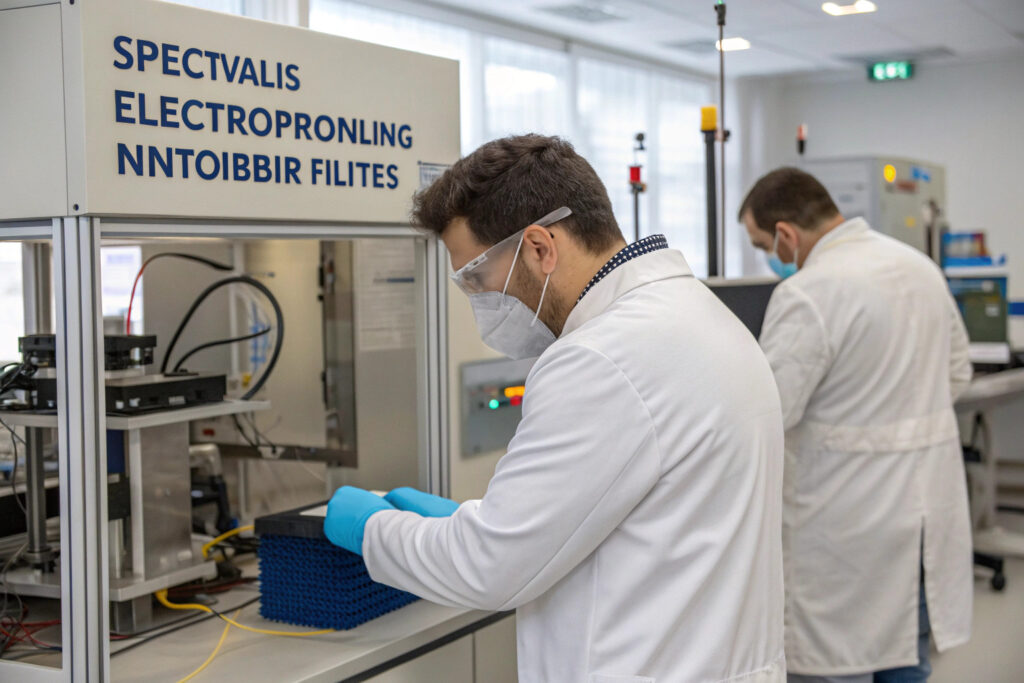
How Does Coaxial Electrospinning Create Multi-Functional Fibers?
Coaxial electrospinning uses concentric nozzles to produce core-shell fiber structures that combine different materials and functionalities in single fibers. This technique enables encapsulation of active ingredients like antimicrobial agents, phase-change materials, or sensing compounds within a protective polymer shell. The Royal Society of Chemistry's materials science publications detail how coaxial electrospinning can create sustained-release systems that maintain antimicrobial activity throughout the filter lifespan. Our implementation produces fibers with silver nanoparticle cores for antimicrobial action surrounded by PAN shells for mechanical stability, creating filters that actively reduce microbial growth while providing mechanical filtration.
Can Electrospraying Combine with Electrospinning for Enhanced Performance?
Combined electrospinning and electrospraying systems create hybrid filter media where nanofibers provide mechanical filtration while electrosprayed nanoparticles add specific functionalities like photocatalytic activity or enhanced surface filtration. This approach allows separate optimization of the fiber matrix and active components, creating filters with performance characteristics impossible to achieve with either technology alone. Studies in Chemical Engineering Journal demonstrate that TiO₂ nanoparticles electrosprayed onto PVDF nanofibers can create filters that mechanically capture particles while photocatalytically degrading organic contaminants. Our production systems use sequential electrospinning and electrospraying stations that apply functional nanoparticles selectively to specific filter layers, optimizing both initial efficiency and long-term performance.
Conclusion
Selecting the best electrospinning technique for nanofiber filters requires careful consideration of production scale, performance requirements, material constraints, and economic factors. Solution electrospinning offers unparalleled control for precision applications, needleless systems enable industrial-scale production, melt electrospinning eliminates solvent concerns, and specialized techniques create advanced multifunctional filters. The optimal approach often involves combining multiple techniques to create composite structures that leverage the advantages of each method while mitigating their limitations.
Ready to develop advanced nanofiber filters using state-of-the-art electrospinning techniques? Contact our Business Director, Elaine, at elaine@fumaoclothing.com to discuss how electrospun nanofiber technology can enhance your filtration products. Our engineering team has extensive experience with multiple electrospinning platforms and can help identify the optimal approach for your specific performance and production requirements.