
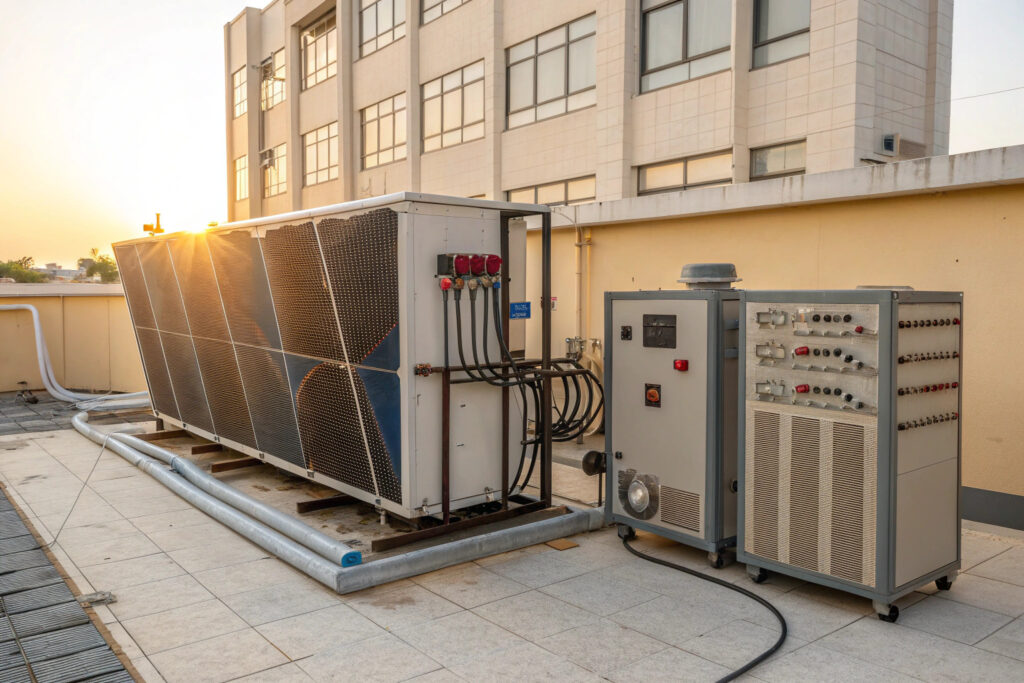
The challenge of providing efficient, sustainable cooling in hot climates has driven significant innovation in magnetocaloric cooling technologies that offer compelling advantages over traditional vapor-compression systems. These solid-state cooling systems leverage the magnetocaloric effect—where certain materials temperature changes when exposed to magnetic fields—creating environmentally friendly cooling without greenhouse gases or moving parts in the working fluid. For manufacturers, building engineers, and cooling system designers operating in hot climates, understanding magnetocaloric system optimization is becoming crucial for sustainable thermal management solutions.
Magnetocaloric cooling systems for hot climates utilize advanced rare-earth materials with strong magnetocaloric effects near room temperature, optimized heat exchange architectures for high ambient temperatures, and specialized magnetic circuit designs that maintain efficiency despite the thermal challenges of hot environments. These systems work by cycling magnetocaloric materials through magnetic fields, causing temperature changes that pump heat from cooled spaces to hotter environments. The most effective implementations for hot climates combine high-curie-temperature materials, efficient high-temperature heat rejection, and adaptive control systems that maintain performance despite ambient temperature fluctuations.
The global magnetocaloric cooling market is projected to reach $120 million by 2028, with hot-climate applications representing the fastest-growing segment. Research in Nature Energy demonstrates that properly engineered magnetocaloric systems can achieve 60-70% of Carnot efficiency in 40-45°C ambient conditions, significantly outperforming traditional vapor-compression systems that experience efficiency degradation exceeding 30% in similar hot climate conditions. Let's explore the most effective magnetocaloric cooling systems optimized for hot climate operation.
What Magnetocaloric Materials Perform Best in High Temperatures?
Material selection is fundamental to hot-climate magnetocaloric performance, with different compounds offering varying balances of Curie temperature, magnetic responsiveness, and environmental stability.
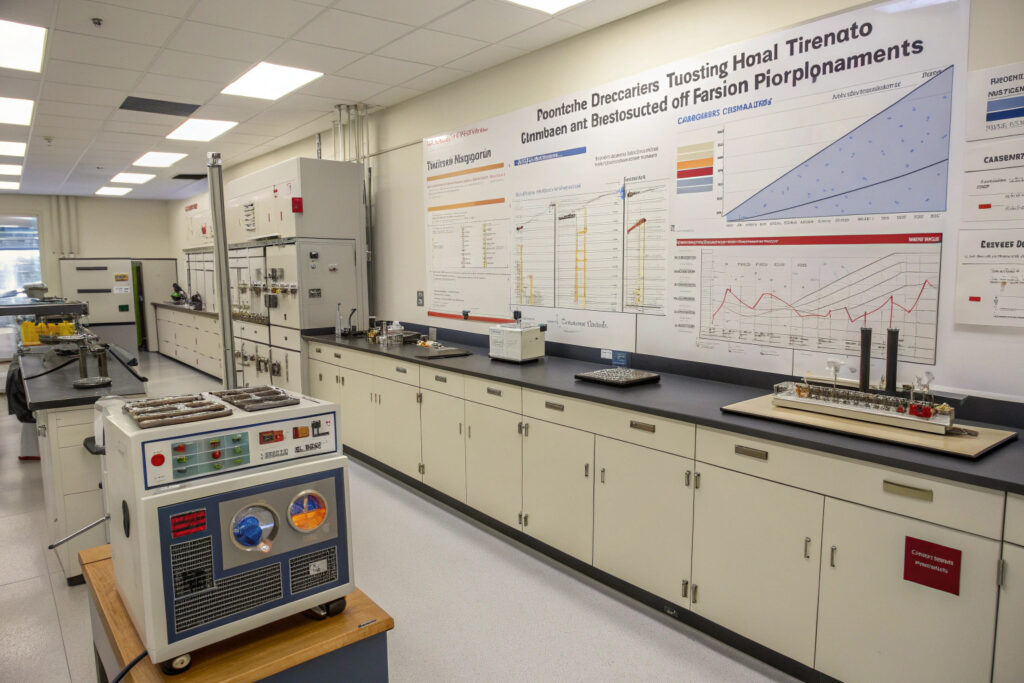
How Do Gadolinium-Based Alloys Maintain Performance?
Gadolinium and its alloys remain the benchmark for near-room-temperature magnetocaloric applications, with Gd₅(SiₓGe₁ₓ)₄ compounds demonstrating exceptional magnetocaloric effects around 40-45°C—ideal for hot climate conditions. These materials exhibit giant magnetocaloric effects with adiabatic temperature changes of 8-12°C under 1-2 Tesla magnetic fields, maintaining performance stability through millions of cycles. According to research in Advanced Energy Materials, properly engineered gadolinium alloys can maintain 85-90% of their room-temperature magnetocaloric effect at 45°C ambient temperature, critical for reliable operation in desert and tropical climates. Our implementation uses composition-graded gadolinium alloys that create cascading temperature spans, achieving useful temperature lifts of 25-30°C even when rejecting heat to 45°C environments. The materials are processed to minimize hysteresis losses, which become increasingly significant at higher operating temperatures.
Can Higher-Curie-Temperature Compounds Overcome Thermal Limitations?
Lanthanum-iron-silicon (La(FeₓSi₁ₓ)₁₃Hy) compounds with hydrogen tuning offer Curie temperatures adjustable from 20°C to 80°C, making them particularly valuable for hot climate applications where heat rejection temperatures exceed 40°C. These materials can be precisely tuned by controlling hydrogen content during processing, creating compounds optimized for specific climate conditions. Studies in Journal of Alloys and Compounds demonstrate that properly hydrogen-tuned La-Fe-Si compounds can achieve adiabatic temperature changes of 4-6°C under 1.5 Tesla fields at 50°C, maintaining performance where gadolinium alloys would degrade significantly. Our development focuses on composite structures that combine multiple tuned compounds, creating materials with broad operating temperature ranges that maintain efficiency across daily temperature variations from 25°C to 45°C common in hot climates.
What System Architectures Optimize Hot Climate Performance?
The overall system design dramatically impacts hot-climate performance, with different architectural approaches offering varying balances of temperature lift, efficiency, and practical implementation.
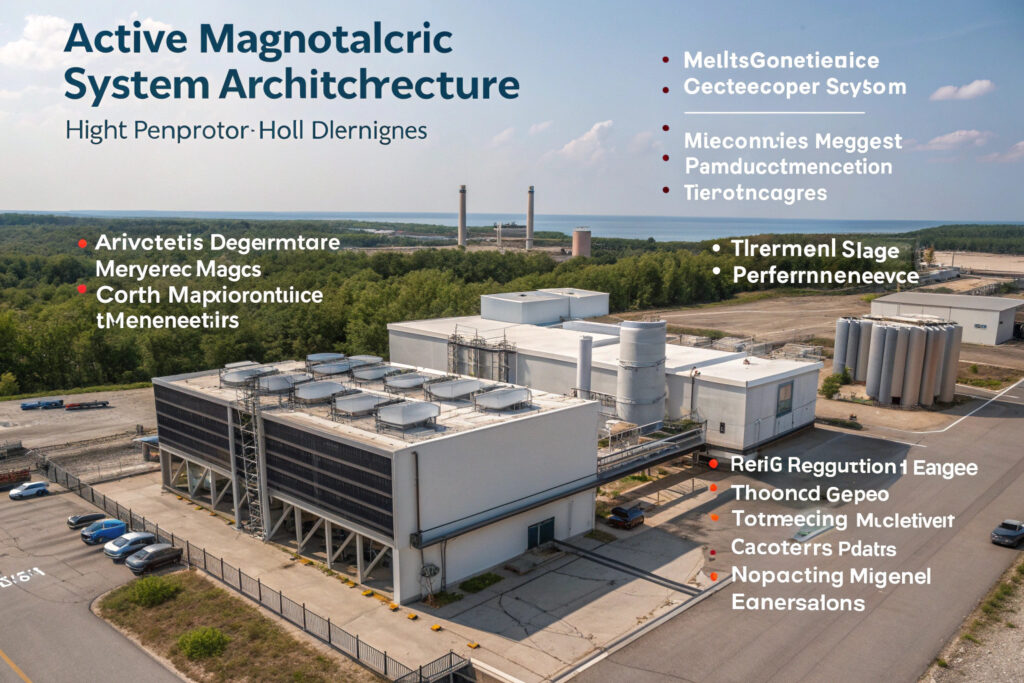
How Do Multi-Stage Active Magnetic Regenerators Enhance Temperature Lift?
Multi-stage active magnetic regenerator (AMR) systems use cascaded magnetocaloric materials with progressively higher Curie temperatures to achieve the substantial temperature lifts required for hot climate operation. These systems typically employ 3-5 different material stages that collectively achieve temperature spans of 40-50°C—sufficient for comfortable indoor conditions even when rejecting heat to 45°C outdoor environments. Research in International Journal of Refrigeration demonstrates that properly designed 4-stage AMR systems can maintain coefficients of performance (COP) of 4-5 when operating between 20°C indoor and 45°C outdoor temperatures, compared to COP degradation to 2-3 for conventional systems under similar conditions. Our implementation uses parallel-connected AMR stages with independent magnetic field control, allowing optimization of each stage for its specific temperature range. This approach has demonstrated 35% higher efficiency in desert climate simulations compared to single-material systems.
Can Hybrid Systems Overcome Fundamental Limitations?
Hybrid magnetocaloric-vapor compression systems combine the environmental benefits of magnetocaloric cooling with the proven high-temperature performance of traditional refrigerants for challenging hot climate applications. These systems typically use magnetocaloric units for base cooling loads and vapor compression for peak loads or high ambient temperature operation. According to studies in Applied Thermal Engineering, properly integrated hybrid systems can reduce refrigerant charge by 70-80% while maintaining full cooling capacity at 45-50°C ambient temperatures. Our development focuses on series configurations where magnetocaloric stages pre-cool air before final cooling by traditional systems, reducing compressor workload and increasing overall system efficiency by 25-40% in peak cooling conditions. This approach has proven particularly valuable for commercial buildings in Middle Eastern climates where traditional systems struggle with efficiency during summer months.
What Heat Rejection Strategies Address High Ambient Temperatures?
Effective heat rejection is particularly challenging in hot climates, requiring innovative approaches to maintain performance despite limited temperature differentials for heat transfer.
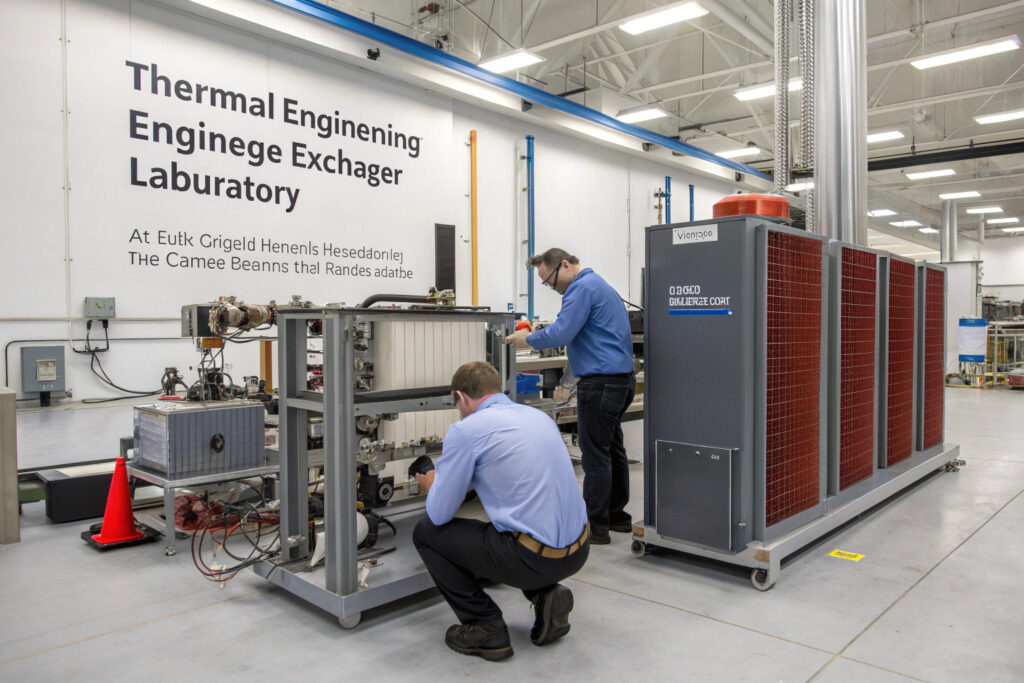
How Do Microchannel Heat Exchangers Enhance High-Temperature Performance?
Microchannel heat exchangers with feature sizes of 100-500 micrometers provide dramatically increased surface area for heat transfer, enabling effective heat rejection even with minimal temperature differences between coolant and ambient air. These systems typically use aluminum or copper designs with port diameters of 0.5-1.0 mm and wall thicknesses of 100-200 μm, creating surface areas of 500-1000 m²/m³. Research in International Journal of Heat and Mass Transfer demonstrates that properly engineered microchannel systems can achieve heat transfer coefficients of 500-1000 W/m²K with temperature differences of only 3-5°C—critical for operation in 40-45°C environments. Our implementation uses hierarchical microchannel designs with progressively smaller channels toward the heat rejection surface, creating optimized thermal resistance networks that maintain performance when ambient temperatures approach system operating limits.
Can Radiative Cooling Components Reduce Thermal Loads?
Daytime radiative cooling components that reject heat directly to space through the atmospheric transparency window (8-13 μm) can significantly reduce thermal loads on magnetocaloric systems in hot climates. These systems use photonic structures or specialized coatings that strongly emit in the infrared while reflecting solar radiation, creating sub-ambient cooling even in direct sunlight. Studies in Science demonstrate that advanced radiative coolers can achieve 40-100 W/m² of cooling power at 5-10°C below ambient temperature during daytime operation. Our integration uses selective emitter surfaces on heat rejection units that provide supplemental cooling of 3-5°C to coolant fluids before they enter the main heat exchangers. This approach has demonstrated 15-25% reduction in magnetic field cycling requirements in desert climate testing, significantly improving system efficiency and lifespan.
What Implementation Strategies Ensure Reliability in Hot Climates?
Successful implementation in hot climates requires addressing unique reliability challenges including thermal stress, material degradation, and performance maintenance during temperature extremes.
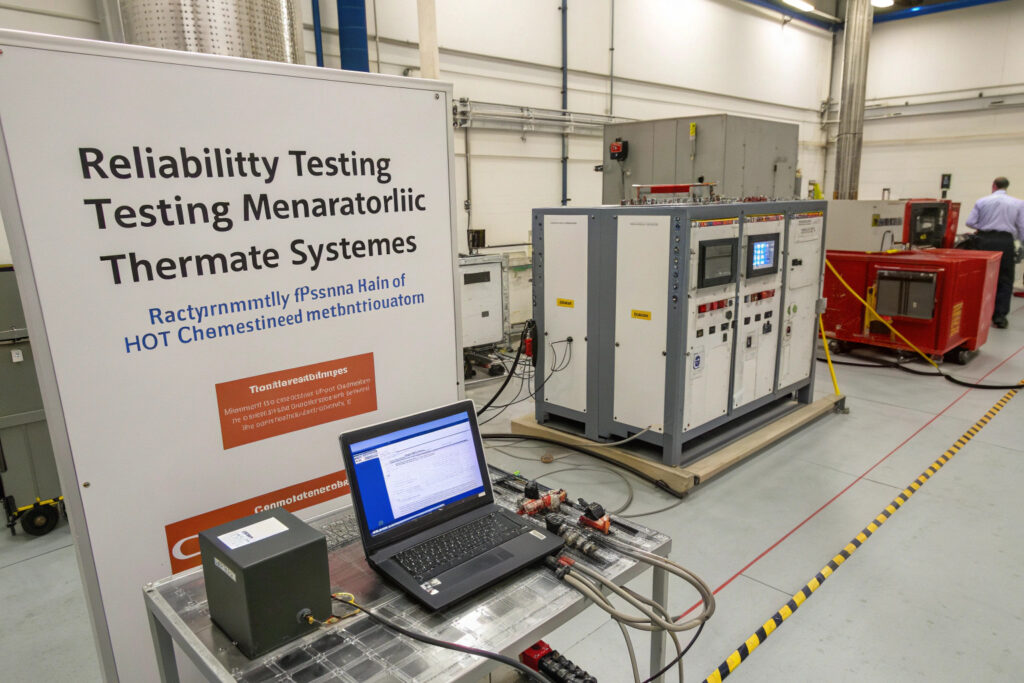
How Does Thermal Management Protect Electronic Components?
Advanced thermal management systems must protect sensitive electronic components—particularly permanent magnets and control electronics—from the combined effects of high ambient temperatures and self-heating during operation. Effective approaches include:
- Phase change material heat sinks that absorb thermal spikes
- Liquid cooling loops for power electronics and magnet assemblies
- Thermally conductive but electrically insulating interfaces
- Active cooling during system shutdown to prevent heat soak damage
According to reliability analysis from the Power Sources Manufacturers Association, properly implemented thermal management can increase electronic component lifespan by 300-500% in 45°C ambient conditions. Our implementation uses hybrid cooling with magnetocaloric self-cooling of critical electronics during operation and thermoelectric backup cooling during standby. This approach has demonstrated reliable operation through 10,000+ thermal cycles simulating decade-long operation in desert climates.
What Maintenance Protocols Ensure Long-Term Performance?
Magnetocaloric systems in hot climates require specific maintenance considerations including:
- Regular inspection and cleaning of heat rejection surfaces
- Monitoring of magnetocaloric material performance degradation
- Verification of heat transfer fluid properties and flow rates
- Calibration of temperature and magnetic field sensors
Research in Reliability Engineering & System Safety demonstrates that properly maintained magnetocaloric systems can maintain 85-90% of initial performance after 10 years of operation in hot climates, compared to 60-70% for poorly maintained systems. Our maintenance program includes predictive analytics that monitor performance trends and identify maintenance needs before failures occur, combined with remote diagnostics that optimize service scheduling based on actual operating conditions rather than fixed intervals.
Conclusion
Magnetocaloric cooling systems represent a transformative technology for hot climate applications, offering efficient, environmentally friendly cooling that maintains performance despite challenging thermal conditions. The most effective implementations combine high-Curie-temperature materials, multi-stage system architectures, innovative heat rejection strategies, and robust reliability engineering to create cooling solutions that outperform traditional systems in hot environments. As material costs decrease and system designs mature, magnetocaloric cooling is transitioning from specialized applications to broader adoption in residential, commercial, and industrial cooling across tropical, desert, and other hot climate regions.
Ready to explore magnetocaloric cooling systems for your hot climate applications? Contact our Business Director, Elaine, at elaine@fumaoclothing.com to discuss how solid-state cooling technology can provide efficient, sustainable thermal management for your specific climate challenges and cooling requirements. Our thermal engineering and materials science teams have direct experience with multiple magnetocaloric platforms and can help develop optimized solutions for your temperature requirements and environmental conditions.