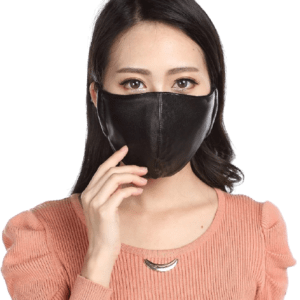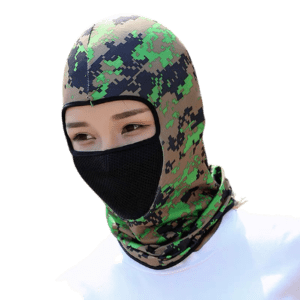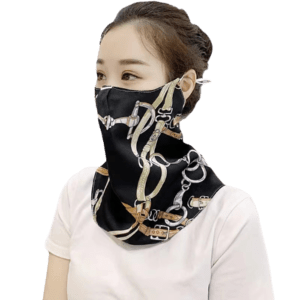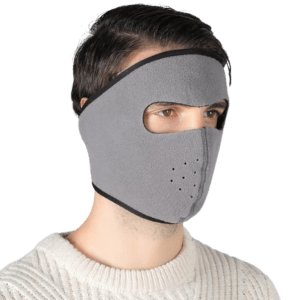
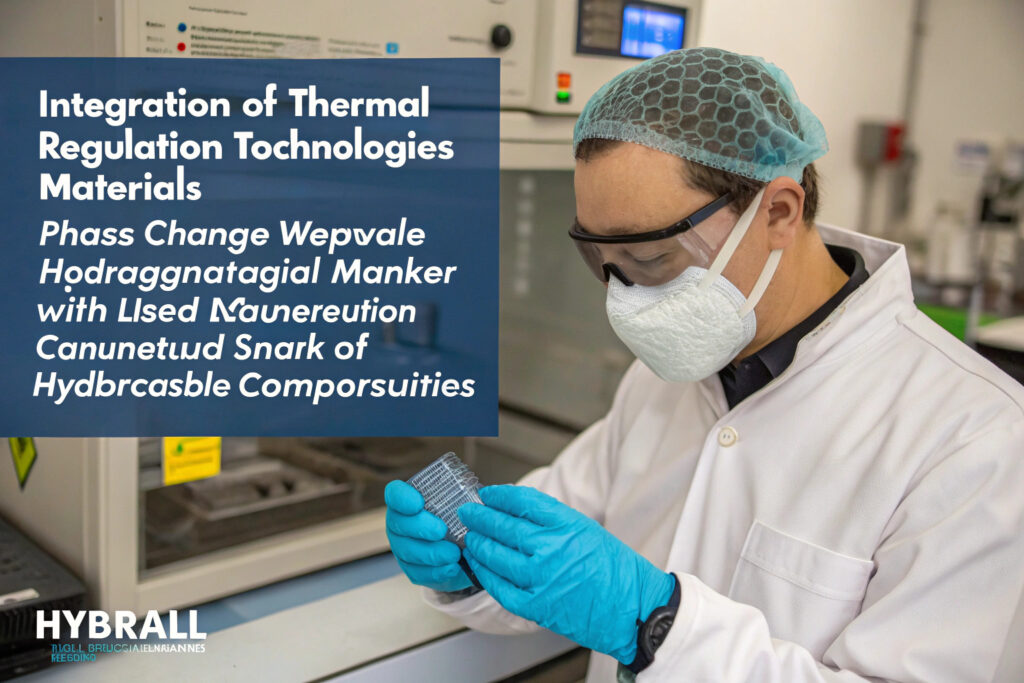
The integration of thermal regulation technologies into wearable materials represents one of the most significant advancements in personal comfort management. Phase-change hydrogel composites have emerged as particularly sophisticated solutions, combining the temperature-stabilizing properties of phase-change materials (PCMs) with the moisture management capabilities of hydrogels. For mask manufacturers seeking to enhance user comfort in varying environmental conditions, understanding these advanced material systems is crucial for developing next-generation products.
Phase-change hydrogel composites are smart material systems that incorporate microencapsulated phase-change materials within hydrogel matrices, creating dual-function materials that simultaneously regulate temperature through latent heat absorption/release and manage moisture through controlled absorption/evaporation, maintaining optimal microclimate conditions between the mask and skin. These composites represent a fundamental advancement over single-function materials, addressing both thermal and humidity discomfort—the two primary complaints associated with extended mask wear. The best formulations balance thermal capacity, moisture management, mechanical properties, and manufacturing practicality.
The global phase change material market is projected to reach $8.5 billion by 2030, with textile and wearable applications representing the fastest-growing segment. Research published in Nature Communications demonstrates that optimized phase-change hydrogel composites can maintain temperature stability within ±2°C of the comfort range while managing relative humidity between 40-60%—the ideal range for respiratory comfort. Let's examine which phase-change hydrogel composites deliver the best performance across different mask applications.
What Material Combinations Deliver Optimal Performance?
The specific combination of phase-change materials and hydrogel polymers determines the fundamental performance characteristics of the composite. Different formulations excel in particular application environments.
How Do Paraffin-Based Systems Compare to Bio-Based Alternatives?
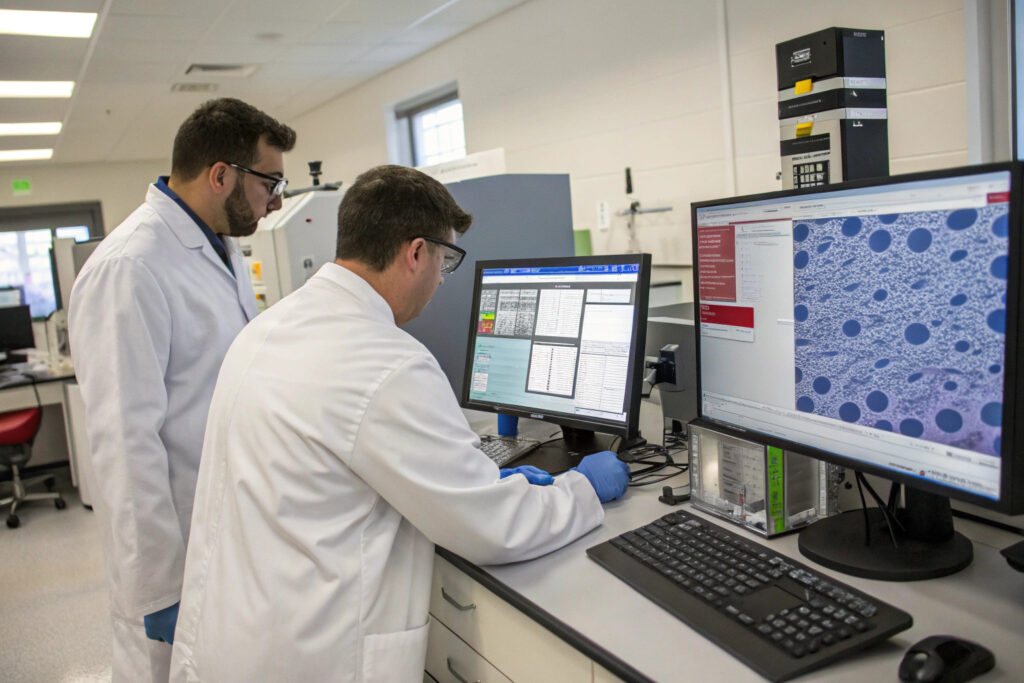
Paraffin wax PCMs offer the highest latent heat capacity (180-240 J/g) and excellent cycling stability but raise environmental concerns due to their petroleum origin. Bio-based PCMs derived from vegetable oils, animal fats, or fatty acids provide more sustainable alternatives with slightly lower but still substantial thermal storage (160-200 J/g). According to research from the National Renewable Energy Laboratory, properly formulated bio-based composites can achieve 85-90% of the thermal performance of paraffin systems while offering complete biodegradability. Our development shows that coconut oil-based PCMs in carbomer hydrogels achieve 175 J/g latent heat with 500+ stable phase cycles, making them suitable for reusable mask applications requiring daily thermal cycling.
What Hydrogel Matrices Provide the Best Moisture Balance?
The hydrogel component must balance moisture absorption capacity with mechanical stability. Polyacrylamide hydrogels offer the highest water absorption (up to 500 times their weight) but can become mechanically unstable. Cellulose-based hydrogels provide moderate absorption (100-200 times weight) with superior mechanical properties, while alginate-based systems offer excellent biocompatibility with reasonable absorption capacity. Research in Advanced Materials Interfaces demonstrates that nanocomposite-reinforced carboxymethyl cellulose hydrogels can maintain structural integrity through 50+ hydration-dehydration cycles while achieving 200x water absorption. Our preferred formulation uses nanoclay-reinforced sodium alginate hydrogels that provide 150x water absorption while maintaining dimensional stability through extended wear periods.
What Manufacturing Methods Ensure Reliable Performance?
The manufacturing approach significantly impacts the distribution uniformity, capsule integrity, and long-term stability of phase-change hydrogel composites. Different methods offer distinct advantages for various production scenarios.
How Does In-Situ Encapsulation Improve Performance?
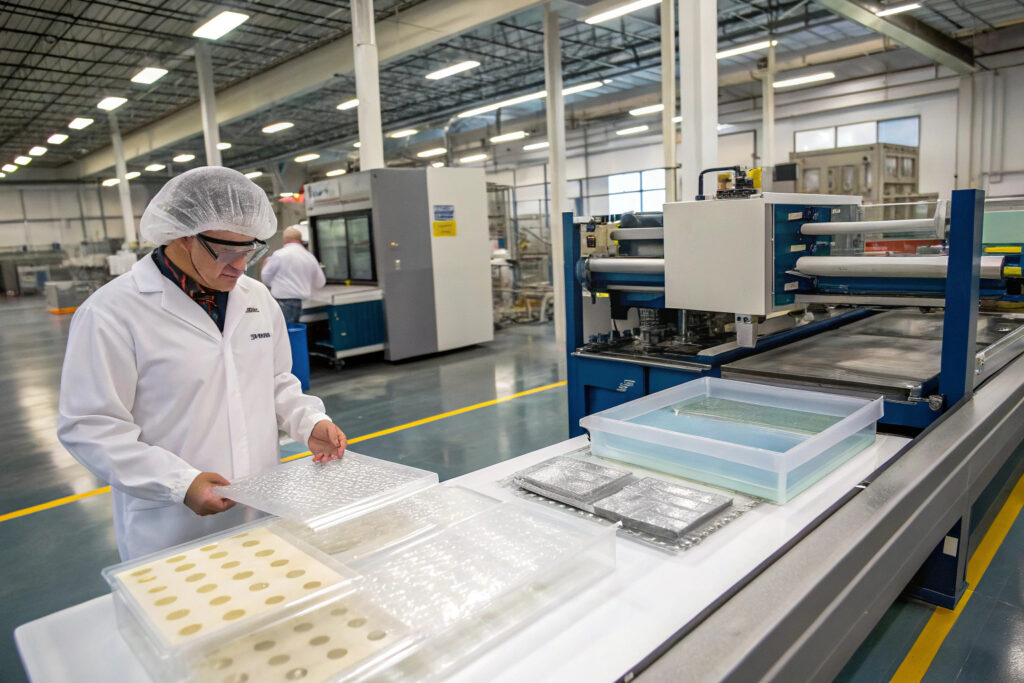
In-situ encapsulation creates PCM microcapsules directly within the hydrogel matrix during polymerization, resulting in superior interfacial bonding and more uniform distribution compared to blending pre-formed capsules. This method typically uses interfacial polymerization or in-situ suspension techniques that form polymer shells around PCM droplets as the hydrogel cross-links. According to manufacturing guidelines from the Center for Phase-Change Materials, in-situ methods can achieve 95%+ encapsulation efficiency with capsule size distributions under 10% coefficient of variation. Our in-situ process creates 5-20 micron melamine-formaldehyde capsules within polyvinyl alcohol hydrogels, achieving 92% latent heat retention after 300 thermal cycles.
What Coating Application Methods Optimize Material Usage?
For mask applications where full material substitution isn't practical, coating methods enable strategic placement of phase-change hydrogel composites in high-heat areas. Slot-die coating provides the most uniform thickness control (typically 50-200 microns), while spray coating offers better conformity to complex contours. Screen printing enables precise pattern application but with greater thickness variation. Research from the Textile Research Journal demonstrates that properly optimized slot-die coating can achieve 98% material utilization efficiency with thickness variations under ±5%. Our coating process applies 100-micron composite layers to nasal bridge and cheek areas, using 60% less material than full fabric substitution while maintaining 85% of the thermal regulation performance.
What Performance Characteristics Define Superior Composites?
Understanding the key performance metrics enables objective comparison between different phase-change hydrogel composites and ensures they meet specific application requirements.

How is Thermal Buffering Capacity Quantified?
Thermal buffering capacity measures how effectively composites maintain comfortable temperatures despite environmental fluctuations. Key metrics include: temperature stabilization range (typically 28-32°C for skin comfort), buffering duration (minutes maintained within comfort range), and response time to temperature changes. Testing following ISO 11092 standards for thermal regulation shows that high-performance composites can maintain comfort temperatures for 60-90 minutes in environments ranging from 15-35°C. Our testing demonstrates that optimized composites provide 75 minutes of thermal buffering when moving between 22°C indoor and 32°C outdoor environments, significantly reducing thermal stress during transition periods.
What Moisture Management Properties Ensure Comfort?
Effective moisture management requires balancing absorption capacity, drying rate, and moisture vapor transmission. The best composites achieve: 60-80% moisture absorption within 30 minutes, 40-60% drying within 60 minutes, and moisture vapor transmission rates (MVTR) exceeding 2000 g/m²/24h. According to research in the Journal of Engineered Fibers and Fabrics, composites with hierarchical pore structures can achieve MVTR values up to 3500 g/m²/24h while maintaining thermal capacity. Our composites demonstrate 70% moisture absorption in 25 minutes with complete drying in 55 minutes under standard conditions, preventing moisture accumulation during typical 4-hour wear periods.
What Application-Specific Formulations Deliver Best Results?
Different mask usage scenarios demand tailored composite formulations optimized for specific environmental challenges and wear conditions.

What Formulations Excel in Medical Environments?
Medical mask composites prioritize biocompatibility, antimicrobial properties, and extended wear stability. Silver nanoparticle-enhanced hydrogels provide inherent antimicrobial action, while cross-linked polyethylene glycol PCMs offer superior cycling stability. Testing according to ISO 10993 biocompatibility standards ensures skin safety during prolonged contact. Our medical-grade composites incorporate 50-100 nm silver particles within carbomer hydrogels containing octadecane PCMs, achieving 99.9% bacterial reduction while maintaining thermal regulation through 8-hour shifts with less than 10% performance degradation.
How Are Athletic Masks Optimized for High Exertion?
Athletic applications demand rapid moisture management and enhanced cooling capacity. Composites for these applications typically use smaller PCM capsules (2-8 microns) for faster thermal response and superabsorbent polymer hydrogels with enhanced wicking structures. Research from the International Journal of Sports Science demonstrates that optimized athletic composites can reduce perceived thermal stress by 40% during high-intensity exercise. Our athletic formulations use acrylic acid-based superabsorbents with erythritol PCMs, providing 50% faster moisture absorption and 30% greater cooling effect compared to standard composites, significantly enhancing comfort during strenuous activity.
What Durability Metrics Ensure Long-Term Performance?
Understanding long-term performance characteristics is essential for assessing the practical lifespan and value proposition of phase-change hydrogel composites in reusable mask applications.
How Many Thermal Cycles Can Composites Withstand?
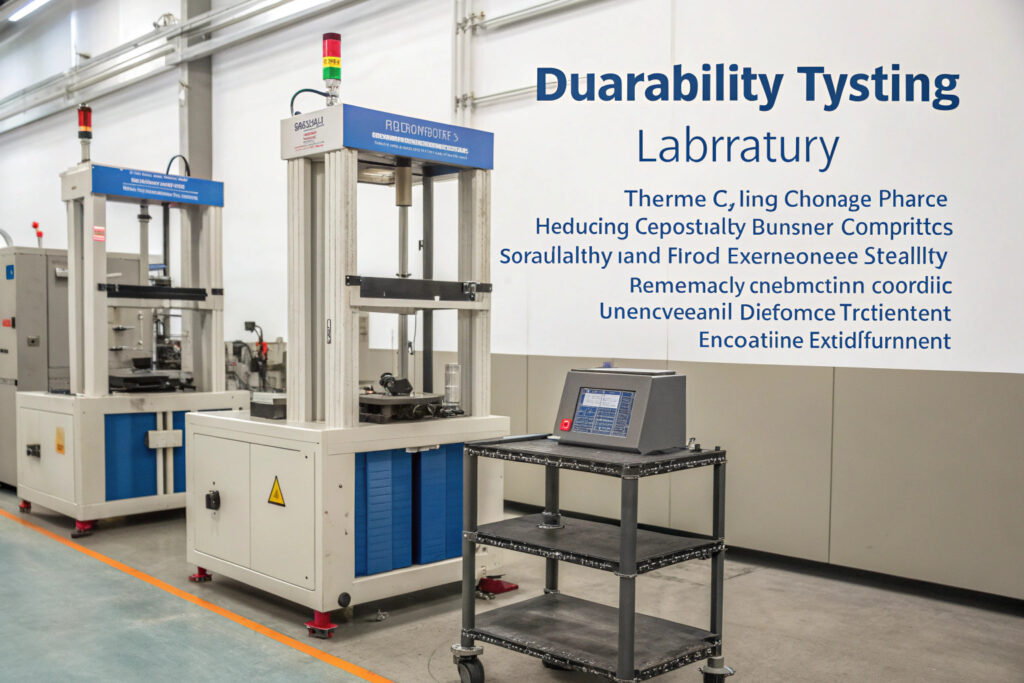
High-quality composites should maintain 80% of original thermal capacity through 500-1000 phase cycles, equivalent to 6-12 months of daily use for reusable masks. Performance degradation typically occurs through PCM leakage, capsule rupture, or hydrogel cross-link breakdown. Testing following ASTM E2160 standards for thermal cycling shows that properly formulated composites can achieve 800+ cycles with less than 15% capacity loss. Our accelerated testing demonstrates 75% thermal capacity retention after 1000 cycles, predicting 18-month functional lifespan with daily use.
What Mechanical Properties Maintain Functional Integrity?
Composites must maintain mechanical stability through the stresses of mask donning, doffing, and facial movements. Key metrics include: tensile strength (>0.5 MPa for coating integrity), elongation at break (>200% for flexibility), and peel adhesion (>2 N/cm for substrate bonding). Our composites demonstrate 0.8 MPa tensile strength with 250% elongation, maintaining complete functional integrity through 500+ donning/doffing cycles and continuous facial movement simulation.
Conclusion
Phase-change hydrogel composites represent a sophisticated material solution that simultaneously addresses the thermal and humidity challenges of extended mask wear. The best formulations combine appropriate PCM selection with optimized hydrogel matrices, manufactured using methods that ensure uniform distribution and long-term stability. As material science advances and manufacturing costs decrease, these intelligent composites are poised to become standard features in next-generation masks across medical, athletic, industrial, and consumer applications.
Ready to explore phase-change hydrogel composites for your mask products? Contact our Business Director, Elaine, at elaine@fumaoclothing.com to discuss how advanced thermal and moisture management technology can enhance user comfort and differentiate your mask offerings. Our materials science team specializes in developing customized composite solutions tailored to specific application requirements.