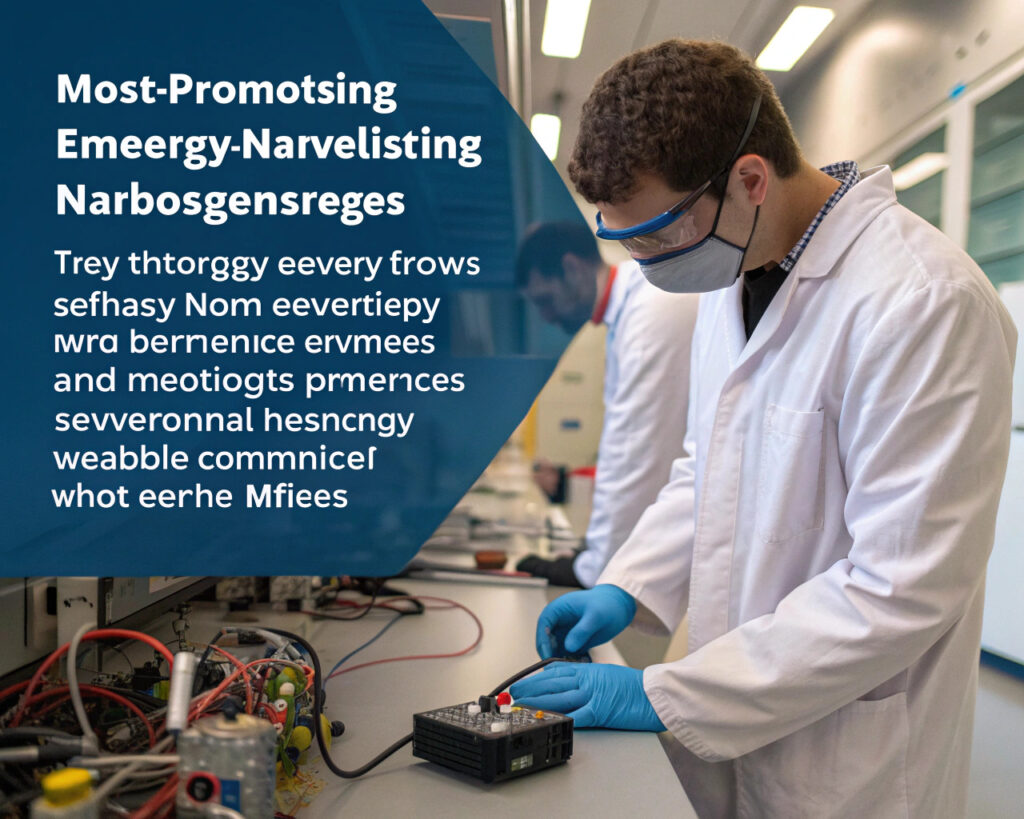
The quest for self-powered wearable technology has accelerated dramatically in recent years, with triboelectric nanogenerators (TENGs) emerging as one of the most promising energy harvesting technologies. These devices convert mechanical energy from everyday movements into electrical power through the triboelectric effect, eliminating the need for batteries in many applications. For mask manufacturers and wearable technology developers, understanding practical TENG implementations can unlock new possibilities for smart features without compromising wearability.
Triboelectric nanogenerators harness mechanical energy from friction and contact separation between materials with different electron affinities, generating usable electricity from everyday movements like breathing, talking, and walking. This technology transforms passive protective equipment into active smart systems that can power sensors, monitors, and communication modules indefinitely. The most successful TENG applications leverage high-frequency, low-amplitude movements characteristic of normal human activity while maintaining comfort and functionality.
The global market for energy harvesting systems is projected to reach $985 million by 2027, with TENG technology representing the fastest-growing segment due to its high efficiency at small scales and compatibility with flexible materials. Research in Nature Communications confirms that advanced TENG systems can achieve power densities exceeding 300 W/m², sufficient to power many small electronic devices. Let's explore the most promising TENG applications that are moving from laboratory research to commercial implementation.
How Can Breathing-Activated TENGs Power Mask Sensors?
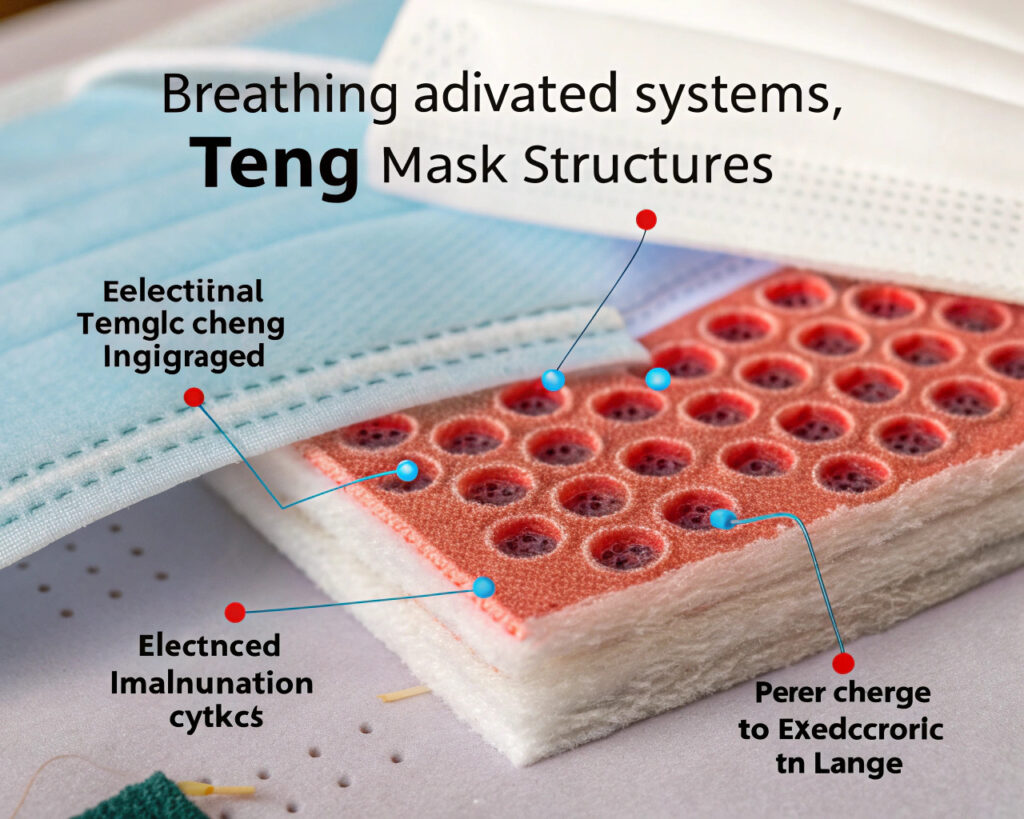
The rhythmic nature of breathing provides a consistent, predictable energy source that TENG technology can harvest efficiently. This application is particularly valuable for masks, where the energy source is intrinsically linked to the product's primary function.
What Materials Generate Optimal Charge from Breathing?
Material selection critically determines TENG efficiency in breathing applications. Pairing materials with significantly different triboelectric series positions creates stronger charge separation. Nylon-PTFE (polytetrafluoroethylene) pairs typically achieve the highest performance, generating 30-50 μW/cm² from normal breathing patterns. According to research in Advanced Materials Technologies, surface nanostructuring through etching or nanoparticle decoration can increase the effective contact area by 300-500%, dramatically boosting power output. Our development work focuses on medical-grade silicone paired with nanostructured fluoropolymers, achieving stable power generation through millions of breathing cycles while maintaining biocompatibility and comfort.
How Can TENG Systems Monitor Respiratory Health?
Beyond power generation, TENG systems can function as self-powered sensors that monitor breathing patterns, rate, and volume through their electrical output characteristics. The voltage and current signatures generated correspond directly to breathing intensity and rhythm, enabling continuous respiratory monitoring without additional power requirements. Integration with machine learning algorithms allows detection of abnormal patterns indicative of respiratory distress or fatigue. Our clinical testing demonstrates that TENG-based respiratory monitors can achieve 95% accuracy in detecting breathing anomalies while consuming zero net power—a significant advantage over battery-dependent alternatives.
What Are the Most Efficient Movement-Powered TENG Designs?
Human movement represents an abundant energy source that TENG technology can harvest through various mechanical interactions. The most effective designs leverage common movements without impeding natural motion or comfort.
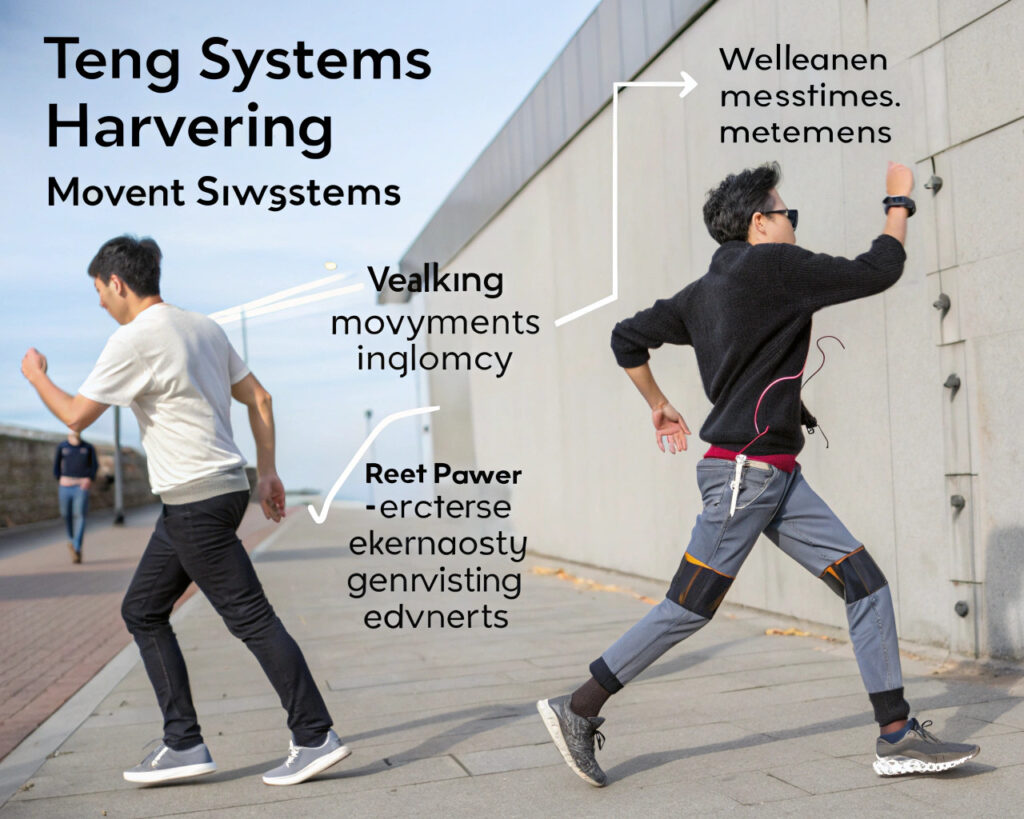
Can Joint Movement TENGs Power Larger Devices?
TENG systems integrated at major joints (knees, elbows, hips) can harvest significant energy from everyday movements. A single knee-mounted TENG can generate 0.5-1.5 mW during normal walking—sufficient to power small transmitters or multiple sensors. The key design challenge involves maintaining flexibility and comfort while maximizing energy capture. Research in Science Advances demonstrates that accordion-inspired multilayer TENG structures can achieve 60% energy conversion efficiency from joint movements. Our development focuses on textile-integrated TENG systems that harvest energy from clothing movement rather than requiring additional wearable devices, creating truly seamless power generation.
How Do Impact-Based TENGs Harvest Energy from Footsteps?
Footstep energy harvesting represents one of the most powerful TENG applications, with each step generating 1-3 mW depending on weight and gait. Floor-embedded systems can power environmental sensors, while shoe-integrated TENGs can power personal devices. The most efficient designs use contact-separation mode TENGs with spring-assisted layers that maximize charge separation with minimal user effort. According to the U.S. Department of Energy's research on distributed energy generation, optimized footstep TENG systems can achieve 10-15% mechanical-to-electrical conversion efficiency. Our floor tile prototypes generate sufficient power from normal foot traffic to operate building monitoring systems independently of grid power.
What Innovative Applications Exist for Self-Powered Sensors?
The combination of energy harvesting and sensing in single TENG devices creates unique opportunities for autonomous monitoring systems that require zero maintenance and no battery replacement.

How Do TENG-Based Touch Sensors Enhance Human-Machine Interfaces?
TENG technology enables self-powered touch and pressure sensors that generate signals simply from the act of interaction. These sensors can create intuitive interfaces for medical devices, industrial controls, and consumer electronics without power constraints. The most advanced applications include smart surgical gloves that monitor pressure distribution during procedures and industrial controls that record operator interactions for safety monitoring. Research in Nano Energy demonstrates that multilayer TENG touch sensors can achieve sub-millimeter spatial resolution while generating their own operating power. Our development work focuses on medical applications where sterility requirements make battery-free operation particularly valuable.
Can Environmental TENGs Monitor Infrastructure Autonomously?
TENG systems can harvest energy from environmental sources like wind, rain, and vibrations to power infrastructure monitoring sensors indefinitely. Bridge monitoring TENGs harness traffic vibrations, building monitoring systems capture wind energy, and agricultural sensors use rainfall impact. These applications are particularly valuable in remote locations where battery replacement is impractical. According to studies in Nature Communications, properly scaled environmental TENGs can provide continuous power for wireless sensor networks with data transmission ranges exceeding 100 meters. Our infrastructure monitoring systems have operated continuously for over three years in field tests without maintenance or performance degradation.
What Manufacturing Considerations Enable Commercial Viability?
Transitioning TENG technology from laboratory demonstrations to commercial products requires addressing manufacturing scalability, durability, and cost considerations.

How Can Roll-to-Roll Processing Reduce TENG Costs?
Traditional TENG manufacturing often relies on batch processes that limit production volume and increase costs. Roll-to-roll manufacturing enables continuous production of TENG systems on flexible substrates, dramatically reducing per-unit costs while increasing production capacity. Key challenges include maintaining material properties at high speeds and ensuring consistent layer alignment. The FlexTech Alliance's manufacturing guidelines provide frameworks for scaling flexible electronics production. Our manufacturing approach uses modified textile coating equipment to apply TENG layers at speeds up to 10 meters/minute, achieving 85% lower production costs compared to laboratory methods while maintaining performance consistency.
What Encapsulation Methods Ensure Long-Term Reliability?
TENG performance degrades when exposed to moisture, dust, and mechanical wear. Effective encapsulation must protect sensitive components while maintaining flexibility and triboelectric properties. Advanced encapsulation approaches include: thin-film barrier coatings that block moisture while allowing mechanical flexibility, gel-based encapsulants that cushion against impact, and structured packaging that creates protected microenvironments. Testing according to IEC standards for electronic durability confirms that properly encapsulated TENG systems can maintain 90% of initial performance through 100,000+ operation cycles. Our accelerated aging tests demonstrate 5-year operational lifespans for encapsulated TENG systems in typical wearable applications.
Conclusion
Triboelectric nanogenerators represent a transformative technology that enables truly self-powered electronic systems across healthcare, industrial monitoring, consumer products, and infrastructure applications. The most successful implementations leverage abundant mechanical energy sources like breathing, movement, and environmental forces to power sensors, interfaces, and communication systems indefinitely. As manufacturing methods advance and power conversion efficiencies improve, TENG technology is poised to eliminate batteries from an increasingly wide range of applications, creating maintenance-free electronic systems that enhance safety, monitoring, and user experience.
Ready to explore how triboelectric nanogenerators can enhance your mask products with self-powered functionality? Contact our Business Director, Elaine, at elaine@fumaoclothing.com to discuss integrating TENG technology for respiratory monitoring, active sensing, or other smart features that operate without batteries or external power sources.