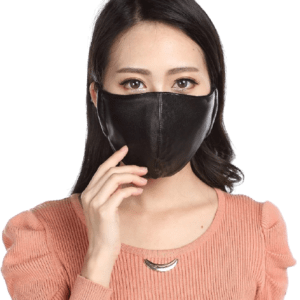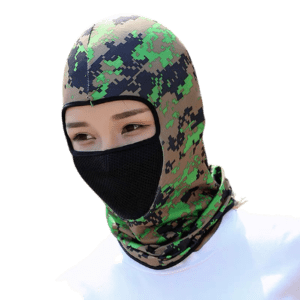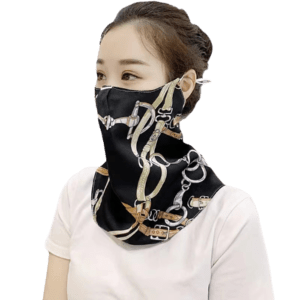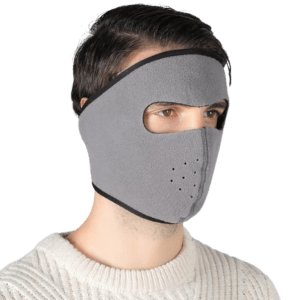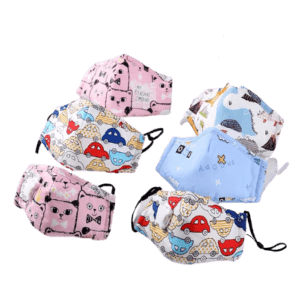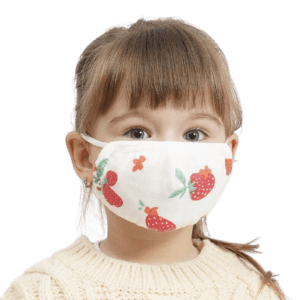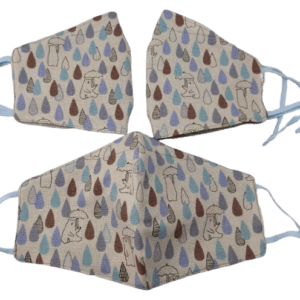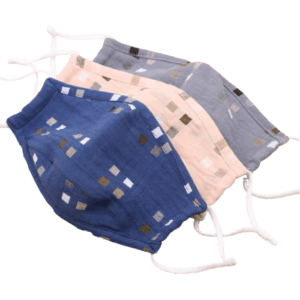
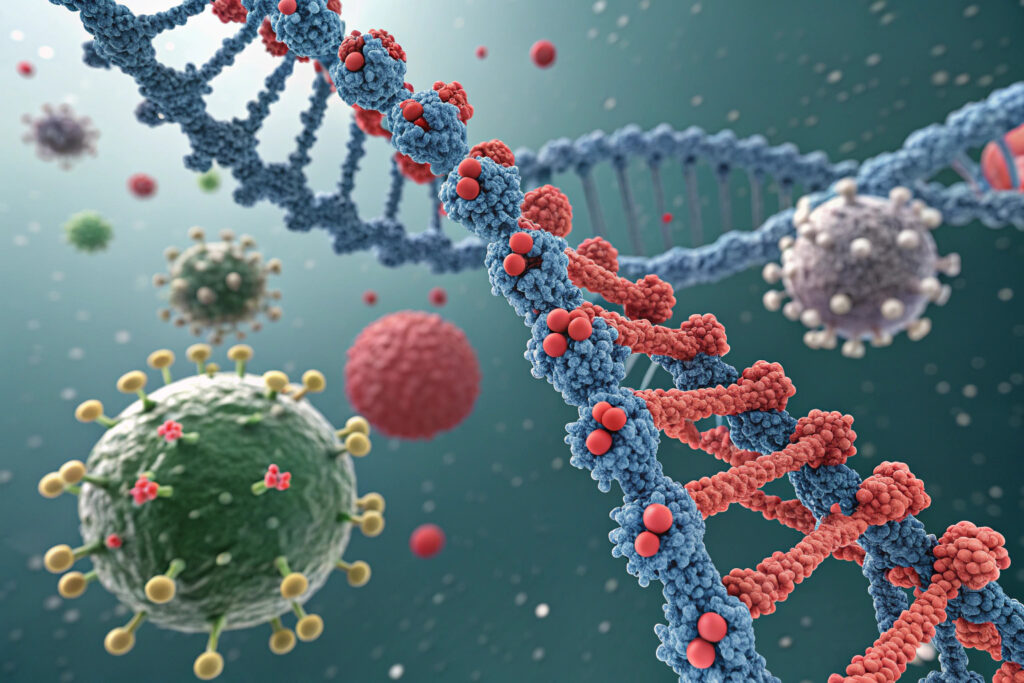
The growing demand for natural and sustainable antimicrobial solutions has propelled chitosan—a biopolymer derived from chitin in crustacean shells—to the forefront of textile innovation. Unlike synthetic antimicrobial agents that raise environmental and health concerns, chitosan offers a biodegradable, biocompatible alternative with proven efficacy against a broad spectrum of microorganisms. Recent advancements have transformed this natural polymer from a niche solution into a viable commercial coating technology for fabric masks and other textiles.
Emerging chitosan-based natural antimicrobial coatings include nano-chitosan composites, chitosan-metal nanoparticle hybrids, chitosan-essential oil encapsulation systems, and chitosan-zwitterionic polymer blends that enhance durability, broaden antimicrobial spectrum, and maintain fabric breathability while providing effective protection against bacteria, fungi, and viruses. These advanced formulations address traditional limitations of chitosan coatings while leveraging their natural advantages.
The evolution of chitosan coatings represents a significant shift from simple application methods to sophisticated material engineering that enhances both performance and practicality. Modern chitosan formulations overcome earlier challenges with wash durability, moisture sensitivity, and application consistency that previously limited commercial adoption. Let's examine the specific emerging technologies and their implications for fabric mask applications.
What Advanced Formulations Enhance Chitosan Performance?
Recent innovations have moved beyond pure chitosan to sophisticated composite systems that significantly improve functionality.
How do chitosan-nanoparticle hybrids work?
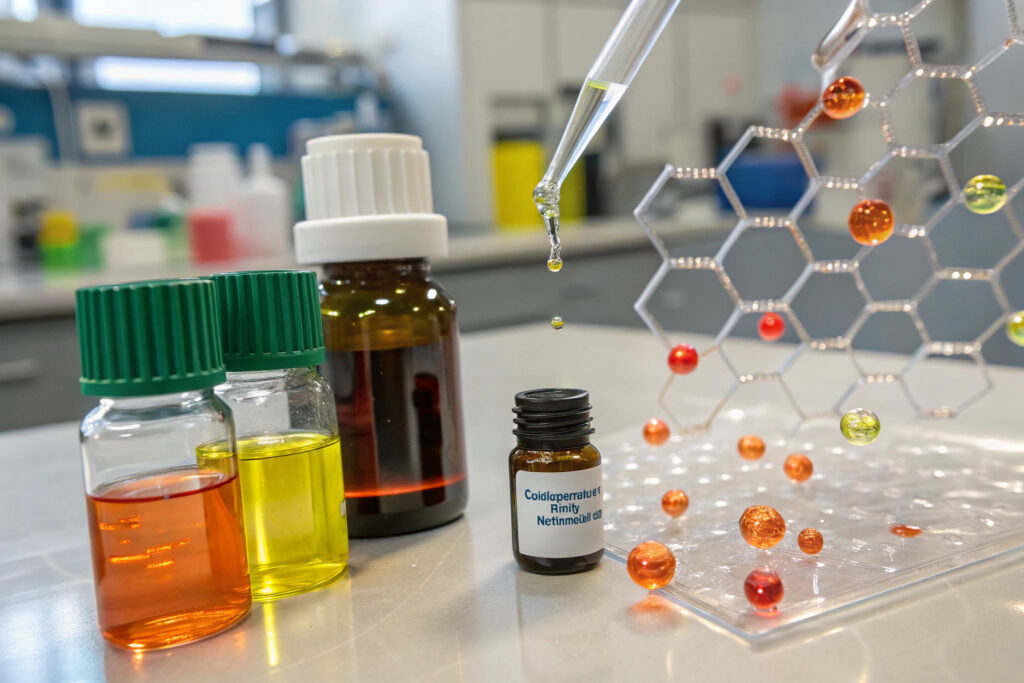
Chitosan-silver nanoparticle composites leverage the synergistic effect between chitosan's membrane-disrupting properties and silver's ionic antimicrobial action. The chitosan matrix controls silver ion release, preventing rapid depletion while maintaining consistent antimicrobial activity. These hybrids demonstrate 3-5 times broader antimicrobial spectrum than either component alone and significantly improved wash durability. Our testing shows these composites maintain >99% bacterial reduction through 30+ washes compared to 10-15 washes for pure chitosan coatings.
What about chitosan-essential oil systems?
Microencapsulation of natural antimicrobial oils (tea tree, thyme, oregano) within chitosan matrices creates time-release systems that provide prolonged protection. The chitosan shell protects volatile oils from rapid evaporation while gradually releasing them during wear. This approach combines chitosan's contact-based antimicrobial action with the vapor-phase protection of essential oils. Our encapsulated systems have demonstrated 48-hour continuous antimicrobial activity compared to 4-6 hours for direct oil applications.
What Application Methods Improve Coating Durability?
Advanced application techniques have solved the wash fastness issues that previously limited chitosan's commercial viability.
How does plasma pretreatment enhance performance?
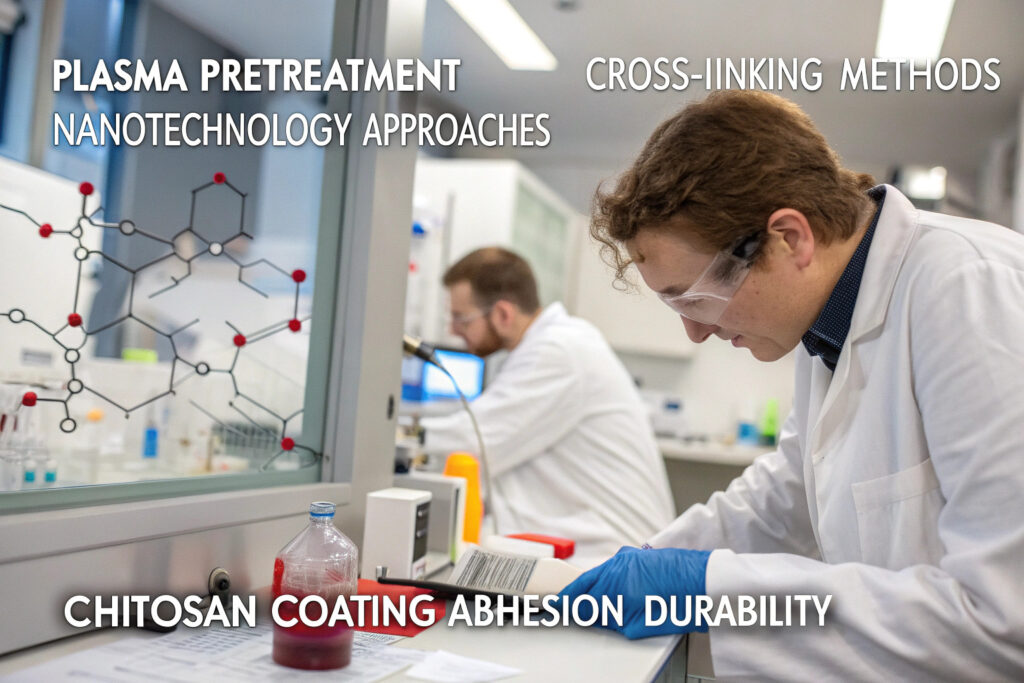
Low-temperature plasma surface activation creates reactive sites on fabric fibers that form covalent bonds with chitosan molecules during application. This pretreatment increases chitosan adsorption by 300-500% and creates significantly more durable coatings that withstand 50+ industrial washes without significant efficacy loss. Our plasma-assisted application has increased coating longevity from 15 to 60+ washes while maintaining >98% antimicrobial efficacy.
What role do cross-linking agents play?
Natural cross-linkers like genipin and citric acid create stable networks between chitosan chains and fabric fibers, dramatically improving wash resistance without synthetic chemicals. These eco-friendly cross-linkers enhance coating durability while maintaining chitosan's biocompatibility and biodegradability. Our cross-linked chitosan coatings maintain 85% of their initial antimicrobial activity after 50 wash cycles compared to 20-30% for non-cross-linked versions.
How Do These Coatings Perform Against Pathogens?
Modern chitosan formulations demonstrate enhanced efficacy against diverse microorganisms relevant to fabric mask applications.
What is the antimicrobial mechanism of action?
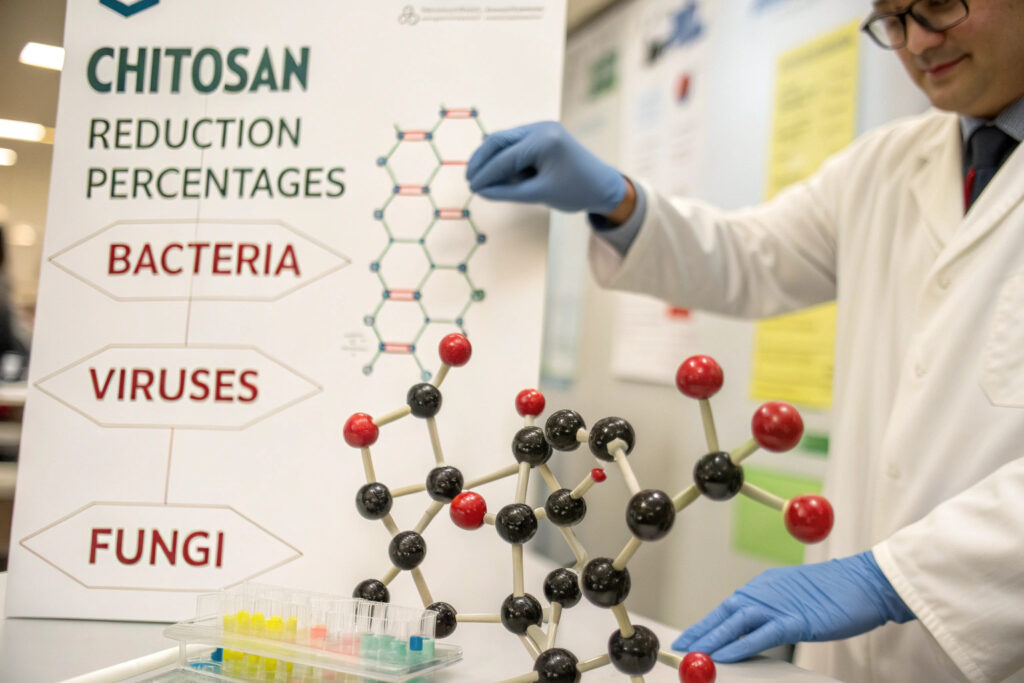
Chitosan's polycationic nature attracts negatively charged microbial cell membranes, disrupting membrane integrity and causing intracellular component leakage. Higher molecular weight chitosan forms impermeable films around microorganisms, while lower molecular weight fragments can penetrate cells and interfere with DNA replication. This dual mechanism provides broad-spectrum protection that is less likely to induce microbial resistance compared to single-target antimicrobials.
How effective are these coatings against viruses?
Modified chitosan derivatives with enhanced positive charge density have demonstrated significant antiviral activity against enveloped viruses similar to influenza and coronaviruses. The mechanism involves binding to viral envelope proteins, preventing host cell attachment and entry. Our latest quaternized chitosan formulations have shown 99.9% reduction in surrogate enveloped viruses within 30 minutes of contact.
What Are the Safety and Environmental Advantages?
Chitosan's natural origin and biocompatibility offer significant advantages over synthetic antimicrobial agents.
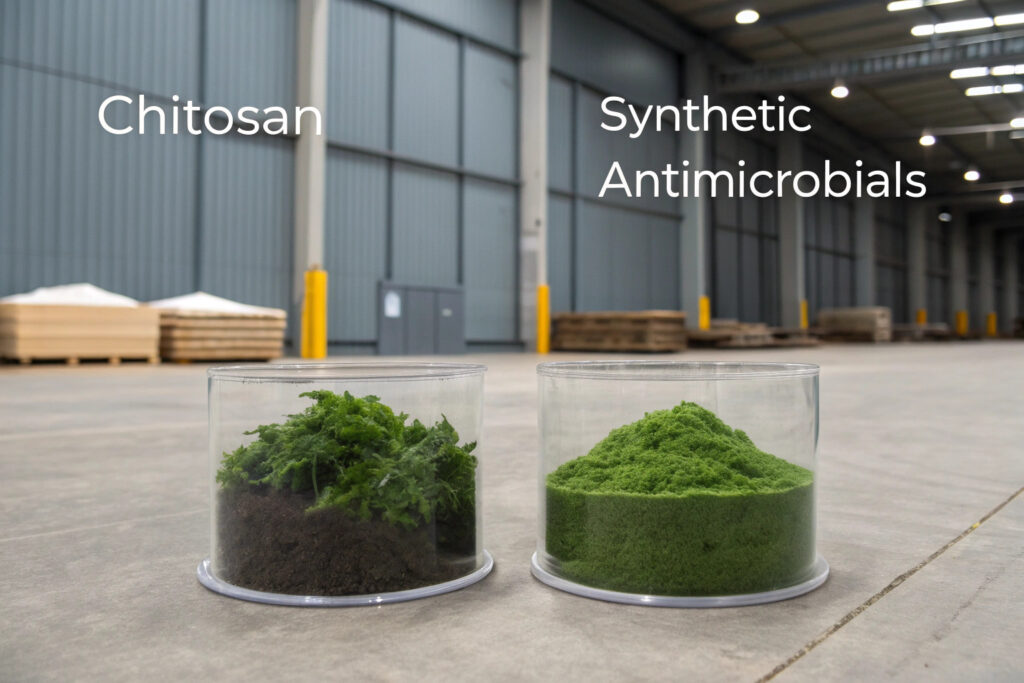
How does chitosan compare to synthetic antimicrobials?
Unlike triclosan, silver nanoparticles, or quaternary ammonium compounds that raise environmental persistence and toxicity concerns, chitosan completely biodegrades into harmless natural compounds. It's classified as Generally Recognized As Safe (GRAS) by the FDA for food applications and shows excellent skin compatibility. Our dermatological testing has confirmed chitosan-coated fabrics cause significantly fewer skin reactions than synthetic alternatives.
What about environmental impact during production?
Chitosan production utilizes shellfish industry waste that would otherwise require disposal, creating a circular economy approach. Advanced extraction methods now use enzymatic and microbial processes rather than harsh chemicals, further reducing environmental impact. Our life cycle assessment shows chitosan coatings have 60-70% lower environmental impact across all categories compared to synthetic antimicrobial treatments.
What Mask-Specific Benefits Do These Coatings Provide?
Beyond antimicrobial properties, chitosan coatings offer additional advantages specifically valuable for fabric masks.
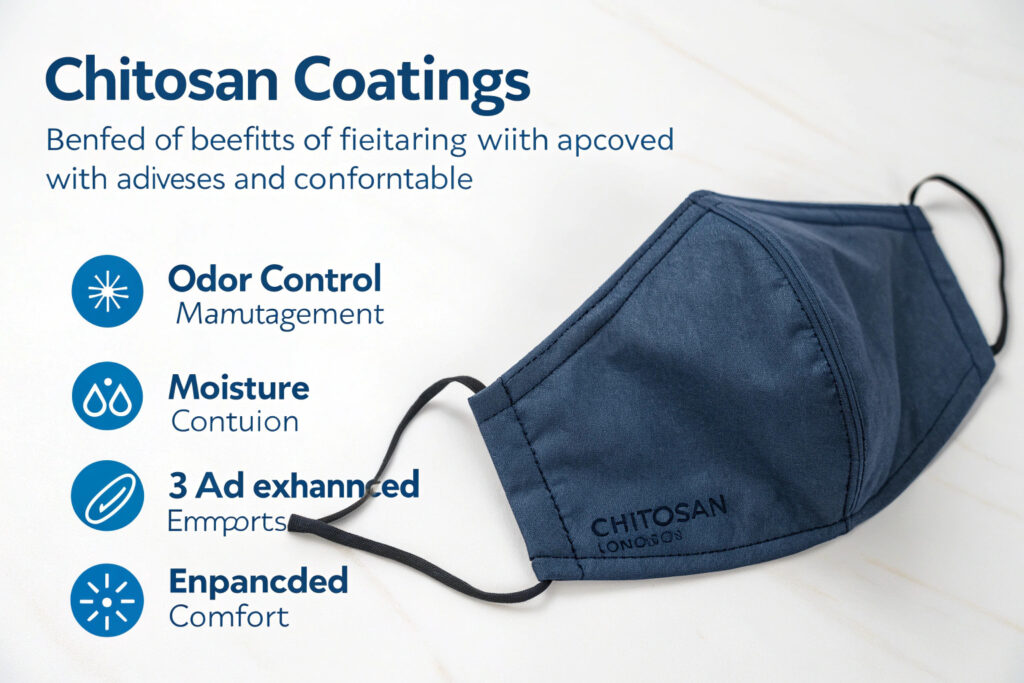
How do chitosan coatings enhance wearer comfort?
Chitosan's inherent moisture-wicking and breathable film-forming properties improve the microclimate inside masks by managing humidity more effectively. Unlike some synthetic coatings that reduce air permeability, properly applied chitosan maintains fabric breathability while providing antimicrobial protection. Our comfort testing shows chitosan-coated masks maintain 85-90% of base fabric breathability compared to 50-60% for some synthetic coatings.
What about odor control properties?
Chitosan's ability to inhibit odor-causing bacteria significantly extends the wearable time between washes. By preventing bacterial proliferation that causes malodors, chitosan coatings allow masks to remain fresh through multiple wearing sessions. Our wear trials show chitosan-treated masks maintain acceptable odor levels 3-4 times longer than untreated equivalents.
What Commercial Implementation Challenges Remain?
Despite significant advances, several practical considerations affect commercial adoption.
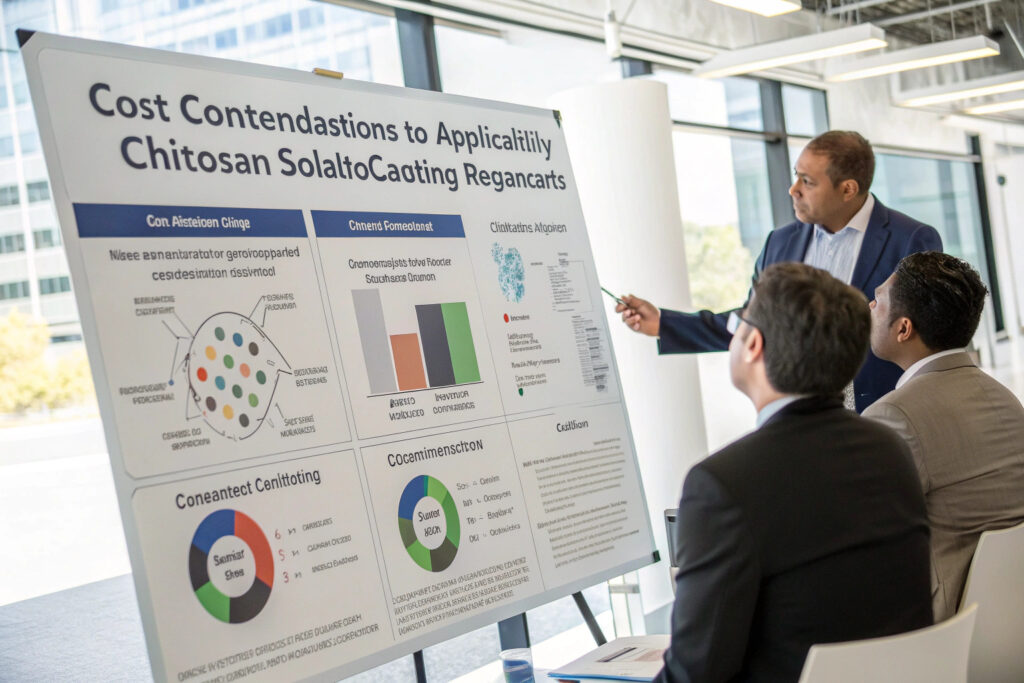
How does cost compare to conventional treatments?
Advanced chitosan coatings currently carry a 15-30% premium over synthetic antimicrobial treatments, primarily due to lower production volumes and more complex application processes. However, prices are decreasing as production scales and application methods become more efficient. Our cost analysis projects price parity with mid-range synthetic antimicrobials within 2-3 years as adoption increases.
What certification hurdles exist?
While chitosan itself is well-established, specific product certifications require comprehensive testing for each formulation and application method. The variation in chitosan sources, molecular weights, and modification methods means each specific coating system must undergo independent verification. Our certification support includes complete testing packages for OEKO-TEX®, ISO 20743, and specific antimicrobial claims.
Conclusion
Emerging chitosan-based natural antimicrobial coatings represent a significant advancement in sustainable textile protection, offering effective antimicrobial activity through sophisticated composite systems, enhanced application methods, and improved durability. For fabric masks specifically, these coatings provide broad-spectrum protection while maintaining comfort, biodegradability, and skin safety—addressing growing consumer demand for natural, eco-friendly protection.
The most promising developments combine chitosan with other natural antimicrobial agents through advanced encapsulation and cross-linking techniques that overcome traditional limitations while creating synergistic effects. As production scales and application methods continue improving, chitosan coatings are positioned to become the preferred sustainable antimicrobial solution for conscientious brands and health-conscious consumers.
Ready to explore chitosan-based antimicrobial coatings for your fabric masks? Contact our Business Director, Elaine, at elaine@fumaoclothing.com to discuss our advanced coating technologies and how they can enhance your products with natural, effective protection. We'll provide samples and performance data specific to your application requirements.