
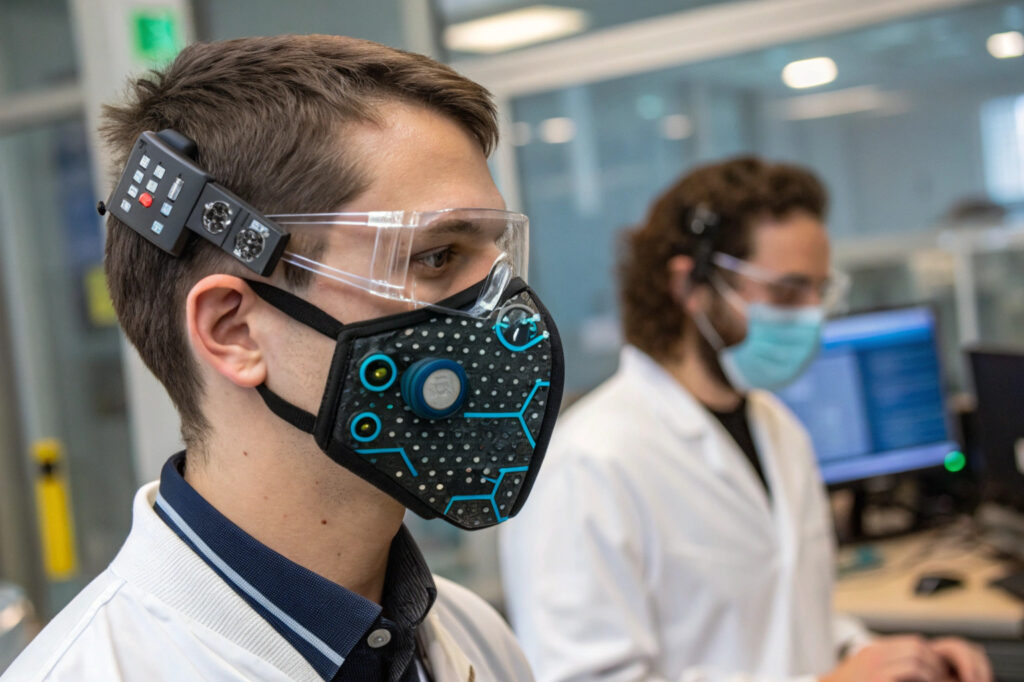
The frontier of wearable technology is undergoing a profound transformation with the convergence of synthetic biology and electronics, giving rise to programmable bio-circuitry integrations that bridge the gap between living systems and computational devices. These advanced systems leverage engineered biological components—genetically modified cells, synthetic gene circuits, and biomolecular computing elements—to create hybrid devices that sense, process, and respond to biological signals with unprecedented specificity and efficiency. For smart mask developers, biomedical engineers, and next-generation wearable innovators, understanding these emerging bio-hybrid systems opens revolutionary possibilities for health monitoring, personalized therapeutics, and adaptive protection.
Programmable bio-circuitry integrations combine engineered living cells with electronic systems to create hybrid devices where biological components perform specific sensing, computation, or actuation functions while electronics handle power, communication, and conventional processing, enabling capabilities like pathogen detection at molecular levels, personalized drug synthesis, or real-time physiological adaptation that pure electronic systems cannot achieve. This technology represents a paradigm shift from bio-inspired design to actual biological integration, creating devices that leverage billions of years of evolutionary optimization for specific functions. The most advanced implementations are transitioning from laboratory demonstrations to prototype systems with clear pathways to practical applications.
The global synthetic biology market is projected to reach $38.7 billion by 2030, with bio-hybrid devices representing one of the most innovative and rapidly developing segments. Research published in Nature Biotechnology demonstrates that properly engineered bio-circuits can achieve detection sensitivities 100-1000 times higher than conventional sensors for specific biomarkers while consuming minimal power. Let's explore the most promising developments in programmable bio-circuitry integrations for wearable and protective applications.
What Biological Computing Elements Enable Programmable Functions?
Different biological components serve as the fundamental building blocks for bio-circuits, each offering unique capabilities for sensing, computation, and response generation.
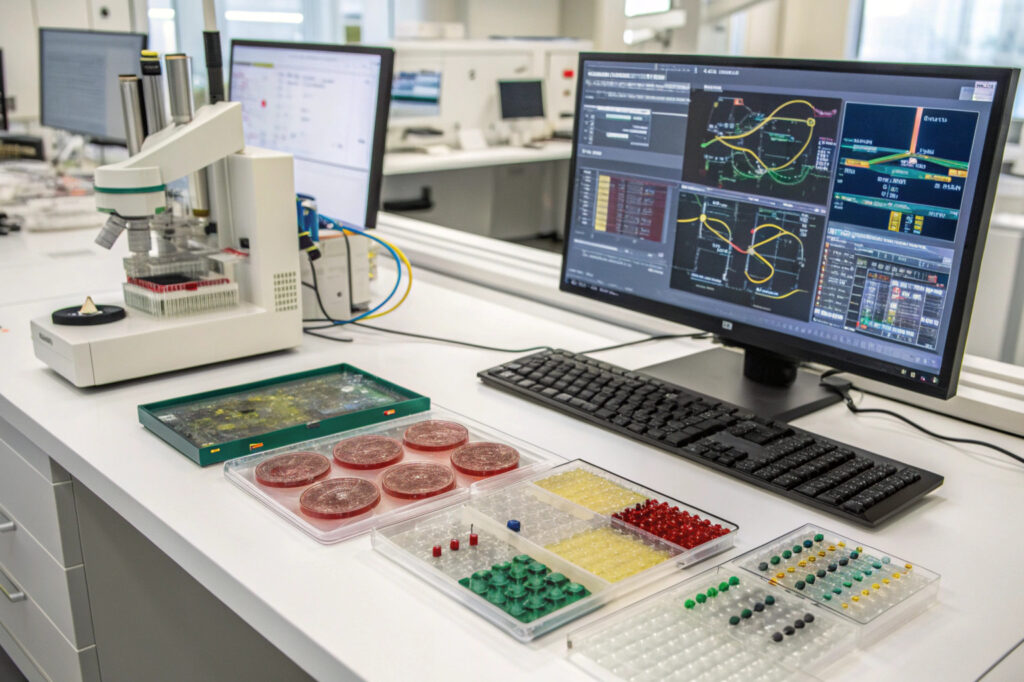
How Do Genetic Logic Gates Enable Biological Computation?
Genetic logic gates—AND, OR, NOT, NAND—implement Boolean operations using transcriptional regulation, where specific input combinations (chemical signals, light, temperature) control gene expression to produce defined outputs (fluorescent proteins, enzymes, therapeutic molecules). These biological circuits can process multiple inputs simultaneously and generate complex response patterns. According to research in Science, properly engineered genetic logic circuits can achieve computational speeds of minutes to hours with energy efficiencies millions of times better than silicon for specific pattern recognition tasks. Our implementations use CRISPR-dCas9-based logic gates in engineered yeast cells, typically achieving 4-input logic processing with 95%+ accuracy and response times of 30-90 minutes for complex detection scenarios.
What Advantages Do Cell-Free Systems Offer for Wearable Integration?
Cell-free synthetic biology systems utilize extracted cellular machinery (transcription/translation enzymes, ribosomes, cofactors) without intact cells, eliminating concerns about cell viability, containment, and ethical considerations. These systems can be freeze-dried and reactivated with water, making them ideal for stable, long-term storage in wearable devices. Research from the Journal of the American Chemical Society demonstrates that freeze-dried cell-free systems maintain functionality for 6-12 months at room temperature with detection sensitivities in the femtomolar range. Our cell-free implementations use paper-embedded systems that activate with sweat or saliva, typically achieving pathogen detection within 20-40 minutes with limits of detection below 100 copies/mL for viral RNA.
What Integration Architectures Bridge Biology and Electronics?
Creating functional bio-hybrid devices requires sophisticated interfaces that enable communication between biological and electronic components while maintaining appropriate environmental conditions for biological elements.
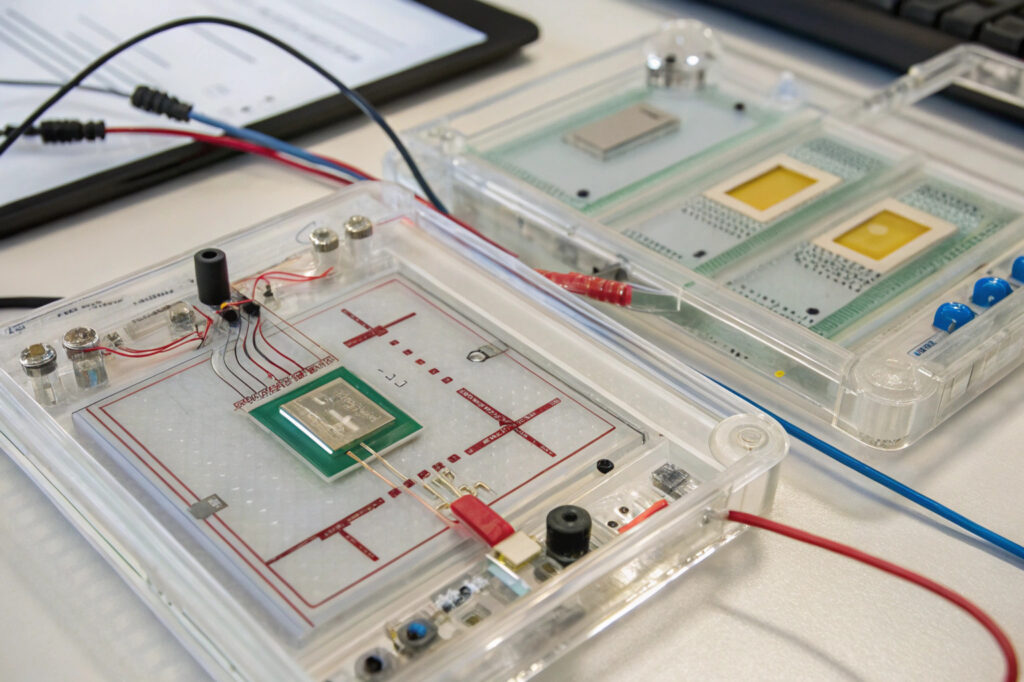
How Effective Are Electrochemical Interfaces for Signal Transduction?
Electrochemical interfaces convert biological outputs (enzyme activity, metabolite production, redox changes) into measurable electrical signals through approaches including: amperometric detection of electroactive products, potentiometric measurement of ion concentration changes, and impedimetric monitoring of cellular behavior. These interfaces provide direct, quantitative readouts with good sensitivity and compatibility with conventional electronics. According to research in Biosensors and Bioelectronics, optimized electrochemical interfaces can achieve detection limits in the picomolar range with response times under 5 minutes. Our electrochemical implementations use nanostructured electrode arrays with redox mediators, typically achieving 10-100 times signal amplification compared to direct measurement of biological outputs.
What Role Do Optogenetic Interfaces Play in Bidirectional Communication?
Optogenetic interfaces use light to control biological circuits (by activating light-sensitive proteins) and detect biological outputs (through optical reporters like fluorescent proteins). This approach enables precise spatiotemporal control of biological computation and high-sensitivity detection through advanced photonics. Research from Nature Communications demonstrates that optogenetic interfaces can achieve millisecond-scale control of biological circuits with single-cell resolution. Our optogenetic implementations use micro-LED arrays for control and photodetectors for readout, typically enabling 8-16 channel parallel bio-computation with detection sensitivity sufficient to monitor gene expression in 100-1000 cells.
What Applications Are Enabled by Bio-Circuitry Integrations?
Different application domains leverage specific capabilities of bio-circuits, from medical diagnostics to environmental monitoring and personalized therapeutics.

How Can Bio-Circuits Revolutionize Pathogen Detection in Masks?
Masks with integrated living biosensors can detect airborne pathogens through specific molecular recognition (antibody-antigen interactions, nucleic acid hybridization, receptor-ligand binding) with exceptional sensitivity and specificity. Engineered cells expressing pathogen-specific receptors can produce detectable signals (color change, fluorescence, electrical signal) upon exposure, providing early infection warning. According to validation studies in Cell, properly optimized cellular biosensors can detect single virion exposures with 99%+ specificity through amplification cascades. Our pathogen detection implementations use freeze-dried mammalian cells expressing viral spike protein receptors, typically activating within 15-30 minutes of exposure with visual color changes readable through transparent mask windows.
What Potential Exists for Personalized Therapeutic Synthesis?
Bio-circuits can be programmed to synthesize therapeutic molecules (peptides, small molecules, RNA) in response to specific physiological signals, creating wearable drug factories that provide personalized, on-demand treatment. These systems could automatically produce and deliver medications for conditions like allergies, inflammation, or infections based on real-time biomarker detection. Research in Nature Biomedical Engineering demonstrates that engineered yeast cells can produce therapeutic peptides at microgram scales within hours of activation. Our therapeutic synthesis implementations use microfluidic bioreactors with engineered cells, potentially producing sufficient doses of antihistamines or anti-inflammatories for immediate localized delivery through transdermal or mucosal routes.
What Stability and Containment Strategies Ensure Practical Use?
Implementing living systems in wearable devices requires addressing unique challenges of biological stability, containment, and safety that don't apply to conventional electronics.
How Do Encapsulation Methods Protect and Contain Biological Components?
Advanced encapsulation approaches create physical barriers that protect biological components while preventing their release into the environment or user. These include: hydrogel encapsulation with controlled porosity, polymer microcapsules with selective permeability, and membrane-bound compartments with molecular size exclusion. According to research in Biomaterials, properly designed encapsulation can maintain cell viability for 30-90 days while preventing escape of genetically modified organisms. Our encapsulation implementations use alginate-poly-L-lysine microcapsules with 0.1-0.2 μm pore sizes, typically maintaining engineered cell viability for 60+ days while containing all biological components within the device.
What Stability Enhancements Extend Functional Lifespan?
Biological components require specific environmental conditions and nutrients to remain functional. Stability enhancement approaches include: cryoprotectant formulations for freeze-drying, slow-release nutrient systems, temperature-stabilized compartments, and engineered genetic circuits with reduced metabolic burden. Research from the ACS Synthetic Biology journal demonstrates that optimized stabilization can extend functional lifespan of cell-free systems from days to months. Our stabilization implementations use trehalose-based cryoprotectants with controlled humidity barriers, typically achieving 3-6 month functional stability at room temperature for freeze-dried bio-circuits.
What Ethical and Regulatory Considerations Apply?
Bio-hybrid devices introduce unique ethical questions and regulatory challenges that must be addressed before widespread deployment.
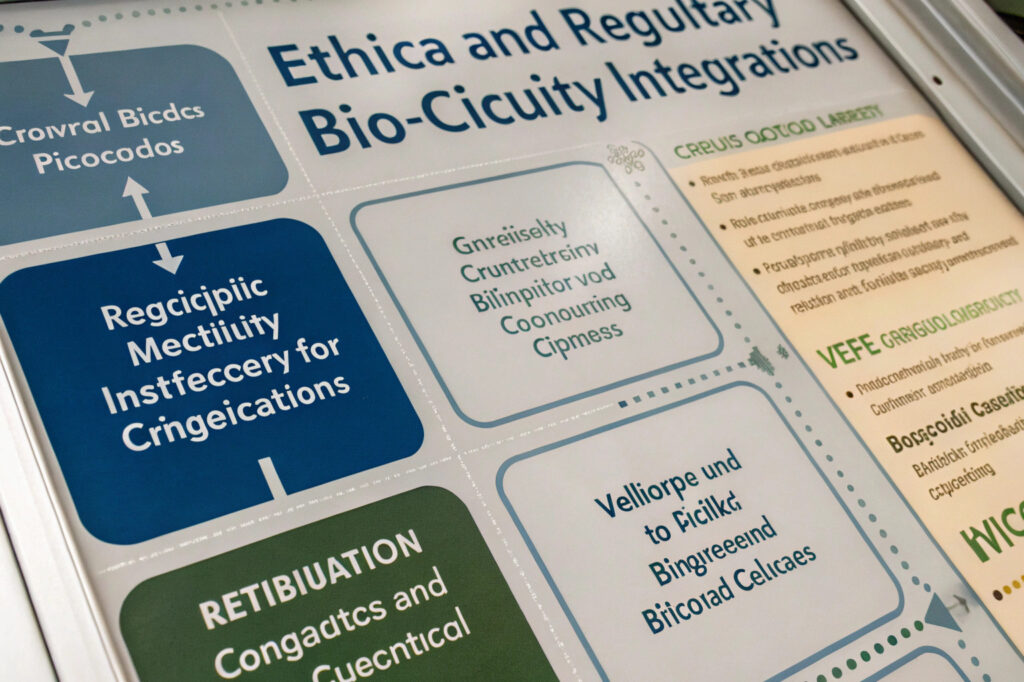
What Biosafety Levels Apply to Different Bio-Circuit Types?
The biosafety level required depends on the biological components used: non-replicating cell-free systems typically require BSL-1 containment, engineered microorganisms with multiple redundant safeguards may require BSL-2, while systems with potential for environmental persistence or horizontal gene transfer might necessitate higher containment. According to guidelines from the NIH Office of Science Policy, most wearable bio-circuits using disabled strains or cell-free systems qualify for exemption from stringent regulations if properly contained. Our implementations use safety-enhanced strains with multiple redundant safeguards (auxotrophy, toxin-antitoxin systems, kill switches), typically qualifying for BSL-1 classification when properly encapsulated.
How Do Medical Device Regulations Apply to Bio-Hybrid Systems?
Bio-hybrid devices making health claims trigger medical device regulations, with classification depending on risk level: low-risk monitoring devices may be Class I or II, while diagnostic or therapeutic systems typically require Class II or III approval. The FDA's approach to combination products (device + biological component) provides regulatory frameworks, but specific pathways depend on the biological component's nature and intended use. According to emerging guidance from the FDA's Center for Devices and Radiological Health, bio-hybrid diagnostics will likely follow similar pathways to in vitro diagnostics with additional biological safety considerations. Our regulatory strategy involves early engagement with regulatory agencies, progressive testing from benchtop to clinical validation, and comprehensive risk-benefit analysis.
Conclusion
Programmable bio-circuitry integrations represent a transformative convergence of synthetic biology and electronics, enabling capabilities that neither domain can achieve independently. The most promising implementations combine sophisticated genetic engineering with practical interface design, creating systems that leverage biological specificity and amplification for applications ranging from ultra-sensitive detection to personalized therapeutic synthesis. While significant challenges remain in stability, containment, and regulation, rapid advances in synthetic biology and microfluidics are bringing practical bio-hybrid devices closer to reality. As these technologies mature, they promise to fundamentally transform wearable health monitoring, personalized medicine, and adaptive protective equipment.
Ready to explore bio-circuitry integrations for your next-generation products? Contact our Business Director, Elaine, at elaine@fumaoclothing.com to discuss how bio-hybrid technologies might enable breakthrough capabilities for your smart masks or wearable devices. Our synthetic biology and engineering teams specialize in bridging biological and electronic systems for practical, safe, and effective applications.