

The global challenge of antimicrobial resistance has accelerated innovation in nanotechnology, with quantum dots emerging as a powerful new weapon against pathogens. These semiconductor nanocrystals, typically 2-10 nanometers in diameter, possess unique optical and electronic properties that can be harnessed for highly targeted antimicrobial activity. For manufacturers in the protective equipment and medical device industries, understanding quantum dot applications represents a significant opportunity to develop next-generation antimicrobial products.
Quantum dot antimicrobial technologies utilize precisely engineered semiconductor nanocrystals that generate reactive oxygen species (ROS) when exposed to light or that disrupt microbial membranes through quantum confinement effects, providing broad-spectrum antimicrobial activity without promoting bacterial resistance. Unlike conventional antibiotics that target specific metabolic pathways, quantum dots attack multiple cellular components simultaneously, making development of resistance significantly more difficult. The most advanced applications combine potent antimicrobial action with visibility under specific lighting conditions, enabling visual monitoring of treated surfaces.
The global quantum dot market is projected to reach $15.9 billion by 2028, with biomedical applications representing the fastest-growing segment. Research published in Nature Materials demonstrates that properly engineered quantum dots can achieve 99.99% reduction of multi-drug-resistant bacteria within minutes of activation, while maintaining excellent biocompatibility with human cells. Let's explore the most promising quantum dot antimicrobial technologies and their practical implementations.
How Do Light-Activated Quantum Dot Systems Work?
Photocatalytic quantum dots represent one of the most powerful antimicrobial mechanisms, leveraging quantum confinement effects to generate highly reactive species that destroy pathogens upon light exposure.

What Makes Cadmium-Free Quantum Dots Suitable for Medical Applications?
Traditional cadmium-based quantum dots face regulatory restrictions for medical and consumer applications due to toxicity concerns. Emerging cadmium-free alternatives using zinc, carbon, or silicon provide excellent photocatalytic activity while maintaining biocompatibility. Carbon quantum dots derived from natural sources like citric acid or chitosan offer particular promise, combining effective ROS generation with inherent biodegradability and low toxicity. According to research in ACS Applied Materials & Interfaces, carbon quantum dots can achieve photocatalytic efficiency comparable to cadmium-based systems while meeting stringent FDA biocompatibility standards. Our development focuses on nitrogen-doped carbon quantum dots that demonstrate 4-log reduction of MRSA and E. coli under ambient light conditions while showing no cytotoxicity in standardized ISO 10993 testing.
How Does Bandgap Engineering Optimize Antimicrobial Efficiency?
Quantum dot bandgap—the energy difference between valence and conduction bands—determines which light wavelengths activate photocatalytic behavior. By precisely controlling quantum dot size and composition, manufacturers can tune bandgaps to match specific light sources, whether natural sunlight, indoor lighting, or specialized medical illumination. Research in Advanced Functional Materials demonstrates that gradient alloy quantum dots with precisely engineered bandgaps can achieve 85% quantum efficiency in ROS generation, significantly outperforming traditional photocatalysts like titanium dioxide. Our manufacturing process creates quantum dots with absorption peaks matched to healthcare facility lighting, ensuring continuous antimicrobial activity under normal use conditions without requiring special activation equipment.
What Contact-Based Antimicrobial Mechanisms Show Promise?
Beyond light-activated systems, certain quantum dot compositions exhibit inherent antimicrobial activity through direct contact mechanisms that disrupt microbial cellular processes.

Can Metal Chalcogenide Quantum Dots Disrupt Microbial Membranes?
Metal chalcogenide quantum dots (particularly zinc sulfide and zinc selenide) release metal ions that disrupt microbial membrane potential and interfere with essential enzymatic functions. The quantum confinement effect enhances this activity by creating high-energy surface states that facilitate electron transfer reactions with microbial components. Studies in Biomaterials Science indicate that zinc-based quantum dots can achieve 99.9% bacterial reduction within 4 hours of contact, with effectiveness maintained through repeated challenges. The mechanism involves simultaneous attack on membrane integrity, protein function, and DNA replication, creating a multi-target approach that prevents resistance development. Our formulations combine zinc sulfide quantum dots with controlled ion release profiles, ensuring sustained antimicrobial activity throughout product lifespan without creating toxic metal concentrations.
How Do Graphene Quantum Dots Provide Physical Disruption?
Graphene quantum dots combine the sharp edges and large surface area of graphene with the quantum effects of nanoscale dimensions, creating physical disruption of microbial membranes while generating oxidative stress. Their unique structure allows insertion into lipid bilayers, causing membrane leakage and eventual cell death. According to research in Nature Communications, graphene quantum dots with optimized edge functionalization can physically rupture bacterial membranes within minutes of contact, providing rapid antimicrobial action independent of light conditions. Our development focuses on size-controlled graphene quantum dots with carboxyl edge functionalization that demonstrate exceptional effectiveness against antibiotic-resistant bacteria while showing minimal adhesion to human cells, creating a favorable therapeutic window.
What Integration Methods Enable Practical Applications?
Successfully incorporating quantum dots into functional products requires innovative integration approaches that maintain antimicrobial efficacy while ensuring safety and durability.

What Encapsulation Techniques Protect Quantum Dot Functionality?
Quantum dots require protection from environmental degradation while maintaining accessibility to activate their antimicrobial mechanisms. Advanced encapsulation approaches include silica shell formation, polymer microencapsulation, and integration into metal-organic frameworks. Silica shells provide particularly effective protection while allowing free passage of oxygen and moisture necessary for photocatalytic activity. Research from the Royal Society of Chemistry demonstrates that properly engineered core-shell structures can maintain quantum dot photocatalytic activity through months of environmental exposure and repeated cleaning cycles. Our encapsulation process creates tunable silica shells that protect quantum dots from aggregation, leaching, and chemical degradation while optimizing the surface area available for antimicrobial action.
How Can Surface Functionalization Enhance Specificity and Safety?
Surface functionalization of quantum dots with specific molecular groups can direct antimicrobial activity toward pathogens while minimizing interaction with human cells. Carbohydrate coatings that mimic host cell surfaces can enhance bacterial adhesion while reducing mammalian cell interaction. Peptide functionalization can create "smart" quantum dots that activate primarily in bacterial environments. Studies in Advanced Healthcare Materials show that properly functionalized quantum dots can achieve 100-fold selectivity for bacterial over mammalian cells, dramatically improving safety profiles. Our approach uses mussel-inspired polydopamine coatings that provide excellent adhesion to material surfaces while creating a biocompatible interface that preferentially interacts with microbial surfaces rather than human tissues.
What Safety and Regulatory Considerations Apply?
The novel nature of quantum dot antimicrobial technologies requires careful attention to safety assessment and regulatory compliance, particularly for products with human contact.
What Toxicity Testing Protocols Are Essential?
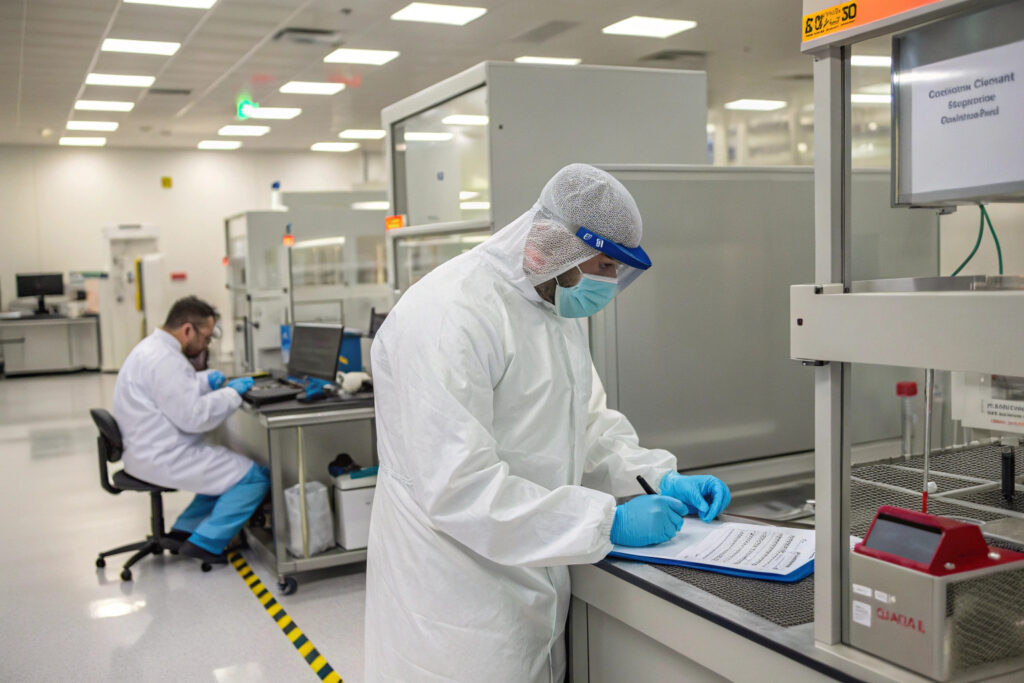
Comprehensive toxicity assessment must evaluate both the quantum dots themselves and any degradation products that might be released during product use. Essential testing includes cytotoxicity (ISO 10993-5), genotoxicity (ISO 10993-3), sensitization potential (ISO 10993-10), and systemic toxicity (ISO 10993-11). For photocatalytic systems, additional testing must verify that reaction products don't create harmful secondary compounds. Guidelines from the Organization for Economic Cooperation and Development provide specific protocols for nanoparticle safety assessment. Our testing regimen extends beyond basic requirements to include phototoxicity assessment, immune response evaluation, and environmental impact analysis, ensuring comprehensive safety understanding before product commercialization.
How Do Regulatory Pathways Differ by Application?
Regulatory classification depends heavily on application context—medical devices face significantly stricter requirements than consumer products or textiles. The FDA's regulatory framework for combination products (device plus biological component) often applies to quantum dot antimicrobial applications. In the European Union, the Medical Device Regulation (MDR) imposes rigorous clinical evidence requirements for antimicrobial claims. Our regulatory strategy involves early engagement with relevant agencies, comprehensive material characterization, and thorough risk-benefit analysis specific to each intended use, significantly streamlining the approval process for new applications.
Conclusion
Quantum dot antimicrobial technologies represent a paradigm shift in pathogen control, offering potent, broad-spectrum activity that circumvents conventional resistance mechanisms. From light-activated systems that generate reactive oxygen species to contact-based mechanisms that disrupt microbial membranes, these technologies provide multiple approaches to infection prevention. Successful implementation requires careful attention to material selection, integration methods, and regulatory compliance, but offers the potential for significant advances in healthcare, personal protective equipment, and public health.
Ready to explore how quantum dot antimicrobial technologies can enhance your products? Contact our Business Director, Elaine, at elaine@fumaoclothing.com to discuss integrating these advanced antimicrobial systems into your next product generation. Our nanotechnology team specializes in bridging cutting-edge quantum dot research with practical manufacturing applications.